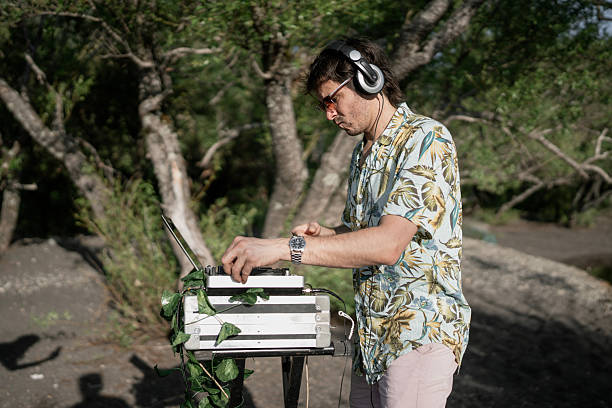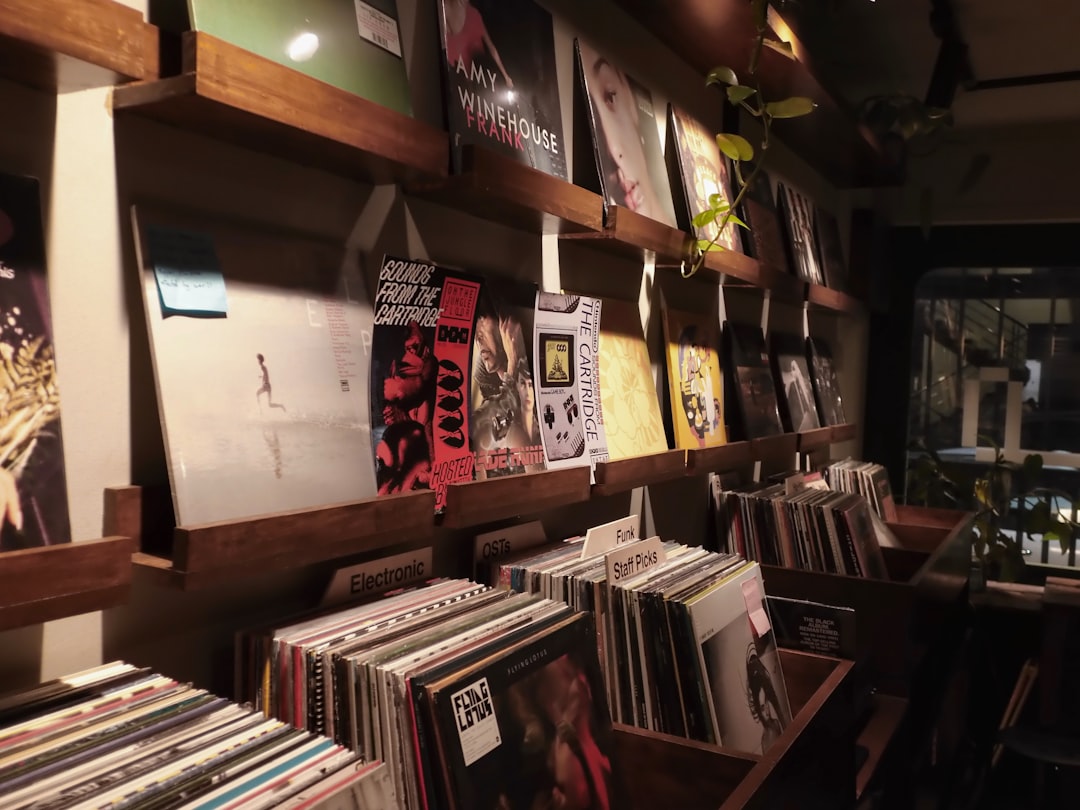
If you’ve ever spent a Sunday afternoon digging through crates at a dusty record fair or scrolling past endless Discogs listings at 2 AM, you know the rush. That moment your fingers land on a worn sleeve with a handwritten sticker—pressed in 1987, never repressed, owned by someone who clearly used it to death at a block party in the Bronx. For those of us living in the Hip Hop DJ Evolution era, the Breakbeat Collection Vinyl Hunt is more than a hobby. It’s a pilgrimage. And at the heart of that pilgrimage lies the untold history of the DJ pioneers who built the craft from scratch.
We’re talking about the architects of rhythm. Before digital waveforms and sync buttons, before Serato and Rekordbox, there were people like Larry Levan, Frankie Knuckles, and Wendy Hunt—figures whose names might not headline Coachella but whose hands literally shaped the way we blend tracks today. Let’s rewind.
Larry Levan was the godfather of the Paradise Garage in New York, a space that wasn’t just a club but a laboratory for beat science. He didn’t just play records; he deconstructed them. Levan would drag a needle across a groove to create a loop, then layer a cowbell hit over it for minutes at a time. That instinct—to break a track down to its bones and rebuild it live—is the DNA of every breakbeat you’ve ever flipped. When you hunt for a rare drum break on vinyl today, you’re chasing the same energy Levan chased when he spliced tape reels in his basement.
Then there’s Frankie Knuckles, the “Godfather of House.” His journey from the Warehouse in Chicago to global influence mirrors the evolution of DJing itself. Knuckles wasn’t a producer in the modern sense; he was a curator. He’d take a soul record, strip away the vocals, and loop the percussion until the room became a single, breathing organism. That’s the breakbeat ethos—finding the moment in a song where the drums speak louder than the singer, then making that moment last forever. The physical hunt for those original pressings? It’s an archaeological dig into his brain.
Now, let’s talk about a lesser-known but equally pivotal figure: Wendy Hunt. While female DJs have historically been erased from the narrative, Wendy Hunt was a force in the underground New York scene of the late ‘70s and early ‘80s. She wasn’t just a DJ’s wife or a sideline figure; she was a vinyl warrior who dug through basement shops in Brooklyn to find the rarest Latin jazz and funk 45s—records that became secret weapons for breakbeat pioneers. Without her contributions, the foundational loops that Grandmaster Flash and Kool Herc built upon might never have surfaced. When you find a pristine copy of a 1974 Cymande record in the wild, you’re feeling her shadow.
The Breakbeat Collection Vinyl Hunt is about connecting dots that streaming algorithms can’t show you. You learn that the same breakbeat used by DJ Premier on a 1994 Gang Starr track was originally cut from a $2 bin soul record that Larry Levan once played at 3 AM to clear the floor just before sunrise. You start to recognize Wally’s in Chicago, Rock & Soul in NYC, and smaller mom-and-pop shops in Detroit where Frankie Knuckles’ protégés would swap rare pressings under the table. Every scuff on a record is a memory of a pioneer’s touch.
But the hunt isn’t just nostalgia—it’s an active preservation of technique. When you find an original pressing of “Ashley’s Roachclip” by The Soul Searchers on a major label, you’re holding a piece of equipment that taught a generation how to manually loop drums using two turntables and a mixer. No pads, no quantize. Just fingers, ears, and a pocket full of quarters for the coin-op table at a burger joint that let you practice all night.
The language of this world matters too. Terms like “digging,” “crate digging,” and “the break” aren’t jargon—they’re a code shared by a community that values artifact over algorithm. When a fellow DJ sees you carrying a tote bag with a corner of a yellowed sleeve sticking out, they just nod. They know you’ve been inside a shop where the owner doesn’t use a price gun, just a pencil mark on the inner sleeve. They know you’ve argued with a seller over whether a cracked spindle counts as “mint minus.”
So if you’re building your own collection, whether you’re a bedroom producer or a club headliner, remember this: every breakbeat you spin has a bloodline. Larry Levan’s risk-taking, Frankie Knuckles’ patience, Wendy Hunt’s obsessive digging—they’re all pressed into the grooves of those records you’re hunting. The vinyl might be scratched, but the history isn’t. It’s waiting in a stack, in a shop you’ve never been to, on a street you didn’t know existed. Go find it.