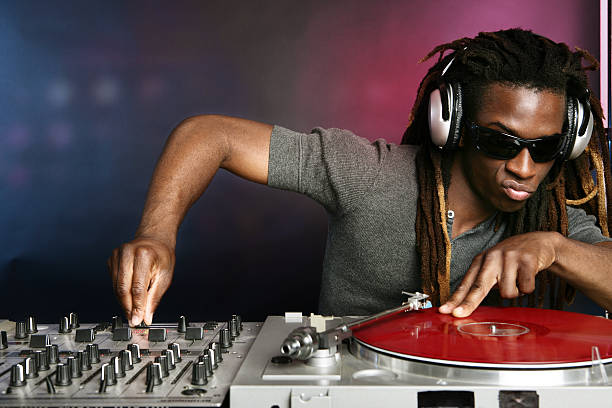
When you’re standing behind the decks, fingers hovering over the faders, and that split second between tracks feels like an eternity, you’re actually tapping into a lineage that goes back way further than Spotify playlists or even vinyl. The drum machine transition—that crisp, seamless shift from one beat to another without losing the floor—wasn’t invented by some algorithm or a YouTube tutorial. It was born in the sweaty, smoke-filled basements and legendary clubs where the DJ pioneers turned machines into emotion. And if you’re reading this under the Frankie Knuckles House Father section, you already know: the father of house music wasn’t just a selector. He was a sculptor of time.
Let’s rewind to the late 1970s and early 1980s. Before the Roland TR-808 and TR-909 became the heartbeat of dance music, DJs were working with whatever they could get their hands on. Turntables, tape reels, and a lot of patience. But the real game-changer came when drum machines hit the scene—not because they were easy to use, but because they forced a new kind of thinking. Frankie Knuckles, the Godfather of House, was one of the first to realize that a drum machine could do more than just keep time. It could transition a room from one state of mind to another.
At the Warehouse in Chicago, Knuckles would often use a Roland TR-808 to bridge two records that had no business being next to each other. Imagine a disco banger fading out and a raw, percussive track about to slam in. Without a drum machine, you’d either have a dead silence or a chaotic clash. But Knuckles would program a simple, four-on-the-floor beat on the 808, let it roll under the outgoing track’s breakdown, then slowly bring it to the forefront as the next record’s groove took over. The crowd didn’t hear a transition. They felt a shift.
This wasn’t just technical wizardry. It was storytelling. The drum machine allowed DJs to control the energy of the room with precision. Larry Levan, the Paradise Garage legend, took this idea and ran with it—sometimes using the Roland CR-78 or the LinnDrum to layer rhythms that made the air thick with tension. He’d let a drum pattern loop for minutes, building anticipation until the crowd was practically begging for the drop. That’s the art of the effective drum machine transition: it’s not about showing off gear. It’s about reading the floor and knowing when to hit that reset button on the groove.
Wendy Hunt, another unsung pioneer, used drum machines to create bridges between genres that hadn’t been mixed before—jazz-funk into early electro, soul into proto-house. She understood that the drum machine was a neutral canvas. You could paint any rhythm onto it, and that rhythm could act as a universal translator between records. That’s a lesson every DJ today should steal: the drum machine transition isn’t about the machine. It’s about the intention.
Now, let’s fast forward to the modern era. You probably have a laptop, a controller, or even a standalone unit with built-in drum sequencers. The technology is easier than ever. But the philosophy remains the same. When you’re planning a set and you hit that moment where two tracks don’t naturally flow, resist the urge to just slam the crossfader. Instead, think like Frankie. Program a simple beat on your drum machine or sampler—something that matches the BPM of the outgoing track—and let it simmer underneath. Then, when the outgoing track’s energy starts to dip, bring that drum pattern up gradually. Use its hi-hats or claps as a metronome for the incoming track. Let the two sounds coexist for a bar or two, then kill the original track’s drums at just the right moment. The result? A transition that feels more like a breath than a cut.
The best DJs in the game, from the golden era to now, treat the drum machine like an extra hand in the mix. It’s not about blasting beats over everything—it’s about using them as glue. That’s the transition effect done correctly. And it’s why Frankie Knuckles’ legacy isn’t just about house music. It’s about how to move a room without words.
So next time you’re prepping a set, give a nod to the pioneers. They didn’t have YouTube tutorials or sync buttons. They had ears, instinct, and a machine that could punch out a kick drum like a heartbeat. That’s the drum machine transition. It’s not just history. It’s how you keep the floor alive.