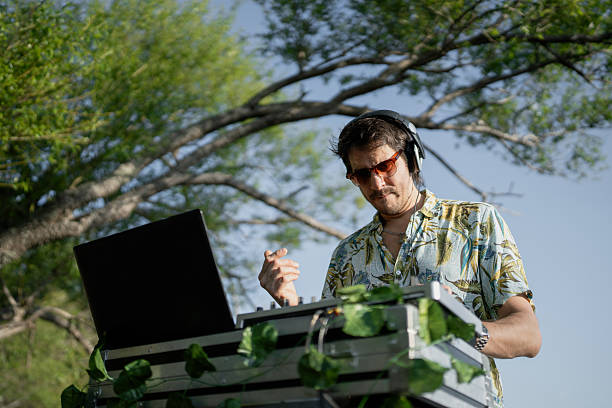
So you’ve got your first controller, your crate is stacked with bangers, and you’re ready to take the decks. But before you even think about blending two tracks, there’s something more fundamental than beatmatching or EQing. It’s the ability to read a room. And the simplest way to start doing that? The Head Nod Check Method.
Think of it as your crowd radar. You don’t need expensive gear or years of experience. You just need your eyes, your ears, and a little bit of self-awareness. This is DJ Life 101, right here.
When you step behind the booth, especially as a beginner, the temptation is to stare at your laptop screen or your mixer. You’re worried about the next transition, the BPM counter, or the waveform. That’s natural. But the crowd isn’t watching your screen. They’re watching you, and they’re feeling the energy. The Head Nod Check Method forces you to look up and observe the most obvious signal a dancer can give you: the movement of their head.
Here’s how it works. Every thirty seconds or so, glance at three to five different people on the dancefloor. Don’t stare at one person—that’s creepy. Just scan. Look at their head. Is it bouncing? Is it bobbing? Is it still? A head that is nodding in time with the kick drum is the greenest light you can get. It means the groove is locked. It means they’re inside the pocket. It means your track selection is speaking to them on a physical level.
If you see a sea of nodding heads, you’re golden. Keep rolling. Maybe bring in that next track with a similar energy or build a little tension. But if you see heads that are still, or worse, heads that are turning away from the booth toward the bar or the exit, you have a problem. That’s a red flag. Your vibe is slipping. It doesn’t mean you’re a bad DJ. It means you need to pivot.
Maybe the track is too fast. Maybe it’s too repetitive. Maybe the crowd was vibing to a house groove and you just dropped a dubstep banger that killed the flow. The Head Nod Check Method catches that before you lose the entire floor. It’s a real-time feedback loop that costs nothing but a second of attention.
Now, you have to read the context. A head that is nodding slowly and deeply usually means the crowd is in a hypnotic trance—perfect for deep house or techno. A head that is nodding with sharp, aggressive bounces means they want energy—that’s your cue for a drop or a big break. A head that is completely still but smiling? They might be listening, but they’re not dancing. That’s a yellow flag. They’re not feeling the rhythm yet. Give them a reason to move.
This method is especially useful when you’re playing a room you don’t know. Maybe it’s an opening slot at a club where the headliner is a big name, or a random bar gig where the crowd wasn’t really there for dancing. You can’t rely on the promoter’s description of “the vibe.” You have to see the vibe. And the head nod is the purest, most immediate signal of whether you are connecting or failing.
Don’t confuse the Head Nod Check with getting validation for every track. You don’t need every person to be a human metronome. If you see three people nodding and two people scrolling on their phones, that’s okay. The dancers are your target audience. But if zero people are nodding over four or five checks, it’s time to change your approach.
One common mistake new DJs make is ignoring the head nod check entirely because they’re nervous. They keep their eyes glued to the mixer and hope nobody notices. But the crowd notices. They can feel the disconnect. DJing is not a solo performance. It’s a conversation. You speak with tracks, and the crowd speaks back with movement. If you never look at them, you’re talking to yourself.
So here’s your homework. Next time you practice at home, play a mix and deliberately look away from your gear every fifteen seconds. Get comfortable with the feeling of not staring at a screen. Then, when you’re out, use the Head Nod Check Method as your anchor. It’s the first step in reading a crowd, and it’s the easiest one to master. Once you get good at spotting a nodding head, you’ll start noticing shoulder shrugs, foot taps, hand raises, and open mouths. That’s the advanced stuff. But for now? Just look for the nod.
The floor is yours. Don’t forget to lift your eyes.