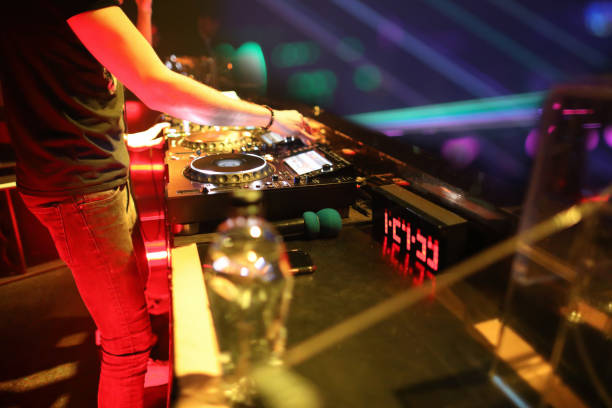
Let’s be real for a second—if you’ve ever been behind the decks and felt like your kick drum was fighting with the track before it, or your bassline sounded like a muddy sponge instead of a clean thump, you’ve already bumped into the problem the Low End Swap Technique was designed to solve. This isn’t some secret sauce from a shady forum. It’s a foundational move in advanced EQ and filtering that separates DJs who play songs from DJs who craft a night.
First, let’s get grounded. The low end—everything below about 150 Hz, especially the sub-bass and kick fundamentals—is the physical core of dance music. In a club, that’s what you feel in your chest and your feet. But here’s the dirty truth: most club systems are monophonic in the sub range. That means if two tracks both have heavy low frequencies at the same time, they’ll phase-cancel, distort, or just turn into a soupy mess. The Low End Swap Technique is your surgical solution.
Here’s how it works. You’re mixing out of Track A, which has a big kick and a rumbling sub-bass. You want to bring in Track B, which also has a kick and some low-end weight. Instead of just fading Track A’s lows out slowly, you swap them. You cut the low EQ on Track A below, say, 100 Hz, while simultaneously boosting or opening the low EQ on Track B in that same range. The listener’s body never feels a gap. One low end disappears, the other appears instantly. It’s not a gradual transition. It’s a switch. And that switch, when timed with a phrase change or a drop, hits like a controlled explosion.
But why would you swap instead of just blending? Because blending low frequencies over time creates a blur. The human ear struggles to distinguish two kicks hitting at the same frequencies, even at different volumes. You get a “flam” effect—two sounds slightly out of sync—which ruins the groove. By swapping, you preserve the clarity of each track’s groove. The dance floor doesn’t have to guess which beat to lock into. They lock into Track B’s kick immediately, because Track A’s kick is simply gone.
To pull this off, you need a mixer with per-channel EQ filters. Most three-band EQs have a low knob that cuts or shelves. The trick is to know your frequencies. If you cut too high, you kill the body of the track. If you cut too low, you leave rumble that still bleeds into the next song. The sweet spot is usually between 80 and 120 Hz, depending on the genre. House and disco? Lower, around 80 Hz. Dubstep or trap? You might push the swap up to 150 Hz because there’s more mid-bass energy. Test it with your cans. Feel it with your body.
Now, timing. The Low End Swap doesn’t work if you do it randomly. You want to execute it on the one—the first beat of a bar—or right as a breakdown ends and the drop hits. Think of it like a reset button for the floor’s energy. Track A is cruising along, people are locked in. Then you cut its low end, and simultaneously open Track B’s low end, and suddenly the crowd feels a new pulse. They don’t even register the transition consciously, but their bodies recalibrate. This is why the technique is beloved by veterans from Larry Levan’s Paradise Garage days to modern minimal techno heads. It’s about crowd control through physics.
Let’s talk gear. You don’t need a fancy digital mixer. Many classic analog mixers, like the DJM-900 or Allen & Heath Xone, have per-channel isolators or sweepable filters. But the Low End Swap is even more powerful with a separate high-pass filter knob, not just a fixed EQ. If your mixer only has three bands, you can still do it—just turn the low knob all the way down while turning up the next track’s low knob. The result is less surgical, but still effective. If you’re on a controller, map your low-frequency knobs to a tight range so you can cut and boost quickly.
One common mistake: boosting the low end too much on Track B to “fill the space.” Don’t. The goal is balance, not loudness. If you boost Track B’s low end by 6 dB while cutting Track A, you’ll clip your master and distort the subs. Instead, set your gains so both tracks hit at similar perceived volume before you even touch the EQ. Then when you perform the swap, you’re just shifting energy, not adding it.
There’s also an artful extension of this technique: the filtered swap. Instead of cutting Track A’s low end sharply, you apply a resonant high-pass filter that sweeps up slowly, removing the lows while adding a slight “wobble” as the resonance peaks. While that’s happening, you slowly open Track B’s low end. The result feels like a slow-motion shape-shift, less abrupt but still clean. This works beautifully for melodic house or deep techno where you want tension.
Finally, practice with tracks that have distinct kicks. Pop a Tr-909 thumper against a fat Moog sub. Swap them back and forth until you can feel the exact moment the floor’s energy transfers. Record your mixes and listen back on a system with a subwoofer. If the low end sounds like a smooth handoff—no gap, no chaos—you’ve nailed it.
The Low End Swap Technique isn’t just a trick. It’s a philosophy: respect the bass, control the crowd, and let the mix breathe. When you master it, you’re not just playing tracks. You’re rewriting the room’s heartbeat.