So you’ve started digging into the gear world, and you keep hearing people throw around phrases like “I run an NXS2 setup” or “you need to learn the NXS2 workflow.” It sounds like a secret code, and honestly, it kind of is. But once you crack it, you’ll realize the NXS2 Setup Standard isn’t just a piece of hardware—it’s the language of club-ready mixing, the backbone of DJ booths from Ibiza to Brooklyn, and the vibe that separates bedroom tinkerers from floor-moving professionals. Let’s decode it so you can speak the language like you’ve been behind the decks for years.
First, let’s get the basics straight. NXS2 refers to the Pioneer DJ Nexus 2 series, specifically the CDJ-2000NXS2 media players and the DJM-900NXS2 mixer. In DJ lingo, when someone says “I’m on an NXS2 setup,” they’re not just naming gear—they’re telling you they operate on the industry standard that’s been the benchmark for clubs and festivals since the mid-2010s. Think of it like saying “I drive stick” or “I shoot on film.” It implies a certain level of skill, a familiarity with a specific workflow, and a respect for tradition. The NXS2 setup is the uniform of the working DJ. It’s what you’ll find in Boiler Room sets, at fabric London, and in the booth at Berghain on a Sunday morning.
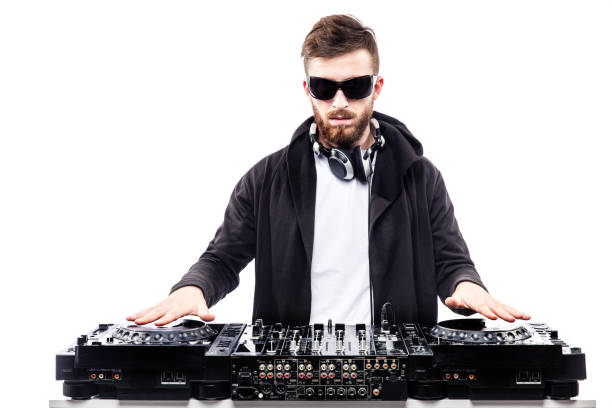
Walk into any serious club and you’ll see two CDJ-2000NXS2s flanking a DJM-900NXS2. The media players have those iconic multi-color waveform displays with the stacked waveforms, the big jog wheels with adjustable resistance, and the hot cue buttons that let you jump to specific points in a track in a split second. The mixer has the classic three-band EQ, a filter knob that feels like butter, and the completely killer Beat FX section that includes delay, reverb, echo, and flanger. When DJs say “NXS2 standard,” they’re referencing how these components become an extension of your hands. You don’t think about the pitch fader or the cue button anymore—you just play. The NXS2 standard is muscle memory turned into music.
But the lingo goes deeper. You’ll hear “NXS2 layout” in tutorials or when someone critiques a controller. Pioneer DJ built the NXS2 series with a very specific arrangement: the CDJs sit to the left and right, the mixer sits in the middle. The USB ports are on top of the players, not on the front, which is a small detail that changes how you reach for your thumb drive during a transition. The browse knob and selection buttons are positioned so you can scroll through tracks while still having your other hand on the mixer’s fader. In DJ school, students spend hours learning the NXS2 standard so they can walk into any booth and not panic. The layout is so widespread that most modern controllers mimic it—so when you hear “this has an NXS2-style layout,” you know the setup is going to feel familiar.
Then there’s the sound. The DJM-900NXS2 has a 96kHz/24-bit sound card and a D/A converter that delivers crisp highs and deep lows. In the booth, you don’t just hear the bass—you feel it vibrate through the booth floor. The NXS2 standard is also about trust. When a promoter books you for a gig and says “we’ve got an NXS2 setup,” you know you won’t have to fight dodgy headphone jacks or laggy pitch sliders. You know the booth runs on reliable hardware that’s been torture-tested by thousands of DJs before you. That reliability is why the NXS2 standard became the default for top-tier venues and why modern replacements like the CDJ-3000 and DJM-A9 still carry that same DNA.
Let’s talk about the culture. When you master the NXS2 setup, you gain entry into a shared vocabulary. You can walk into a DJ booth and instantly know where the trim knob is, how to engage the slip mode, and how to map the beat effects to a dedicated button. That’s the secret language. You might hear someone say “I’m quantized on NXS2” meaning they’re using the beat-sync and quantization functions that come standard. Or “I flipped the NXS2 to XLR” meaning they’re running balanced audio for cleaner sound in big rooms. Even the cable routing has a name: the “NXS2 booth out” refers to the dedicated booth monitor output that lets you control your own volume without messing with the main mix.
For the upcoming DJ, learning the NXS2 standard is like getting your learner’s permit for club mixing. It’s not the flashiest gear on paper anymore—the new CDJ-3000s have faster processors and touchscreens—but the NXS2 setup is still the lingua franca. Being able to walk in, load your USB, and play a seamless set without fumbling for anything is the sign of a pro. So next time you hear someone say “I keep my gear NXS2-ready,” you’ll know they’re not just talking about a brand. They’re talking about fluency. They’re saying they speak the language that every club DJ understands, from the first beat of the warm-up to the last echo of the closing track.