You’ve got your first controller, a playlist that actually slaps, and you’re staring at three knobs labeled Low, Mid, and High. Feels like you’re about to pilot a spaceship, right? Don’t sweat it. That humble three-band EQ is your single most powerful tool for making transitions that don’t sound like a car crash. In the DJ world, we call it the EQ handshake, and mastering it is the difference between a mix that feels like a seamless story and one that makes the dance floor clear out like a fire drill. Let’s break down what it actually means to use EQ like a pro, straight from the first mix ever walkthrough.
First, understand that each band controls a specific frequency slice of your track. The Low is your bass, the subwoofer rumble that shakes your chest. The Mid is the vocal presence, the snare, the guitar strums—the meat of the song. The High is your hi-hats, cymbals, air, and shimmer. When you’re mixing two tracks together, your goal is to avoid frequency clash. If both tracks have their basses cranked, you get muddy, distorted garbage. That’s where the handshake comes in.
The basic move is simple and elegant. As you bring in your new track, slowly roll the Low knob of the outgoing track counterclockwise while simultaneously rolling the Low knob of the incoming track clockwise. You’re literally handing off the low-end energy from one song to the next. Think of it like passing a baton in a relay race—smooth, deliberate, no fumbling. If you’re playing a house track with a big bassline and you want to bring in a techno banger, kill the Low on the outgoing track completely around the eight-bar mark, then let the incoming track’s bass drop exactly when the previous one dies. Your crowd feels the shift in their feet before their ears even register the change. That’s the magic.
But here’s where new DJs often get tripped up. They think EQ is just about bass swaps. Nah. The Mid and High bands are just as crucial. When you’re mixing two vocal-heavy tracks, you don’t want both singers yelling at each other. Use the Mid band to carve out space. Boost the Mid on the incoming track while dipping the Mid on the outgoing track. This creates a vocal transition that feels like one artist handing the mic to another. Or if you’re blending instrumental elements, use the High band to ease in the cymbals and hats of the new track while fading the old track’s highs. The result is a silky, layered transition that sounds intentional, not clumsy.
A killer technique is what I call the “surgical cut.” Say you’re playing a track with a really prominent guitar riff that’s about to clash with the next track’s synth lead. Instead of just cutting the entire track, isolate that frequency region. Roll the Mid or High band on the outgoing track by about 50 percent, not all the way. That leaves the low-end and some texture intact, so the transition feels like a conversation, not a brutal murder. It takes practice, but once you feel it click, you’ll never go back.
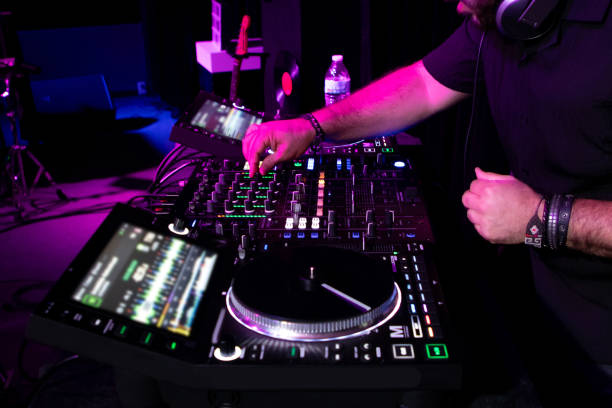
Now, let’s talk about the handshake in context of the first mix ever walkthrough. You’ve picked two songs with compatible BPMs and keys. You’ve cued the incoming track and hit play on the beat. Your crossfader is centered. This is the moment. Gently start turning the Low on the outgoing track down over four bars while turning the Low on the incoming track up over the same four bars. Then do the same with the Mid and High over the next four bars. By the time you’ve completed the full EQ handshake, the incoming track is fully present and the outgoing track is silent. You just executed a clean, professional transition without even touching the fader. That’s the handshake in action.
But real heads know there’s no rule that says you have to do it perfectly every time. Sometimes you want to leave a little bass on the outgoing track for a tension-release effect. Sometimes you want to cut the Mids completely on both tracks and let the drums breathe. This is where your musical intuition starts to grow. The EQ handshake isn’t a rigid formula—it’s a conversation you have with the music. The more you practice, the more you’ll develop an instinct for when to twist, when to hold, and when to cut.
One last pro tip that separates bedroom DJs from club-ready ones. Don’t stare at the EQ knobs. Feel them. I know it’s tempting to watch the numbers, but your ears are the real meters. Practice with your eyes closed for ten minutes. Start a track, bring in a new one, and do the handshake by feel. You’ll be shocked how much more musical your mixes become when your brain isn’t tryna math its way through frequencies. In the club, nobody cares what numerical value your Low is at. They care if the bass drop hits right when the room starts moving.
So there you have it. The three-band EQ handshake is your first real DJ superpower. It’s simple enough to learn in an afternoon, deep enough to spend years refining. Whether you’re spinning at your dorm room pregame or your first real club gig, every transition you make will be a statement. Make it a handshake that says, “I know what I’m doing.” And when you nail it, remember that Larry Levan, Frankie Knuckles, and Wendy Hunt all started with the same three knobs. Now go twist.