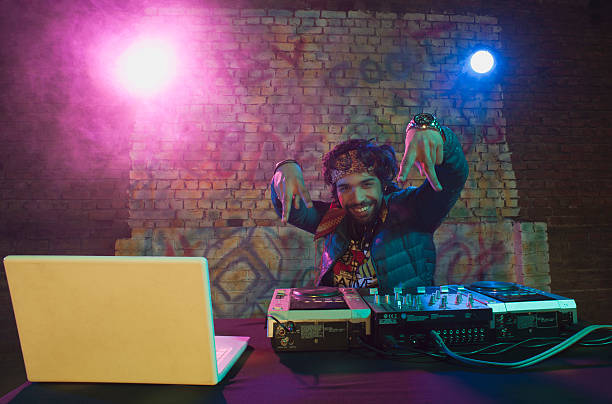
Let’s be real: the golden era of standing shoulder-to-shoulder in a sweaty basement while a vinyl crackle hits you in the chest isn’t going anywhere. But if you’ve been paying attention to the pulse of the scene, you’ve noticed something shifting beneath the bassline. Virtual reality clubbing isn’t some dystopian fever dream or a pandemic-era band-aid anymore. It’s becoming a legitimate parallel universe where ticket sales for virtual events are forging a completely new economy for DJs, producers, and promoters. And honestly? It’s kind of wild.
Think about it this way. A decade ago, your only path to a real rave involved navigating a dodgy Instagram story link, paying a bouncer with crumpled cash, and praying the sound system wasn’t blown out by 2 AM. Now, the same legendary DJs like honey Dijon or Carl Cox can spin a set for a crowd that’s simultaneously in Tokyo, Berlin, and your living room. But here’s the catch: ticket sales for these virtual events aren’t just about slapping a Paypal button on a Twitch stream. The future of DJing depends on how we reimagine the transaction, the experience, and the vibe itself.
First, let’s talk about the friction that virtual ticket sales solve. Physical clubs have bottle service minimums, capacity caps, and geography. A kid in rural Ohio might never catch a Jeff Mills set live, but a VR club like Sensorium or a platform like Decentraland can drop them right into a crowd of digital avatars that actually dance. The ticket sale here isn’t just access to a stream. It’s access to a social space where your avatar can vibe-check someone’s digital outfit, throw virtual glowsticks, or even buy a limited-edition NFT of the afterparty. That’s a different value proposition entirely. And when you price a ticket at fifteen dollars instead of fifty plus a three-hour drive, you open up the floodgates to a global audience that’s hungry for connection.
But here’s where it gets tricky for us DJs. The future isn’t just about selling a link. It’s about selling an atmosphere. Anyone who’s ever watched a DJ set on a flat screen knows the curse of the “bedroom DJ” energy. You’re vibing, but your cat is walking across the keyboard, and your roommate is vacuuming. The magic of a club is that the sound system wraps around your bones like a hug from Uncle Frankie Knuckles himself. Ticket sales for virtual events have to promise that same immersion, and that means the tech has to catch up to the nostalgia.
Streaming platforms are already experimenting with spatial audio and real-time crowd reactivity. Imagine buying a ticket where the volume of the bass increases based on how many people in the virtual room are “throwing their hands up.” Or where the visualizer reacts to your heartbeat via a cheap smartwatch. This isn’t science fiction. This is the next frontier. DJs who understand that their job is 50% music selection and 50% crowd psychology will thrive here because virtual ticket sales reward the architects of atmosphere, not just the button mashers.
Let’s not ignore the elephant in the room, though: the gatekeepers of the old guard. Some purists argue that virtual clubbing is a soulless simulation, a quick cash grab that dilutes the ritual of the DJ. But look at history for a second. Larry Levan and Frankie Knuckles built the church of house music in spaces that were originally seen as rebellious or even illegitimate. Wendy Hunt pushed the boundaries of what a DJ could do without a physical dance floor. The craft has always evolved when the container changes. Ticket sales for virtual events are just a new container. The soul comes from the person behind the decks and the community willing to press play together.
From a business perspective, the math is disgustingly good for artists who play the game right. A sold-out club holds maybe a thousand people. A virtual venue with a premium ticket tier? Ten thousand, twenty thousand, fifty thousand. And the overhead is basically a laptop and a solid internet connection. That means more money flows back to the artist, especially the underground talent that’s been getting squeezed by the industry for decades. Smart DJs are already bundling tickets with exclusive merch drops, tutorial packs, or even “backstage” VR meet-and-greets where you can ask about their beat-mixing secrets.
The downside, of course, is the burnout. The expectation to be “on” for a global audience across multiple time zones is real. Mental health and wellness issues don’t disappear because you’re not hauling flight cases through customs. Virtual events can blur the line between work and life even harder than touring does. The smartest promoters are building in intermissions, chat moderation, and even digital “rest zones” into their tickets so the experience doesn’t sap the joy out of the craft.
So where does this leave you, the DJ reading this on a rainy Tuesday night? The future is not a binary choice between real clubs and virtual spaces. It’s a hybrid. You can play a warehouse in Brooklyn on Friday and then stream a sunrise set from your bedroom on Saturday for an audience that tipped you in crypto. Ticket sales for virtual events are the lever that makes that lifestyle possible. The technology is still clunky, the avatars still glitch, and sometimes the Wi-Fi drops out right when the drop hits. But the trajectory is undeniable.
The clubs of the future aren’t built from concrete and velvet ropes. They’re built from code, community, and a willingness to sell a ticket that doesn’t just grant access to a screen, but to a feeling. And if you’re a DJ worth your salt, you already know that’s what the whole game is about anyway.