If you’ve ever found yourself deep in a rabbit hole of YouTube sets, watching masterclasses from Ricardo Villalobos or Sven Väth, you’ve probably stumbled across a clip that just screams “This is energy.” The crowd is a single organism. The bass is a heartbeat. The lights feel like they’re whispering secrets. That clip was likely filmed at Time Warp’s Mannheim Long Nights. And if you’re a DJ—or even just a rider on the techno wave—this festival isn’t just a bucket-list tick; it’s a rite of passage.
Let’s be real. The DJ life is about more than just beatmatching and track selection. It’s about understanding vibe, flow, and the unspoken contract between you and the dancefloor. Time Warp’s Mannheim Long Nights is the ultimate classroom for that. Founded in 1994 in the German city of Mannheim, this festival has grown from a cult underground gathering into the global benchmark for electronic music experiences. It’s not just a party; it’s a living history lesson in what it means to command a room for twelve straight hours.
So why does every DJ worth their mixer need to experience this festival? Let’s break it down without any numbered lists—just pure, raw energy.
First off, the lineup is a masterclass in curation. Time Warp isn’t about throwing a hundred names at a wall and seeing what sticks. They handpick artists who understand the arc of a night. You’ll see legends like Dixon, Âme, or Ben Klock playing back-to-back with rising stars who are about to blow. For a DJ, watching these sets is like studying at the feet of masters. You learn how to build tension, how to drop a bomb track without losing the crowd, and how to read a room that’s been dancing for six hours. You’ll notice the subtle things: the way a veteran DJ lets a kick drum breathe for an extra bar before bringing in the bassline, or how they use a filter sweep to create a moment of collective exhale before the drop. That’s not just technique—that’s telepathy.
Then there’s the venue itself. The Mannheim Maimarktgelände is a massive exhibition space that gets transformed into a labyrinth of sound. Each hall has its own acoustic identity, its own lighting rig, its own vibe. One room might feel like a sweaty Berlin basement, another like a cathedral of lasers. For a traveling DJ, this is gold. You learn that space matters as much as the music. You start thinking about how your own setup at home or at a club could be tweaked to create similar micro-atmospheres. The visual production at Time Warp is next-level—massive LED screens, robotic lights that dance to the beat, fog that feels like a physical presence. But here’s the thing: the visuals never overpower the sound. The production is there to serve the music, not overshadow it. That’s a lesson in humility every DJ needs to internalize.
Let’s talk about the crowd. Time Warp’s audience is global, seasoned, and locked in. These aren’t people here to film TikTok dances or take selfies at the bar. They’re here for the journey. They know the tracks. They know when to cheer and when to be silent. As a DJ, playing to a crowd like that is both terrifying and exhilarating. It raises your game. You can’t coast on big-room bangers; you have to read the room, adapt, and earn every single moment. That’s the kind of pressure that turns a bedroom DJ into a floor commander.
And then there’s the “Long Nights” part. The festival runs from late evening until the early morning—sometimes going well past sunrise. That endurance test is a reality check for any DJ. You learn about pacing. You learn about energy management—yours and the crowd’s. You realize that a twelve-hour set isn’t just about tracklist curation; it’s about physical stamina, mental focus, and knowing when to drop a curveball. It’s the same muscle you’ll need for your own sets, whether you’re playing a three-hour club slot or a marathon festival headline.
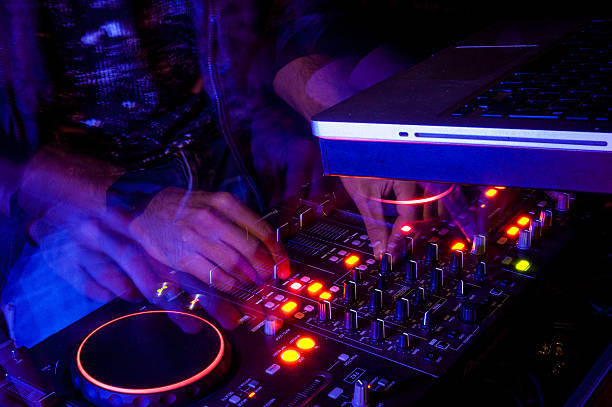
For the gearheads out there, Time Warp’s sound system is legendary—think Funktion-One rigs tuned to perfection. You’ll hear sub-bass that vibrates your ribs and mids that cut through without harshness. It’s the kind of system that makes you re-evaluate your own monitor setup. And if you’re into DJ gear, you’ll notice what the pros are using. Is that a Pioneer DJM-V10? A little bit of rotary magic? You’ll absorb details that inform your own equipment choices.
Finally, don’t sleep on the after-parties. Mannheim’s scene runs deep, and the unofficial gatherings at local clubs or warehouse spaces are where you’ll catch impromptu back-to-backs that turn into legend. These moments are where the craft becomes culture.
In the end, Time Warp’s Mannheim Long Nights isn’t just a festival. It’s a pilgrimage for anyone who takes the DJ life seriously. It teaches you about sound, space, crowd, and self. It reminds you that behind every great DJ is a night that changed everything. Go. Listen. Learn. Dance.