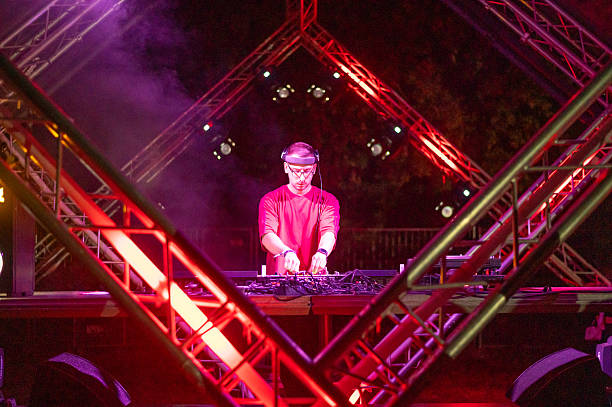
Let’s be real for a second. You’ve just stepped off the decks after a three-hour set, the bass is still vibrating in your sternum, and your ears are humming like a forgotten amp. You lean down to pack your headphones, and that’s when you notice it. A high-pitched whine that wasn’t there before. It cuts through the ambient crowd chatter, louder than the subs you just mixed on. Your heart rate spikes. Suddenly, you’re not thinking about your next transition or the after-party. You’re thinking, Is this permanent? Am I going deaf? Welcome to the backstage reality of tinnitus, the unwanted guest that shows up when you push the volume past your body’s natural limit. But here’s the good news: you don’t have to live in panic. Managing tinnitus starts with understanding what it actually is, and then building a prevention routine that lets you keep DJing without wrecking your ears.
First, let’s break down the panic itself. Tinnitus is not a disease. It’s a symptom, usually caused by damage to the tiny hair cells in your inner ear that transmit sound signals to your brain. When those cells get blasted by consistent high-decibel noise—like monitor wedges, club stacks, or even your own headphones during a long bedroom mixing session—they bend, break, or die. Your brain, confused by the lack of full auditory input, starts filling in the gaps with a phantom sound. That ringing, buzzing, or hissing is your brain desperately trying to hear something that isn’t there. For many DJs, the first experience triggers a full-on panic loop. You obsess over the sound, which makes you anxious, which makes you clench your jaw, which makes the tinnitus worse, which makes you more anxious. It’s a feedback loop that can derail your career if you let it. The hard truth is that tinnitus is often permanent, but here’s the overlooked twist: your brain can learn to ignore it. That process is called habituation, and it’s the same reason you stop noticing the refrigerator hum after ten minutes. The key is not to fight the sound, but to stop being scared of it.
Now, how do you actually prevent ringing ears without quitting the craft you love? Let’s talk about your most neglected piece of gear: hearing protection. This isn’t about grabbing foam earplugs from a drugstore that turn the music into muffled garbage. You need high-fidelity earplugs, sometimes called musician’s plugs, that lower the volume evenly across all frequencies. Brands like Etymotic, ACS, or custom-molded options from an audiologist let you hear the mix clearly at a safe level. They drop the decibel load by fifteen to twenty-five decibels, which is the difference between a healthy listening session and permanent damage. Wear them during soundcheck, wear them while the opener plays, and absolutely wear them if you’re standing next to a speaker for more than two minutes. Also, get into the habit of checking your headphone monitor mix. If your cans are turned up so loud that you can’t hear the crowd chatter without them, your ears are already in danger. A good rule from veteran touring DJs is the “talk test”: if you have to shout to talk to someone arm’s length away, the room is too loud, and your headphones should be at half that level.
Beyond the physical prevention, let’s address the mental side because that’s what wrecked your backstage vibe in the first place. Tinnitus panic often hits hardest when you’re trying to sleep. Silence becomes your enemy because there’s nothing to mask the ringing. That’s why many DJs swear by noise machines, white noise apps, or even a fan aimed at the bed. The goal is to give your brain a neutral sound to latch onto instead of the tinnitus. If you feel the panic rising, do a simple grounding exercise: focus on the lowest-pitch sound you can hear in the room, whether it’s the hum of an air conditioner or the bass bleed from a neighbor’s apartment. Let that low sound anchor your attention away from the high-pitched phantom. Another lifesaver is to avoid using headphones for music or podcasts right before bed. Give your ears at least thirty minutes of quiet before you try to sleep. This reduces the overall auditory load on your cochlea and lowers the chance of a panic spiral.
Finally, remember that you are not alone. DJs from Larry Levan to Frankie Knuckles dealt with hearing issues long before the era of silicone earplugs and audiologist visits. They adapted by rotating their monitor positions, taking breaks between records, and sometimes even switching to lower volumes in the booth. Wendy Hunt, a pioneer of the UK club scene, famously advocated for ear hygiene routines long before it was cool. The best DJs know that longevity is not just about the next viral set; it’s about the next decade of sets. If your ears are buzzing right now, take a deep breath. You are not broken. You are just a human who spends time in loud rooms. Start with prevention, own the panic with grounding techniques, and protect the tool that makes your entire craft possible. Backstage, your ears are your most valuable instrument. Treat them like you treat your mixer, with care, calibration, and respect.