So you’ve decided to step behind the decks. Maybe you’ve spent enough nights watching someone else pull the room into a collective trance, or you’ve spent enough hours in your bedroom obsessing over transitions that only your cat has heard. Either way, welcome to DJ Life 101. Before you start digging through crates or obsessing over BPM counters and phase meters, there’s one foundational concept you need to lock in: the Vibe Architect. This isn’t just a buzzword we cooked up for a slick landing page. It’s the entire reason people leave their houses, spend money on overpriced water, and trust you with their night out. The Vibe Architect is the person who reads the room, reads the energy, and then builds something out of thin air that makes strangers feel like they’re part of one breathing organism. If you’re trying to get started in the DJ life, understanding this role is your first real gear.
Let’s rewind to the roots for a second. The Vibe Architect didn’t appear with the first Pioneer CDJ or the invention of sync buttons. It goes straight back to the legends who built the blueprint. Think about Larry Levan at the Paradise Garage. He wasn’t just playing records; he was engineering a sonic ecosystem that carried people from the dance floor into a spiritual dimension. Frankie Knuckles did the same in Chicago, weaving together soul, disco, and early house tracks like a storyteller who knew exactly when to drop the tension and when to release it. Wendy Hunt and other trailblazers proved that the Vibe Architect has nothing to do with gender or genre and everything to do with intuition and curation. These pioneers understood that the tracklist is a living document, constantly adjusted based on how the floor breathes. That’s the core of the role: you are not a jukebox. You are an architect of shared feeling.
So how do you actually live this role when you’re just starting out? First, kill the idea that being a DJ is about showing off your obscure vinyl collection or proving you can mix faster than anyone else. The Vibe Architect is an empath with a crossfader. You need to read the room before you even plug in your USB. Is this a crowd of exhausted ravers who need a slow build into deep house, or is it a crew of hypebeasts ready for heavy bass drops from minute one? The best DJs, from the Ibiza residencies to the underground Berlin bunkers, spend the first fifteen minutes of their set just watching. They’re not rushing to drop the biggest track. They’re constructing a mood, laying foundation bricks of energy that allow them to escalate later.
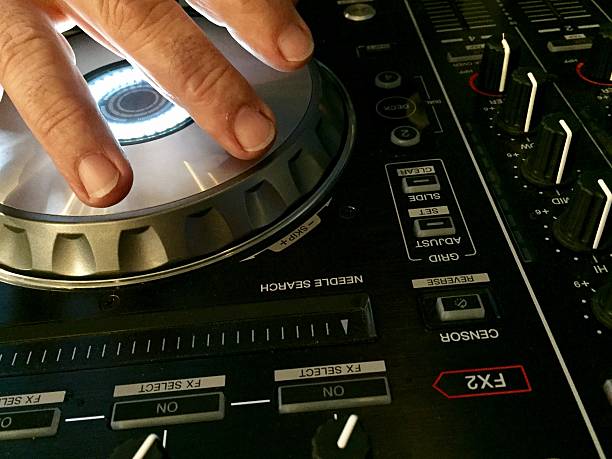
The equipment helps, don’t get it twisted. You need gear that lets you react fast. A solid controller like a Pioneer DDJ-FLX4 or a pair of XDJ-700s is your scaffolding. But the Vibe Architect’s real tools are track selection and sequencing. You can have the most expensive booth setup in the world, but if you play a techno banger after a deep soulful house track without considering the emotional arc, you’ll lose the room. Think of your set as a narrative. It has an introduction, rising action, a climax, a cool-down, and maybe a fake-out ending that brings everyone back for an encore. When you’re starting out, practice this arc with just twenty tracks. Don’t worry about mixing perfectly yet. Worry about the story you’re telling. That’s the Vibe Architect mindset.
Language and terminology matter here too. When you talk to other DJs, drop phrases like “energy mapping” and “harmonic mixing” and “phrase matching,” but never use them to gatekeep. The real Vibe Architect shares knowledge. The scene only grows when we all get better at reading rooms and building vibes. And let’s be real, part of the Vibe Architect role is also about how you present yourself. Your clothing and accessories are part of the architecture. A simple black tee and a cap works if that’s your energy, but if you show up in a full cybergoth getup while playing Balearic chill, you’re sending mixed signals. Your look should match the vibe you’re building, not fight it.
Health and wellness is the dark horse of this role. Traveling between gigs, staying up until 5 AM, and being surrounded by loud crowds and cheap drinks will wreck your mental and physical balance if you don’t respect it. The best Vibe Architects prioritize sleep, hydration, and quiet time. You can’t read a room if your own energy is fried. Take care of the architect so the architecture doesn’t collapse.
As you start your journey, keep the bucket-list clubs in mind. Ibiza’s Amnesia, Berlin’s Berghain, Detroit’s Movement Festival, Tokyo’s WOMB, New York’s Output when it was alive—these are temples of vibe architecture. Study why they work. Study how the crowd moves there. And eventually, go play there. But it all starts with the core vibe check. Understanding that you are not just a button-pusher or a track picker. You are the person who walks into a room, feels the invisible current, and subtly redirects it until everyone loses themselves together. That’s the DJ Life 101. Everything else is just technique. The Vibe Architect is the soul.