Let’s be real for a second. You’ve got the beatmatched transitions down, your cue points are mapped tighter than your AirPods case, and your library is curated like a late-night NYC basement vibe. But something still feels… flat. Like your set is technically correct but emotionally asleep. That’s where iso mode steps in, and honestly? It’s one of the most underrated tools in advanced EQ and filtering. Forget your fancy multiband compressors for a minute. Iso mode isn’t just a technical trick—it’s a storytelling weapon.
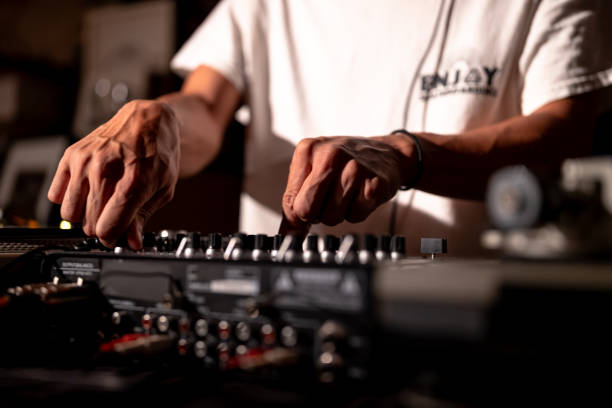
If you’ve ever watched a veteran DJ at a spot like Berghain or a warehouse party in Brooklyn and wondered how they get a room to collectively gasp when the bass drops back in, chances are they’re using iso mode. The concept is simple but the effect is devastating. Iso mode turns each EQ band (typically low, mid, high) into a kill switch. When you take that knob all the way counterclockwise, you aren’t just cutting the frequency—you’re muting it completely. Zero. Silence. That surgical quiet creates space, tension, and a level of drama that a standard EQ filter can’t touch.
Here’s the thing most DJs don’t realize: isolation isn’t about destruction. It’s about anticipation. When you isolate the low end from a track that’s pounding hard, you’re essentially telling the dancefloor, “Hold on, something huge is coming.” That split second of emptiness—when the subs vanish and the crowd feels that vacuum in their chest—is pure psychological manipulation. And we mean that in the best way. Larry Levan understood this instinctually at the Paradise Garage. He would yank the bass out of a track and let the crowd hang there, suspended, before slamming it back in with a kick that felt like a hug from God. That’s the legacy you’re tapping into.
Let’s break down how to actually use iso mode without getting lost in the mix. Start with a track that has a strong, recognizable element—maybe a vocal hook or a synth line that the crowd knows. As you’re approaching a breakdown or a buildup, slowly close the mids or highs using iso mode. Don’t yank them. Let the sound thin out gradually, like a breath being held. Then, right as the tension peaks, drop the bass out entirely. Not a gentle roll-off. A full kill. The room will feel that emptiness, and you’ll see heads turn toward the booth like, “Did he just…?” Hold it for one bar. Maybe two if you’re feeling reckless. Then slam the bass back in, ideally on a downbeat, and let the full track roar back. That’s not just a transition. That’s a moment.
Where iso mode really shines is in the buildup to a drop or a key change. Say you’re mixing from a house track into a more aggressive techno banger. Instead of using a high-pass filter that leaves the mids muddy, use iso mode to kill the low end on the outgoing track while isolating the high frequencies—like a shimmering ghost that fades. Meanwhile, you can bring in the new track with only the low end engaged. You’re basically crossfading frequency ranges, not just volume. The result is a seamless, dramatic handoff that feels intentional and powerful. It’s advanced, but once you train your ear, it becomes second nature.
There’s a trap here, though. Overuse kills the magic. If you’re killing the bass every sixteen bars, the crowd stops reacting because the drama becomes predictable. Iso mode is a spice, not the main course. Use it at peak emotional moments: the end of a long build, right after a breakdown, or when switching energy levels between genres. Think of it like a pause in a speech. Silence is powerful because it’s rare. Same goes for isolation.
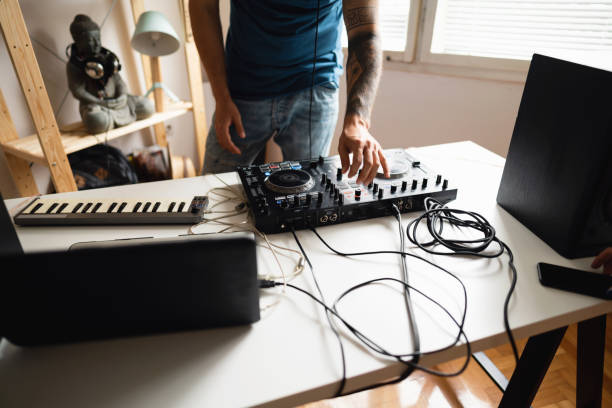
Technically, most modern DJ gear—Pioneer mixers, Denon, even some controllers—has iso mode built into the EQ knobs. Usually it’s a switch labeled “EQ Kill” or “Iso” on the mixer’s trim section. If your hardware doesn’t have it, you can hack it by setting the EQ curve to a steep cut in software, but it won’t feel as clean. For the real heads, analog rotary mixers (like a Bozak or a Rane MP2015) give you that buttery, warm isolation that digital can’t replicate. But don’t let gear envy stop you. The skill is in your hands, not the knobs.
In the end, mastering iso mode is about understanding that sometimes the most dramatic sound is no sound at all. The DJs who get it—from Frankie Knuckles’ Chicago sets to modern minimal wizards like Ben UFO—know that subtraction can hit harder than addition. So next time you’re in a mix, resist the urge to add effects or layer loops. Instead, take something away. Kill the lows. Let the room breathe. Then bring it back like a thunderclap. That’s not just a technique. That’s mastery.