If you’ve ever been in the middle of a set, locked into a groove, and suddenly realized the next track needs to hit right now—not in four bars, not after a slow fade, but instantly—you’ve probably wished for a way to kill the energy without killing the vibe. Enter the vinyl brake. This little trick, borrowed from the analog era, is one of those secret sauce FX moves that separates a decent DJ from a master of the mix. It’s not about technical flash; it’s about emotional control. When you’re moving a crowd from a peak-time techno banger into a deep house comedown, or you want to drop a vocal sample on the one with zero bleed, the vinyl brake gives you that hard stop with style.
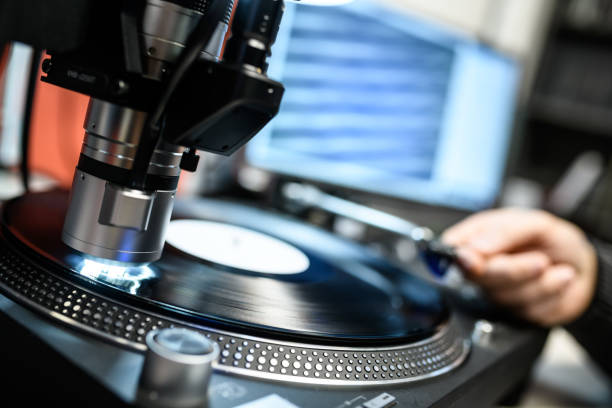
The concept is simple: on a turntable or a controller with platter simulation, you physically slow the record down by pressing your hand on the vinyl or the platter, creating a dramatic pitch descent that sounds like the track is being sucked into a vacuum. It’s a hard brake, not a soft landing. In the digital world, you can emulate this with pitch-bend effects or dedicated “brake” FX on mixers, but the real magic comes from the intention behind it. Think of it as the sonic equivalent of slamming the car into park at a green light—jarring, but if done right, it signals a complete reset for the dancer’s ears.
Where does this fit into “Mastering The Mix”? It’s not about blending two songs seamlessly; it’s about using an effect as a deliberate tool to reshape the energy of your set. The vinyl brake is a punctuation mark. It says, “That was a sentence. Here comes a new one.” When used alongside other FX like reverb throws or delay tails, you can create a moment of silence that lands harder than any drop. Imagine you’re playing a classic house track, the crowd is bouncing, and you want to transition into a completely different BPM or genre. Instead of a beatmatch that feels forced, you let the last kick drum hang, then slam the brake, let the pitch tumble down to silence, and drop the next track on the one. The crowd’s anticipation peaks in that pause. They don’t know what’s coming, but they’re ready for it.
Now, this isn’t a trick you pull every four bars. Secret sauce means using it sparingly. Overusing the vinyl brake makes it predictable, and predictability kills the dancefloor. The DJs who mastered this—think of the legends like Larry Levan at the Paradise Garage, or Frankie Knuckles at the Warehouse—understood that a hard stop was a reset button for the room. They’d use it to transition from a vocal track into a dub version, or to signal a shift in the night’s narrative. Wendy Hunt, another trailblazer who helped shape the early Chicago scene, would often use a manual brake to isolate a snare hit, letting it ring out before pulling the plug. That’s the kind of feel you can’t copy from a YouTube tutorial; you have to develop an ear for when the room needs that jolt.
On the technical side, if you’re using a controller like a Pioneer DDJ or a Denon Prime, look for the “brake” effect in your FX bank, often labeled as “Vinyl Brake” or “Scratch Brake.” You can adjust the time it takes to stop—from a quick 0.5 second halt to a longer, more dramatic deceleration. Pair it with a high-pass filter as the brake engages to create a “whoosh” that sounds like the track is running out of breath. Or, if you want to get really chef-like, use a reverb on the channel before you brake, so the reverb tail continues even after the vinyl stops. That’s the secret sauce: the silence after the brake becomes a canvas for the next element.
But here’s the real sauce: the vinyl brake works best when you’re playing with dynamics. DJs who rely on constant mixing often forget that silence is a weapon. Think of those bucket-list clubs like Berghain in Berlin or Fabric in London—the best sets there aren’t non-stop energy; they breathe. A hard stop at the right moment can make a room go from hands-in-the-air to a deep, waiting hush in one second. That’s mastery. That’s knowing your crowd, your gear, and your emotional palette.
So next time you’re building a set, don’t just think about blending. Think about breaking. Use the vinyl brake like a slap on the table. It’s a statement. It’s the separator between what was and what will be. And when you nail it, the crowd won’t just keep dancing—they’ll feel that you’re in control. That’s the secret sauce. That’s mastering the mix.