Picture this: It’s 2 AM on a Saturday. You’re standing in a massive neon-lit warehouse, bass shaking the floor so hard you can feel it in your chest. The crowd around you is a chaotic blur of glowing avatars—some are giant floating jellyfish, others are cyberpunk samurai, and there’s definitely a guy in a banana suit somewhere. The DJ on stage isn’t at a club in Berlin or Brooklyn. They’re sitting in their bedroom in Ohio, wearing a VR headset, mixing tracks that sound like the future. Welcome to the VRChat underground rave scene—a place where the walls between reality and digital space have melted into a strobe-lit puddle, and the future of DJing is being written right now.
For those who haven’t plunged headfirst into the metaverse, VRChat is a free social platform where you can create, explore, and hang out in user-made worlds. It’s also home to one of the most vibrant and chaotic underground music scenes in existence. We’re talking full-on raves with custom lighting rigs, particle effects that make you feel like you’re inside a music video, and crowds that hit triple digits even on a Tuesday night. The DJs here aren’t just streaming audio—they’re performing in a 3D space where the visual experience is just as important as the beat. And that’s where things get interesting for anyone who cares about where DJing is headed.
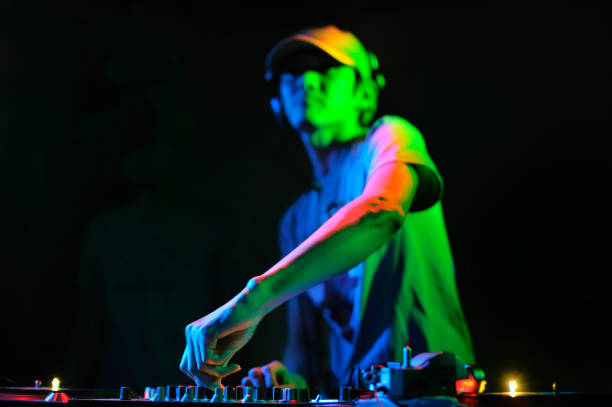
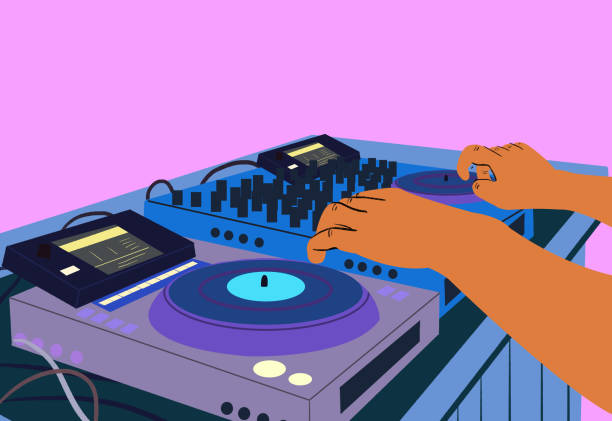
The traditional image of a DJ—headphones around the neck, hunched over a Pioneer CDJ in a dark club—isn’t going away. But the VRChat scene is proving that the future isn’t just about better gear or bigger festivals. It’s about immersion. In this world, DJs control not only the music but the entire environment. They can trigger real-time visual effects, switch between themed worlds mid-set, and even invite the crowd to dance on floating platforms above the dance floor. The barrier between artist and audience is so thin it’s almost nonexistent. You can literally walk up to the DJ booth and wave your avatar’s hands in the air, and they’ll wave back. That connection—unfiltered, digital, and deeply human—is something that traditional club culture has been trying to bottle for decades.
What makes this scene even wilder is how democratized it is. You don’t need thousands of dollars in gear or a record deal to play a VRChat rave. A decent laptop, a gaming headset, and a VR headset (though you can still join on desktop) are all you need. The software side is just as accessible: tools like Virtual DJ, OBS, and VRChat’s built-in world-building tools let anyone build a custom club experience from scratch. We’re seeing a generation of DJs who learned their craft not in a basement with vinyl records, but by experimenting with audio-reactive particle systems and spatial audio in a VR headset. It’s chaotic, it’s messy, and it’s absolutely the most exciting thing to happen to DJ culture since the rise of digital controllers.
Now, you might be thinking: “Okay, cool, but is this really the future? Or just a niche fad?” Look at the numbers. VRChat regularly peaks at tens of thousands of concurrent users. Dedicated rave communities like The Void, Club Infinite, and the legendary Furry Raiders (yes, it’s exactly what it sounds like) have built audiences that rival small real-world clubs. Big-name producers like Deadmau5 and Marshmello have dipped into virtual performances, but the real energy is in the underground. These are DJs who don’t care about Instagram clout or Spotify playlists. They care about creating a moment—a shared experience that transcends physical space.
The future of DJing isn’t about replacing clubs with VR. It’s about adding a new dimension. Imagine playing a set where the crowd can teleport to different rooms you’ve built, each one synced to a different BPM. Imagine layering spatial audio so that different parts of the room hear different elements of your mix. Imagine a festival where you can dance next to someone in Tokyo while the DJ is in São Paulo, and the club itself is a floating castle in a nebula. That’s not science fiction. That’s happening right now in VRChat.
For the DJ community—whether you’re a bedroom beginner or a seasoned vinyl purist—the takeaway is simple: don’t sleep on this. The tools, the culture, and the audience are already here. And while you’re perfecting your beat-matching on a $2,000 controller, some kid in a VR headset is designing a rave inside a black hole. The future of DJing isn’t coming. It’s already playing the drop.