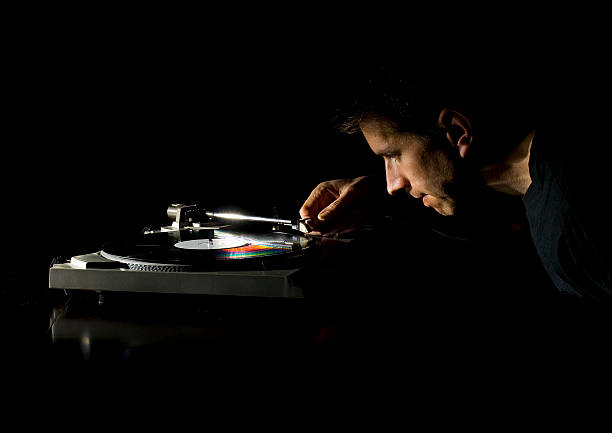
You’re digging through a crate at your local record shop, fingers gliding over dusty sleeves, when your hand stops on something that feels different. No artwork. No tracklist. No label at all. Just a blank white center and a groove-cut promise. That, my friend, is a white label pressing—the most mysterious, sought-after, and frankly, gatekept artifact in DJ culture. If you’re new to the booth or just trying to sound like you belong in the back room at Berghain, you need to understand what a white label actually is, why it matters, and how it earned its spot in the DJ lingo hall of fame.
First off, let’s clear up the mystique. A white label pressing is essentially an unmarked vinyl record, usually released in very small quantities by the artist or label before the official commercial drop. It’s a test pressing, a promo copy, or sometimes just a raw, unfinished cut that the producer wanted to get into the hands of select DJs before anyone else even knew it existed. Back in the golden era of house and techno—think Chicago warehouses and New York lofts with Larry Levan and Frankie Knuckles—white labels were how the underground moved. No hype machine, no press release, no Spotify playlist. Just a DJ holding a piece of plastic that maybe twenty people on the planet had ever heard. That’s power.
For a DJ, owning a white label is like having a secret weapon. You’re not just playing a track; you’re playing the track. The one that hasn’t been rinsed yet. The one that makes people stop dancing, cock their heads, and say, “What the hell is this?” And you can’t tell them. Because you don’t even know exactly what it is half the time. White labels were often anonymous, with no artist name or catalog number. That’s where the “mystery” part kicks in. You’d have to ID the track by ear, by drum pattern, by a muffled vocal sample, or by the small handwritten sticker the distributor slapped on the outer sleeve. It turned every record store visit into a detective mission. You weren’t just shopping; you were hunting.
Fast forward to today, and the white label ethos is still alive, even if the format has evolved. In the streaming era, a white label pressing has become a flex of authenticity. When a producer sends out a handful of unmarked vinyl to their inner circle, it’s a gesture that says, “This is for the heads.” It’s the opposite of algorithmic culture. It’s slow, tactile, and real. And in a world where everyone’s tracklist is public on Shazam, being the DJ who drops a white label on a Funktion-One rig at 3 AM is a statement. You’re part of a lineage that goes back to the pioneers—the Wendy Hunts and Larry Levans who didn’t just play records but used them to build entire sonic landscapes for sweaty, euphoric crowds.
Now, if you’re trying to speak the language on the dancefloor, dropping “white label” into a conversation is a quick way to show you know your history. But use it right. Don’t call every random bootleg a white label. A bootleg is an unauthorized copy made by someone who didn’t have the rights. A white label is an official—or at least sanctioned—pre-release. It’s the difference between a hyped-up leak and a carefully curated secret. And if a DJ hands you a white label and says, “Check this out,” treat it like a sacred object. Don’t record it for SoundCloud. Don’t post the ID on Reddit. Part of the code is that some things stay in the room.
White label pressing mystery isn’t just about vinyl nostalgia. It’s about the thrill of discovery in a culture that’s increasingly digitized and predictable. It’s about the fact that even with all the internet tools at your fingertips, there are still records that exist only in a few hundred copies, known only by a trusted few. It’s the sound of the dancefloor before it becomes the sound of the charts. So next time you see that blank white center spinning on a turntable, lean in. You’re witnessing a piece of living history—and you’re becoming part of it, one groove at a time.