Let’s be real for a second. You’ve seen the memes. The DJ with a laptop and a “sync” button who just appears to press play and wave their hands like a traffic controller. And sure, there’s nothing inherently wrong with using modern tools—nobody’s out here demanding you churn butter before you eat toast. But if you actually want to understand what makes a DJ a DJ, not just a playlist curator with a pulse, you need to wrap your head around beatmatching. It’s the foundational skill, the bread and butter, the “walk before you run” of the craft. Without it, you’re basically a human jukebox. With it, you become a translator between the energy of the crowd and the energy of the music.
So what exactly is beatmatching? At its simplest, it’s the process of adjusting the tempo (measured in BPM, or beats per minute) and phase of one track so that its beats align perfectly with the beats of another track that’s currently playing. That means the kick drums hit at the exact same moment, the snare doesn’t flop around awkwardly, and the rhythmic pocket feels seamless. When you nail it, two separate songs become a single, hypnotic groove that shifts and evolves without any jarring interruptions. When you mess it up, you get that awful “womp-womp-womp” sound where the kicks are chasing each other like two toddlers fighting over a toy. Every DJ has been there. We don’t talk about the early days.
Now, in the pre-digital era, beatmatching was a physical and highly tactile practice. DJs like Frankie Knuckles and Larry Levan weren’t opening Ableton and analyzing waveforms. They had vinyl records, turntables with pitch faders, and a pair of headphones. The process was raw and athletic. You’d listen to the incoming track in your headphones, use the pitch control to speed up or slow down the platter, and then nudge the record with your fingers to adjust the micro-timing. You had to feel the music in your bones, not just see it on a screen. That muscle memory built an intrinsic connection to rhythm that many modern DJs simply don’t have, because they’ve never been forced to develop it.
But here’s the thing: beatmatching is not about being a purist. It’s about having control and understanding the underlying architecture of the music. Even if you rely heavily on sync features or visual waveforms, understanding how to beatmatch manually means you can fix things when technology inevitably glitches. You’re at a gig, the laptop freezes, the SD card corrupts, or you accidentally hit the wrong toggle—and suddenly, you’re left with a track on deck and a dancefloor looking at you expectantly. If you can fall back on your ears and your hands, you save the night. That’s the difference between a professional and a hobbyist who just happens to own a controller.
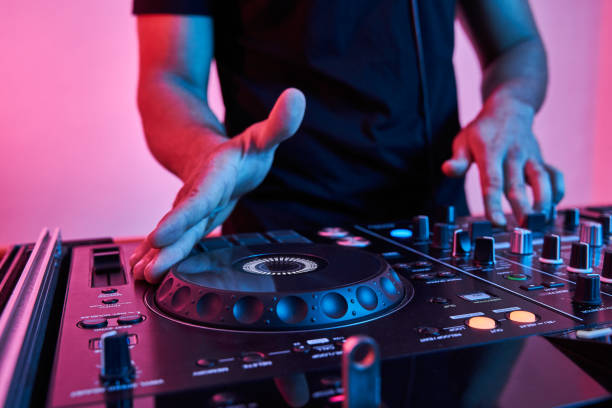
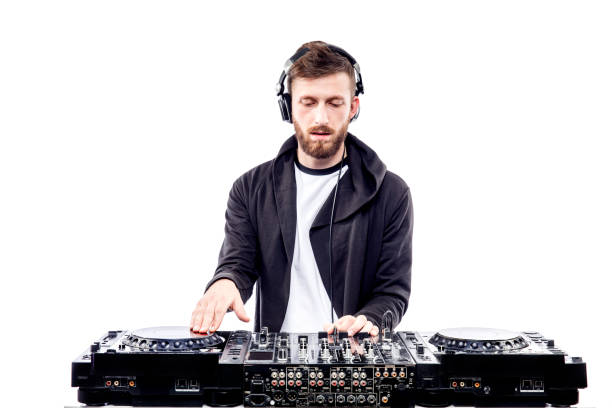
Let’s break down the practical elements. First, you need to identify the downbeat—the “one” of each musical measure. Most electronic dance music operates in phrases of 32 or 64 beats, and the downbeat is your anchor. In your headphones, you’re listening to the incoming track through a cue mix while the main speakers blast out the current track over the crowd. Your goal is to match the tempo first. You adjust the pitch fader until the BPMs are aligned. Then comes the fine-tuning. You might use the jog wheel or the platter to nudge the track forward or backward, making sure the kick drums line up. This process takes practice. Your ears need to develop the ability to hear discrepancies that are just a few milliseconds apart. It’s like tuning a guitar by ear—frustrating at first, but eventually becomes second nature.
Then there’s the art of phrasing. Beatmatching alone isn’t enough. You have to know when to bring the new track in. If you just line up the beats but dump the new track in at a random point, it’ll sound chaotic. You want to introduce it at a phrase boundary—say, when there’s a breakdown or a new section starts in the current track. That way, both tracks are moving through their energy cycles together. This is where creativity and musicality really shine. Beatmatching is the technical foundation, but phrasing is the language you speak on top of that foundation. And you can’t speak if you don’t know how to align your breaths.
Another crucial aspect that often gets overlooked is the mental side. Beatmatching requires intense focus. You’re juggling multiple sensory inputs: what you hear in your headphones, what you hear on the speaker stack, what you see on the waveforms (if you’re using them), and what you feel from the crowd. It’s a sort of flow state, where the outside world melts away and all that exists is the pulse of the music. Many DJs describe it as meditative. You’re not just playing songs; you’re weaving an energy field. And when you land a transition perfectly—when the bass drops and the crowd roars—there’s no feeling quite like it.
Now, a word on sync. The sync button is not evil. It’s a tool. But if you never learn to beatmatch manually, you’re like a chef who only owns a microwave. Sure, you can produce edibles, but you don’t truly understand the ingredients. Learning to beatmatch gives you a deeper respect for tempo, timing, and groove. It also makes you more versatile. For example, not all music is recorded with a strict grid. Old disco tracks, live bands, and certain hip-hop records have subtle tempo drift. Good luck getting sync to handle that cleanly. Manual beatmatching lets you ride the pitch fader and make micro-adjustments on the fly, keeping two imperfect tracks glued together.
So treat beatmatching like the gym workout for your DJ brain. It’s not always glamorous. You’ll spend hours in your bedroom, headphones on, looping a two-bar section just to nail the alignment. But that dedicated practice translates into confidence behind the decks. You stop worrying about the mechanics and start focusing on the vibe, track selection, and crowd engagement. And honestly, the crowd might not know why your transitions feel smoother than a fresh scoop of gelato, but they’ll definitely feel it in their collective groove. They’ll dance harder, stay longer, and remember your set. That’s the real magic of beatmatching—it’s invisible when done right, but utterly jarring when done wrong. So get off the sync crutch, put your headphones on, and start bending those beats to your will. Your ears—and your future dancefloor—will thank you.