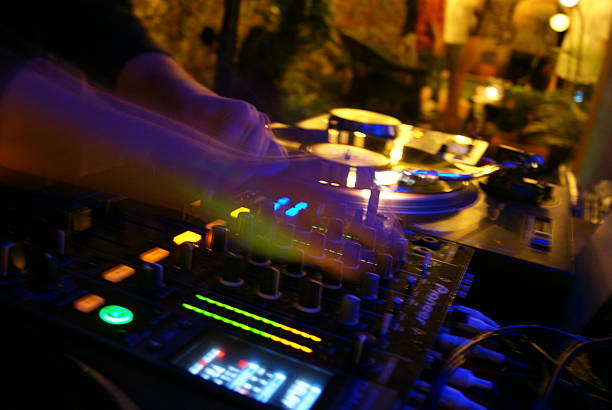
Picture a dark, sweaty room in early ’80s Chicago. The floor is packed, the air is thick with humid energy, and one person is doing something that feels almost alchemical. That person is Frankie Knuckles, but to the crowd at The Warehouse, he’s just “Frankie” – the human heartbeat behind the decks. He wasn’t just playing records; he was stitching together joy, pain, disco, synth funk, and pure raw emotion into a fabric that hadn’t existed before. That fabric became house music, and Knuckles became its House Father. For anyone who’s ever lost themselves in a four-on-the-floor beat, this is the origin story that matters.
Before the world knew the term “house,” Knuckles was already deep in the culture. He grew up in the Bronx during hip-hop’s early crackle, but his soul leaned more toward the smooth waves of Philadelphia soul and European electronic disco. When he moved to Chicago in the late ’70s, he started DJing at a club called The Warehouse – a members-only spot that was mostly Black, mostly gay, and completely free from the mainstream’s judgment. That last point is huge. The Warehouse wasn’t just a club; it was a sanctuary. For the LGBTQ+ community and for Black and brown kids who felt like outliers everywhere else, that dance floor was a place to be unapologetically alive. And Knuckles was the high priest of that sanctuary.
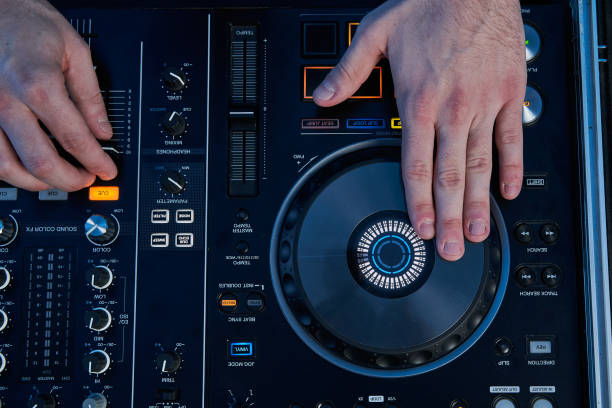
Now, here’s where his genius as a DJ gets seriously underrated. In an era before digital libraries and sync buttons, Knuckles treated the turntable like a musical instrument you had to wrestle with. He’d take a disco track, lengthen its breakdown, loop the percussion, and double up the bassline by literally cutting and splicing reel-to-reel tape. He’d throw a drum machine into the mix – the Roland TR-808, which back then was a geeky piece of plastic, not a legend – to give the groove a harder, hypnotic pulse. He wasn’t afraid to play a track at a slower or faster speed than intended, just to see how the room would react. The result was a sound that felt both familiar and cosmic. Disco had been huge, but after the “Disco Demolition” backlash of 1979, the mainstream had written it off. Knuckles basically rescued those shimmering strings and four-on-the-floor rhythms, boiled them down, and added his own soulful sauce. That slow-cooked mix became the blueprint for early house tracks like “Your Love” and “The Whistle Song.”
Here’s the thing that gets lost when we talk about house music as a genre: Knuckles always insisted that house was never about the records themselves. It was about the room, the people, and the moment. He’d say that the dance floor was a church, and the DJ was just a facilitator. That might sound like hippie talk, but it’s deeply real. When you listen to his legendary sets, you hear him teasing out a vocal snippet for minutes, letting the crowd breathe, then dropping a bass line that feels like a collective exhale. He understood that a DJ’s job isn’t to show off fancy transitions; it’s to take a hundred strangers and turn them into one breathing organism. That’s why he’s called the House Father – not because he invented every sound, but because he created the environment where those sounds could evolve into a culture.
Knuckles’ influence ripples through every corner of modern clubland. Without him, there’s no deep house, no tech house, no that weird subgenre your roommate is obsessed with. When DJs today layer acapellas over rolling drums or let a breakdown stretch into forever, they’re using the same trick Knuckles perfected on his reel-to-reel. And when a festival crowd becomes a sea of unisons during a drop, that’s the ghost of The Warehouse holding the space. He also set the template for the DJ as curator-archivist, digging through crates to unearth forgotten gems and giving them a second life. That’s why his residencies – first at The Warehouse, later at The Power Plant – are legendary, not just for the music but for the community they built.
Let’s be real: the traveling DJ life we chase today – with packed bags, ear fatigue, and that weird hotel smell – started with Knuckles grinding it out in basement clubs with dodgy sound systems. He didn’t have global festival stages. He had a booth, a stack of vinyl, and a crowd that trusted him. That trust is the whole relationship. You feel it every time a DJ reads a room and flips the energy from chill to unhinged. You feel it in the warm, bass-heavy hug of a late-night set. That’s Frankie’s legacy: making the dance floor feel like home even when you’re miles away from your actual home.
So next time you’re lost in a groove, check your pulse. That thump isn’t just the kick drum – it’s the heartbeat of a House Father who proved that a DJ could be more than a record player. He could be a healer, a builder, a parent to a whole community. He made house music feel less like a genre and more like a family name. And we’re all just dancing in his inheritance.