So you’ve decided to dive into the DJ life, but your wallet is currently crying in the corner. Good news: you don’t need a $2,000 battle station to start slamming mixes that make people actually move. In fact, some of the most iconic sets ever played went down on janky, beat-up gear that would make a modern gear snob wince. The bare minimum setup isn’t a handicap—it’s a masterclass in creativity. When you’re working with just a laptop, a cheap controller, and maybe one decent pair of headphones, you’re forced to rely on your ears, your timing, and your library rather than a million fancy features. That’s where the real magic happens.
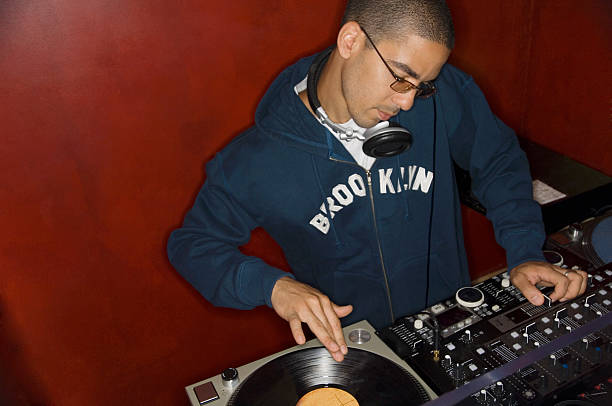
Let’s talk about the actual essentials. Your first controller might be a tiny two-channel wonder with tiny jog wheels and no fancy screens. You might not even have a mixer with dedicated EQs that feel buttery. Who cares? The core skill of DJing is beatmatching—syncing two tracks so they groove as one. And guess what? You can practice that with a couple of MP3s and those tiny jog wheels just as effectively as on a club rig. The secret is to stop relying on the sync button. Yeah, it’s tempting, but manually nudging the platter to keep the drums locked in builds muscle memory and ear training that no plug-in can give you. Use your cue buttons like they’re your best friends. Set a cue at the first beat of the intro, another at the drop, another at a breakdown. Jump between them to preview phrases before you commit to a blend. That’s your early warning system.
Then there’s your music library. With a bare minimum setup, you don’t have 20,000 tracks curated from years of vinyl digging. You’ve got maybe a few hundred songs you actually love. That’s an advantage, not a problem. Knowing every single beat, every bar, every vocal snippet in your library means you can mix with intention instead of just throwing track after track into a blender. You can plan out a whole set based on energy arcs, key changes, and vocal hooks. Don’t chase quantity; chase emotional resonance. A DJ who can make three records feel like a journey beats a DJ who plays forty without making you feel anything.
Let’s get into some techniques that slap harder with limited gear. Phrasing is your ultimate weapon. Most dance tracks are built in 8-bar or 16-bar phrases. If you always start mixing at the beginning of a phrase and start the new track on a phrase that matches the outgoing track, transitions sound clean even without perfect beatmatch precision. Count your bars like a maniac. It’s not lame—it’s the secret language of people who never trainwreck. Another move: use loops. Your cheap controller probably has a loop function. Set a 4-beat loop on a cool percussion section and use it as a tool to stretch out a blend or to build tension before you slam in the next track’s drop. Loops let you fake having two extra decks because you can keep a groove cycling while you fiddle with the next cue point.
And don’t sleep on the gain knob and the trim. With a basic mixer, you won’t have fancy per-band EQs on everything, but you always have volume. Learning to mix by balancing levels instead of just cutting highs and lows is an art form. Push the incoming track’s low end under the outgoing track’s bassline, then swap them at the right moment. That’s called an EQ swap, and it sounds massive when done right. You can also ride the channel faders to create dynamic peaks and valleys, making your set feel alive even without complex effects.
Your headphones are crucial. If you only buy one good piece of gear, make it a reliable pair with a long cable and padding that doesn’t crush your skull. Use them to monitor the cue track in one ear while the crowd hears the master in the other. That’s the old-school way, and it still works. You’ll develop a split-ear awareness that lets you hear when two drum kicks are lined up perfectly. It’s a superpower.
Finally, don’t stress about playing out live right away. Practice in your bedroom with a timer. Record your sets and listen back with a critical ear. Note where you rushed a transition or where you nailed a tease. The bare minimum setup is a gym for your DJ muscles. Every time you overcome a limitation—whether it’s a sticky button or a missing feature—you add a new trick to your box. The clubs will come. The gigs will come. But the foundation you build now, with just the essentials, is what makes you a real DJ rather than a software operator. So turn off the sync, hug your cue button, and let the music teach you the rest.