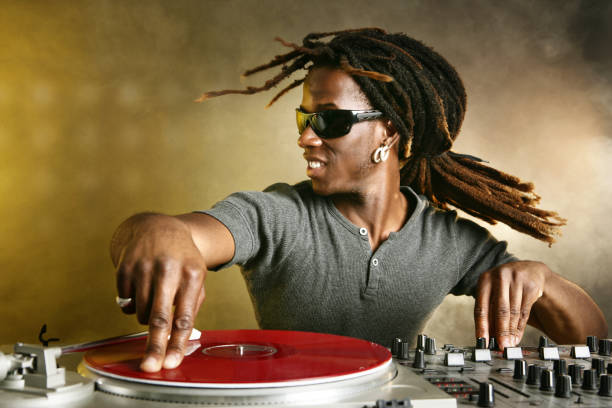
Before festivals had crazy production and DJs were TikTok famous, UK rave culture was built on something way more physical: the sound system. Not just a stack of speakers, but a whole crew, a custom rig, a van full of dubplates, and a reputation that travelled faster than any algorithm. The story starts with Caribbean communities in post-war Britain, where Jamaican sound system culture landed in London, Birmingham, Bristol and beyond. Pioneers like Duke Vin, Count Suckle, and later Lloyd Coxsone and Jah Shaka turned basements, blues parties, and shebeens into sacred spaces. The selector was the DJ, the MC was the host, and the crowd was the algorithm. If a tune got a wheel up, it was going viral IRL.
In the 1970s and 80s, sound system clashes became sport. Saxon Sound, Unity, Channel One, and Jah Shaka Sound System built rigs that could deliver bass weight you felt in your ribcage. Dubplates—exclusive versions of tunes—were the ultimate flex. A clash wasn’t just about who had the biggest stack; it was about who could read the crowd, drop the right dub, and counter the other crew with something unreleased. This culture fed directly into UK reggae, lovers rock, dub, and later jungle. Notting Hill Carnival became the annual showcase, where static systems and mobile rigs turned west London into a free open-air festival of bass.
Then acid house hit. The UK rave scene didn’t just borrow from sound system culture—it turbocharged it. Warehouse parties, M25 orbital raves, and free festivals took the model out of the blues dance and into fields and industrial estates. Crews like Spiral Tribe, DiY, Bedlam, and Circus Warp built mobile rigs that could set up anywhere: a barn, a beach, a motorway bridge. The police hated it. Ravers loved it. The Criminal Justice and Public Order Act 1994 tried to shut it down, but the culture had already mutated. It went into licensed clubs, pirate radio, and eventually the festival circuit. Stations like Kool FM, Rinse FM, and Don FM kept the signal alive, while jungle and drum & bass turned sound system principles into breakbeat science.
What made UK rave sound system culture different was the DIY ethos. You didn’t need a label, a manager, or a fancy venue. You needed a rig, a generator, a stack of records, and a crew who knew how to move fast. The sound itself was designed for impact: scoops, bass bins, mid-tops, and crossovers tuned for chest-rattling low end. Funktion-One and Valve Sound System later became legendary for their clarity and weight, but the blueprint came from Jamaican selectors who understood that bass isn’t just heard—it’s felt. That’s why UK bass music, from dubstep to grime to garage to jungle, still carries that physical pressure. It’s music made for a rig, not just a phone speaker. That’s why a proper rig can make a familiar tune feel brand new, like the bassline is giving you a hug and a punch at the same time.
The culture also had a political edge. Black British communities used sound systems to claim space in a country that often didn’t want them. Free party crews used them to reject licensing laws and commercial gatekeeping. Queer ravers and working-class kids found a temporary autonomous zone on the dancefloor. The sound system was a mobile community centre, a protest, and a party all at once. It said: we’re here, we’re loud, and we’re not asking permission.
Today, you can hear the influence everywhere. Festival stages are built around bass, DJs talk about “reading the crowd,” and dubplates still get wheeled up. But the real ones know the history. It’s in the way a room reacts when the bassline drops. It’s in the rewind. It’s in the clash. It’s in the crew. UK rave sound system culture didn’t just create a genre—it created a whole way of experiencing music together. And if you ever stand in front of a proper rig, feeling your hoodie vibrate and your heartbeat sync up with the kick drum, you’re not just at a party. You’re inside a living history lesson. Keep the bass heavy, respect the selectors, and never forget that the dancefloor is a community. That’s the real rave legacy.