Long before the influencer DJ was livestreaming from a festival mainstage, UK rave culture was built on something way more DIY: sound systems. This is the world of stacked speakers, generator fumes, muddy fields, squat warehouses, and selectors who could read a crowd like a group chat. Its roots go back to the Windrush generation, when Jamaican sound system culture landed in Britain and changed everything. In Jamaica, a sound system wasn’t just a DJ booth. It was a mobile club: huge speaker boxes, a selector picking the tunes, an MC or toaster hyping the crowd, and dubplates—exclusive tracks cut on acetate—used to outgun rival crews. In the UK, that blueprint got mashed up with British nightlife, pirate radio, punk’s DIY energy, and later acid house.
Early UK sound systems like Duke Vin, Count Suckle, Lloyd Coxsone, and Jah Shaka became foundations. They played in blues dances, basements, community halls, and shebeens, often in Black British communities facing racism and police harassment. The music was reggae, dub, ska, lovers rock, and roots. The bass wasn’t just loud; it was physical. You felt it in your chest before you heard the melody. That emphasis on low-end weight became a UK obsession and eventually a global dance music signature.
By the 1980s, London, Bristol, Manchester, and Leeds had their own scenes. Rare groove, soul, funk, hip hop, and electro were in the mix. Then Chicago house and Detroit techno hit. UK DJs and promoters didn’t just copy them; they ran them through the sound system filter. Clubs like Shoom and Spectrum in London and the Hacienda in Manchester are legendary, but the real wildness happened outside licensed venues. Warehouse parties, orbital raves, and free parties popped off. Sound systems like Tonka, DiY, Spiral Tribe, Exodus, Bedlam, Circus Warp, and Desert Storm built massive rigs, loaded them into vans, and set up in fields, squats, and empty industrial units. No corporate sponsors. No VIP areas. Just a generator, a stack, and a crowd ready to lose it.
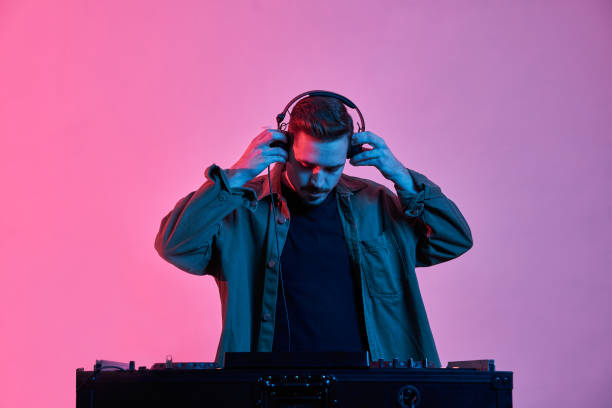
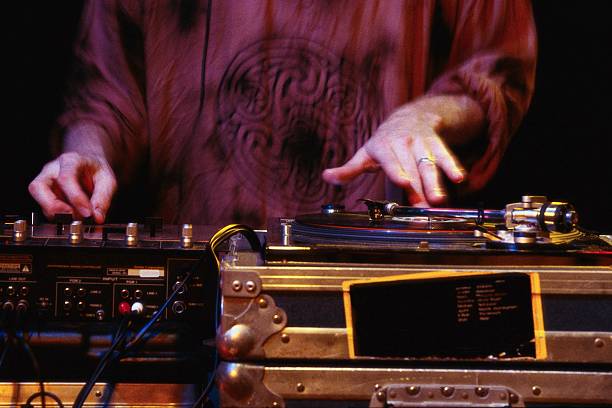
The DJ’s role changed too. In a club, the DJ might be hidden in a booth. At a sound system rave, the selector was part of the architecture. They’d tease a tune, pull it back for a rewind, chat to the crowd, and build energy with dubplates and white labels. MCs rode the rhythm, creating that call-and-response hype that later fed into jungle, garage, and grime. The crowd wasn’t passive. They were part of the rig. If the bass hit right, the whole field moved like one organism.
Of course, the authorities hated it. Free parties were unlicensed, unregulated, and impossible to monetise. The Criminal Justice and Public Order Act 1994 famously targeted raves, with clauses about “repetitive beats” and gatherings of 100 or more people playing amplified music. It was a blatant attempt to criminalise a culture. But you can’t legislate a vibe out of existence. The scene adapted. Some parties went deeper underground. Others moved into licensed clubs, festivals, and warehouse events. Sound system culture also shaped UK dance music’s future: jungle, drum & bass, dubstep, grime, and even modern festival stages owe it a massive debt.
Today, you can still catch that lineage at Notting Hill Carnival, Boomtown, Glastonbury’s Shangri-La, Outlook, Dimensions, and warehouse sessions across the UK. Systems like Channel One, Aba Shanti-I, Iration Steppas, Mungo’s Hi Fi, and Sinai continue to push bass weight. The tools have changed—digital dubplates, CDJs, USB sticks—but the principles remain: community, volume, exclusivity, and a crowd that knows the difference between hearing music and feeling it.
For anyone learning to DJ, UK rave sound system culture is essential homework. It teaches you that beatmatching is only the start. You need taste, timing, and the ability to control a room without a screen. You need to understand bass. You need to respect the roots. It’s proper history you can feel in your chest, not just read about online. And you need to know that some of the most important DJ pioneers weren’t on magazine covers. They were in fields at 4 a.m., behind a wall of speakers, making a whole crowd forget their phone for a minute. That’s the real ultimate guide energy.