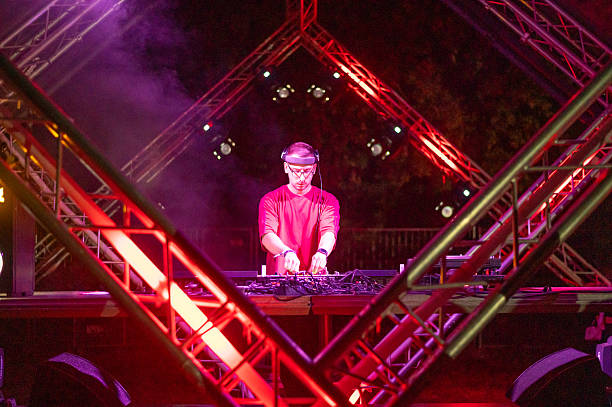
If you’ve ever been cooked by a DJ at 4 a.m., crying on the dancefloor while a vocal loops, you’re living in Larry Levan’s afterglow. From 1977 to 1987, Levan was the resident DJ at Paradise Garage, a members-only club at 84 King Street in SoHo, New York. It wasn’t just a club. It was a church for people who didn’t feel safe in churches, a place where Black, Latinx, queer, straight, and everyday New Yorkers came together to sweat and transcend. And Levan wasn’t just playing records. He was building a world.
The Garage had no alcohol license, which meant the night wasn’t about getting messy. It was about dancing. The sound system, designed by Richard Long, was legendary—clear, warm, and bone-vibrating. The dancefloor was the main character. Levan treated the booth like an instrument: he rode the EQ, added reverb, layered percussion, and used tape edits and dubplates to bend songs into new shapes. He could take a disco anthem, strip it down to a heartbeat, then build it back up until the room lost its mind. That’s the origin story of the modern DJ set as a journey, not a playlist.
Genre wasn’t a box for Levan. He moved through disco, soul, funk, gospel, R&B, new wave, post-punk, reggae, and early house. If a record had feeling, he could make it fit. He broke tracks that became classics, and he created exclusives that made the Garage feel like a secret language. This is why people call him a pioneer of garage house and a major influence on Frankie Knuckles, Chicago house, and every DJ who thinks of themselves as a curator rather than a jukebox. The technical stuff matters—beatmatching, phrasing, blending, effects—but Levan’s real skill was emotional engineering. He read the room like a group chat, knowing when to peak, when to pull back, when to play something weird, when to give the crowd what they didn’t know they needed.
That’s what many beginner DJs miss. You can buy the best controller, memorize harmonic mixing, and still play a set with zero soul. Levan understood that the dancefloor is a living thing. People come to release grief, celebrate joy, forget their rent, and remember their power. For marginalized communities, the Garage was sanctuary. Dancing all night wasn’t escapism; it was survival and joy in the same breath. The DJ’s job was to hold space. That’s why modern DJs talk about “reading the room” and “taking people on a trip.” It’s not just about the drop. It’s about trust.
The Garage also proved that nightlife doesn’t need alcohol to be transcendent. A sober dancefloor can be more intimate, more focused, more free. That hits different now, when conversations about mental health, burnout, and wellness in the DJ world are finally happening. Levan’s own story is complicated. He struggled with addiction and health issues, and he died in 1992 at just 38. His genius came with a cost, and we shouldn’t romanticize the tortured-artist myth. The same community that loved him also worried about him. Modern DJs can honor his legacy by building sustainable careers, protecting their bodies, and remembering the person behind the decks needs care too.
When Paradise Garage closed in 1987, it left a hole in NYC nightlife. But its DNA is everywhere: in Berlin techno basements, Brooklyn warehouse raves, queer parties, festival main stages, and the countless Boiler Room sets where a DJ closes their eyes and the crowd follows. Every time a selector takes a risk, plays a track that shouldn’t work but does, or lets a vocal hang in the air before the beat crashes back in, that’s Levan’s influence. He showed us a DJ can be an artist, therapist, historian, and host all at once.
So if you’re getting into DJing, don’t just practice your transitions. Study Larry Levan. Find recordings, read about the Garage, talk to older heads. Learn to feel the room. Learn to tell a story. Your gear matters, but your empathy matters more. The best set isn’t the one with the cleanest mixes; it’s the one where people leave changed. That’s the real blueprint. Not just mixing, but meaning.