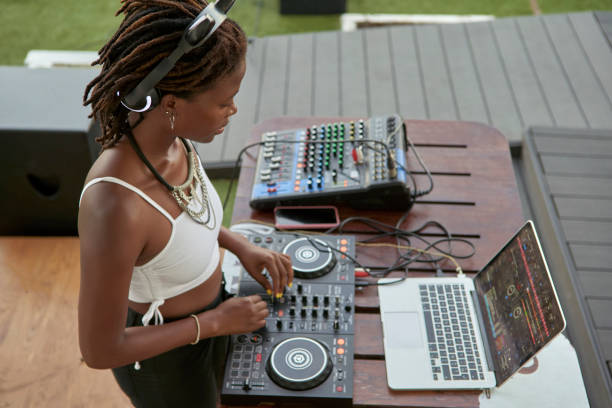
Let’s talk media players. If you’ve been DJing off a laptop with a controller, you already know the vibe. It’s cozy. Your waveforms are right there, your playlists are organized, and your software does half the thinking. But once you step into a club booth, festival stage, or an after-hours spot with a proper setup, you might meet the CDJ-shaped elephant in the room. Standalone media players are not just fancy USB decks. They’re a whole different workflow, and learning them is like leveling up your DJing IRL.
What counts as a media player? Basically hardware that plays digital files without a laptop. Think Pioneer CDJ-3000, Denon DJ SC6000, older CDJ-2000NXS2, and all-in-one units like the Opus Quad or Prime 4+. You load tunes from USB, SD, or even streaming services on some models, then use the screen and platters to mix. No laptop, no dongle anxiety, no “my update broke Serato 20 minutes before my set” meltdown. That freedom hits different when you’re traveling, playing back-to-back, or dealing with a club booth that looks like a spaceship.
The biggest shift is library prep. With a laptop, you can wing it. With media players, you have to export properly. Rekordbox is the club standard for Pioneer gear, Engine DJ for Denon, and some DJs use Serato or Traktor then export. You need your beatgrids locked, hot cues labeled, memory cues set, and playlists organized like your life depends on it. Because in the booth, scrolling through 10,000 unsorted tracks at 1 a.m. is not the move. Make crates for warmup, peak time, vocals, tools, closers, and emergency bangers. Name your USBs. Bring two. Actually, bring three. One is none, two is one, and three is peace of mind.
Then there’s the feel. Standalone players force you to rely on your ears and your preparation. The waveform is there, but it’s not as zoomed-in or customizable as a laptop. You can’t just stare at a screen and call it mixing. You learn to ride the pitch, nudge the platter, and trust your phrasing. Sync exists, and yes, use it if it serves the set, but knowing how to beatmatch manually is still a superpower. When the gear glitches, when the grid is off, when you’re playing a weird edit from Bandcamp, your ears save you. That’s the real media player deep dive.
Standalone gear also changes your relationship with requests and spontaneity. If a track isn’t analyzed or exported, it might not show up. Some players support streaming, but club Wi-Fi is often trash, so don’t bet your set on it. The pros bring a curated USB that reflects their sound, plus a few curveballs. You might have a folder called “if the crowd is mid” and another called “if the crowd is feral.” That’s normal. The media player rewards DJs who think ahead, but it also opens up performance features like three-band waveforms, stacked waveforms on some units, touch strips, and onboard effects. You can get surgical with loops, roll effects, and cue juggling without opening a laptop.
Hybrid setups are also huge now. You can run Serato or Traktor with CDJs in HID mode, use a standalone player as a controller, or go full laptop-free with an all-in-one. The best setup is the one that matches your brain and your gigs. If you’re mostly playing house parties, a controller is fine. If you’re aiming for clubs, festivals, or touring, learn standalone players. Rent a studio hour. Borrow a friend’s CDJs. Watch booth tutorials. Practice exporting and playing only from USB for a week. You’ll feel clumsy at first, then something clicks. Your sets become more intentional, your transitions get cleaner, and you stop relying on visual crutches.
There’s also the mental side of media players. When you can’t see every BPM, key, and waveform detail at a glance, you have to trust your library and your instincts. That can feel scary if you’re used to laptop DJing. But it also makes you present. You listen to the room. You feel the energy. You make decisions based on the crowd instead of the screen. That’s a huge part of growing as a DJ. The gear doesn’t make you elite, but it can push you into a more confident, prepared version of yourself.
At the end of the day, media players are not about being “more legit” than laptop DJs. They’re just another tool. But they’re the tool you’ll meet in a lot of professional rooms. Knowing them means you can walk into any booth, plug in, and handle business. That confidence is priceless. So treat your USB like your passport, your library like your wardrobe, and your ears like your main character energy. Standalone media players don’t make you a better DJ by themselves, but they force you to build habits that do.