Let’s be real for a second. You’ve spent thousands on a mixer, you’ve curated the perfect crate for your next set at [Insert Bucket-List Club Here], and your headphones are so crisp they could cut glass. But if your wrists are singing the blues after forty-five minutes of beatmatching, none of that gear matters. Wrist pain is the silent career-ender for DJs, more insidious than a blown tweeter. The fix isn’t about buying more expensive gear—it’s about understanding angles. Specifically, the angles between your hands, your controller, and the rest of your setup. This is where we talk about essential equipment that doesn’t just look cool on Instagram but actually keeps your radial tunnel from screaming.
First, let’s talk about the elephant in the booth: your desk height. Most DJs are working on tables that were designed for someone typing emails, not riding a crossfader for four hours. The problem is that standard desks (usually 29 inches high) force you to either hunch your shoulders or flare your elbows out like a chicken. Neither feels good after the third hour of a deep house set. The essential gear here is a height-adjustable DJ stand or a laptop stand that elevates your controller. You want your forearms to be parallel to the floor. Not tilted up, not sloping down. That 90-degree angle at your elbow is your best friend. When your forearm is straight out and your wrist is neutral (not bent up or down), you eliminate the compressive force on the median nerve. Brands like Odyssey or Gator make portable stands that fold flat for travel but give you that critical lift. If you’re a booth warrior at a club, bring a small block of wood or a foldable riser. Your wrists will thank you when you’re hitting the afterparty instead of the urgent care.
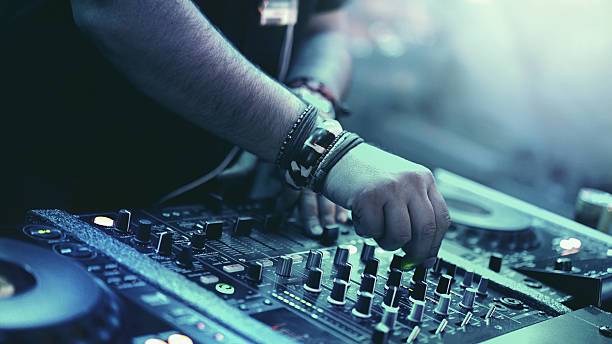
Now, let’s get micro. The angle of your controller itself. You might think a flat, horizontal surface is the most natural, but it’s actually a trap. When a controller lies flat on a table, you have to pronate your palms (turn them floor-ward) to hit the pads. That twisting motion compresses the carpal tunnel. The fix is a simple wedge—a controller stand that tilts the gear toward you at about 15 to 20 degrees. This is the key to unlocking effortless scratching and smooth fader work. A tilted surface means your wrists stay in a handshake position, not a “don’t shoot” position. Look for gear like the Traktor Kontrol X1 stand or a generic tablet stand that can hold your mixers. Even tilting your laptop screen can help, because craning your neck down creates a chain reaction that tightens your traps and pulls your shoulders forward, which in turn torques your wrists. It’s all connected. The angle of your screen, the angle of your mixer, the angle of your body—it’s a system.
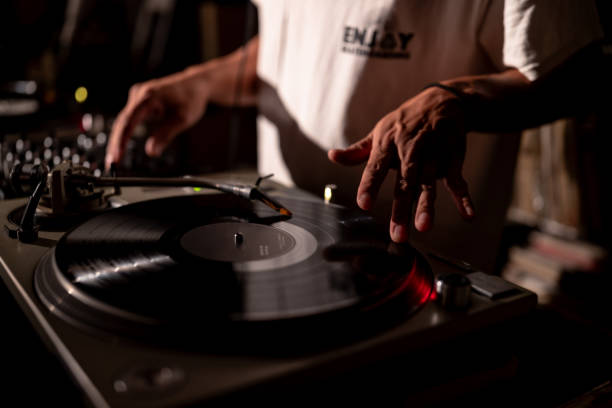
Don’t sleep on the mouse or the jogwheel either. A lot of heavy mixing now happens on software, which means you’re clicking, dragging, and scrolling. A standard mouse forces your wrist into a deviated position (bent toward your pinky finger). The essential equipment here is a vertical mouse. It looks weird. It feels weird for about three days. Then you’ll never go back. A vertical mouse keeps your wrist in that neutral handshake alignment, which is critical for the thousands of micro-adjustments you make when organizing playlists or tweaking FX sends. Similarly, for jogwheels, make sure the platter height matches your grip. If you’re constantly curling your fingers downward to touch the vinyl, you’re overloading the flexor tendons. Some controllers let you adjust platter height; use that. If not, rest your arm on the edge of the mixer and let your fingers meet the platter naturally, not by reaching.
Finally, the angle of the armrest. This is the most overlooked piece of essential gear. A standard DJ booth has no arm support. Your arms are dangling from your shoulders, which means your shoulder muscles have to contract just to keep your arms from falling. That fatigue travels down to your wrists. The solution is a solid armrest or even a padded wrist rest that sits at the edge of the controller. But here’s the nuance: the armrest must be the same height as the controller surface. If it’s too high, you’ll pinch your shoulders. Too low, and you’ll curl your wrists. Brands like Glorious PC Gaming or Fellowes make memory foam wrist pads that are low-profile enough for DJ use. Place it right at the base of your mixer so your palms hover, not press.
Remember the legends like Frankie Knuckles and Larry Levan? They played on massive, angled turntables with heavy tonearms and had to fight the gear. Their wrists were forged in fire. You don’t have to suffer. You just have to buy smart. The angle of your setup isn’t just about comfort—it’s about longevity. A decade from now, you still want to be able to rock a twenty-minute blend without icing your hands afterward. So tilt your gear, level your forearms, and let the equipment do the heavy lifting. Your future self, headlining at one of those bucket-list clubs in Ibiza, will send you a thank-you note.