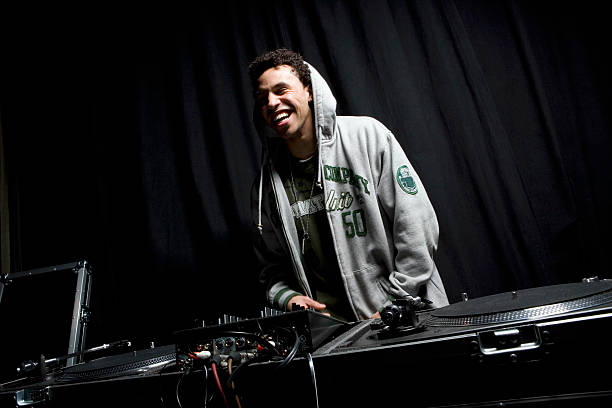
You know that moment when the dancefloor is locked in, heads nodding, energy building like pressure behind a dam, and then the drop hits and the whole room detonates? That tension isn’t magic. It’s physics. And the tool that creates it is the resonant filter sweep — the most underrated, over-juiced, game-changing trick in your DJ arsenal if you know how to wield it right. Forget just twisting the knob like a maniac. We’re talking surgical precision, emotional storytelling, and the kind of frequency manipulation that makes your set feel less like a playlist and more like a living, breathing organism.
Let’s break it down from the top. A filter, at its core, chops frequencies. Low-pass lets the rumble through and kills the sparkle. High-pass does the opposite, turning your track into a thin, eerie ghost of itself. But when you crank the resonance — or Q — you’re not just cutting. You’re boosting a narrow band right around the cutoff point. That’s where the magic happens. Suddenly the sweep becomes a vocal, a scream, a laser beam, a giant inhale that pulls the crowd’s ears directly into your hands. The resonance turns a boring slope into a catchy, whistling presence that can either serenade or shred, depending on how bold you feel.
So how do you actually use this in a live context without melting the speakers? First, stop treating your filter knob as an on/off button. It’s a scalpel, not a chainsaw. The true pros start with a gentle high-pass filter on the incoming track, slowly raising the cutoff frequency to strip away the low end before the mix. But do it in stages. Give the floor a hint — a subtle drop in warmth, a slight thinning of the bassline — then bring it back. That teases the ear. Then, at the peak of a phrase, yank that cutoff way up. Let the resonance bloom like a flower made of pure electricity. Hold it for a bar or two. The crowd feels the absence, the hollow void where the bass should be. And when you finally drop the filter wide open, the original low end smashes back in with twice the weight because the brain just registered how much it missed it.
The real pro move, though, is the sweeping transition. Let’s say you’re playing dark, hypnotic techno and want to move into a vocal-heavy house banger. Instead of just crossfading, set your DJM’s filter to a band-pass mode — a narrow peak that lets only a thin slice of the spectrum through. Then, slowly sweep that band from the lows to the mids. As the resonance hums, the crowd hears a rhythmic “wub-wub-wub” that morphs into the recognizable melody of the next track. You’re not mixing tracks anymore. You’re sculpting expectation, turning the old song into a kind of parenthetical comment before the new narrative begins. That’s not just a transition. That’s a thesis statement.
Here’s a trick I picked up from watching veteran selectors on old-school rotary mixers: use the resonance to create a false drop. You sweep the filter up on the current track, letting the resonance ring out like a feedback-laden howl. The floor leans in, expecting the beat to slam. But instead, you cut the filter completely — silence for one eighth note — and then re-engage it with the new track already in place, at full volume. The result is a gutteral “whoooomph” that feels like the sound itself has punched through a wall. It’s not about the filter alone. It’s about the discipline to pull back at the exact moment of maximum anticipation.
And don’t sleep on the LFO. Many modern DJ mixers and software allow you to modulate filter cutoff with a low-frequency oscillator. Set that LFO to a quarter-note rate, add a touch of resonance, and suddenly your filter sweep turns into a rhythmic, pulsing gurgle that syncs with the drums. It’s like having a robotic DJ partner inside your mixer. Use it on a long breakdown to keep the energy bouncing without adding more percussion. The crowd will think you’ve layered in a secondary synth line, but it’s just your filter cha-cha-ing with the groove.
Know the pitfalls, though. Resonance that’s too high can cause feedback, especially on a loud system. It can also muddy your mix if you’re not paying attention to what the other track is doing. Always babysit your levels — a peak filter is a volume dog. And for the love of all that is holy, don’t sweep the same direction every time. Mix it up. Sweep up for anticipation, sweep down for relief, use a slow sweep for dread, and a fast zip for surprise. Your filter is a conversationalist, not a screaming monkey. Treat it with respect and it will give you the most jaw-dropping moments of your set.
So next time you reach for that knob, don’t just wiggle it. Think of the entire frequency spectrum as a crowd that you’re guiding through a haunted house. Resonance is the flash of lightning that reveals the monster in the corner. Use it sparingly, use it boldly, and watch the dancefloor become your willing puppet.