Every DJ set starts before the first tune. You walk in, clock the room, and let the energy tell you what’s up. That’s the core vibe check, and it’s less mystical than it sounds. It’s just paying attention. Who’s here? What are they wearing? Are they sipping cocktails at the bar, two-stepping near the speakers, or standing in a group chat huddle? Is it 9 p.m. and people are still pre-gaming, or 1 a.m. and the floor is sweaty and locked in? Your first job isn’t to drop bangers. It’s to match the moment, then gently push it forward.
The opening set is not the main character. It’s the side quest that sets up the whole night. If you start with peak-time techno when the room is half empty and people are still finding their friends, you’ll clear the floor before you’ve even warmed up. Instead, start where they are. Maybe that’s slow disco, mellow house, familiar R&B edits, or some low-key amapiano. Give people something to nod to while they order drinks and settle in. You’re building trust. Once they trust you, they’ll follow you somewhere weirder.
Read the floor like a group chat. Are heads bopping? Feet moving? Hands up? Phones out? Careful: phones out can mean recording a slapper, but it can also mean people are scrolling because the vibe is mid. Watch the bar line. If it’s long, you might be too intense too early. If the dancefloor is packed but nobody’s moving, maybe the groove is too stiff. If people are singing every word to a throwback, you’ve found a lane. Use that energy, then transition. A good DJ doesn’t just play songs; they shape a conversation. You say something with one track, the crowd answers with their bodies, and you respond.
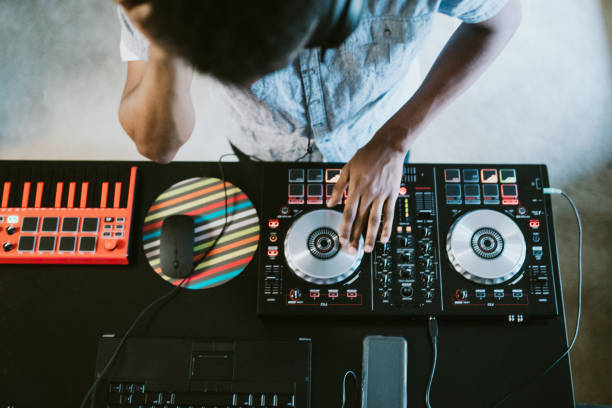
Your tools help, but they don’t do the vibe check for you. BPM, key, cue points, hot cues, EQ, and loops are all useful, but they’re just grammar. The story is the room. Learn to mix cleanly, sure, but also learn when not to mix. Sometimes a quick cut, a rewind, or letting a track breathe is the right move. Sometimes you need to pull the energy down before you take it up. That tension is chef’s kiss. Think of Larry Levan at the Paradise Garage or Frankie Knuckles at the Warehouse: they weren’t just playing records, they were reading the crowd’s mood and taking them on a journey. That legacy is the blueprint.
Requests are data, not demands. If someone asks for a song that fits, cool, read the room and maybe slide it in. If it’s completely off-vibe, don’t panic. You can smile, say “I’ll see what I can do,” and keep it moving. The crowd is not a monolith. A room can have ravers, birthday girls, date-night couples, and someone’s uncle who wandered in. Your job is to find the common thread. Maybe it’s nostalgia. Maybe it’s bass. Maybe it’s a cheeky pop edit that makes everyone lose their cool. The vibe check is ongoing, not a one-time scan. Every transition is a new question.
Don’t take an empty floor personally. Sometimes the room needs time. Sometimes the sound system is harsh. Sometimes the promoter put you on too early. Adjust. Walk the edge of the dancefloor, listen to how the music hits in different spots, and check your booth monitors. If people are talking loudly over the intro, they’re not feeling it yet. If they lean in when the bass drops, you’re onto something. Your mental health matters here too. A quiet room is not a referendum on your worth. It’s feedback. Reset, breathe, and try another angle.
The core vibe check is really about humility and intuition. You’re not there to force your playlist on people. You’re there to guide them, surprise them, and make the night feel like it couldn’t have happened any other way. Start curious. Stay flexible. Watch the room, feel the room, then play the room. When you get it right, the dancefloor becomes a little universe, and everyone in it is on the same wavelength. That’s the real magic trick, no cap.