Real talk: the search for the holy grail headphones is basically the DJ version of trying to find the perfect pair of jeans. Everyone swears by their pair, the internet is a battlefield of hot takes, and what works in a quiet bedroom studio can absolutely betray you the second you step into a sweaty basement club with a Funktion-One rig rattling your organs. The holy grail isn’t a single model. It’s a moving target that depends on your budget, your ears, and your mixing style.
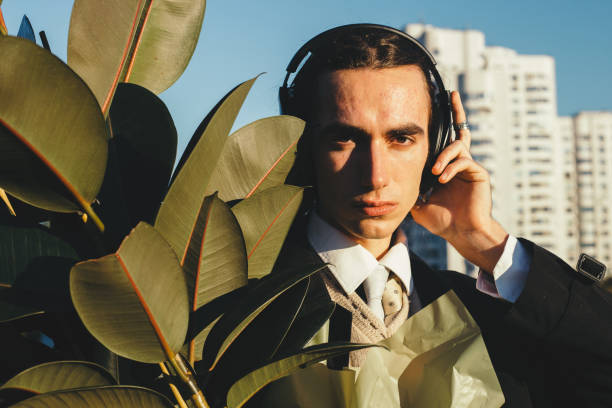
For DJs, headphones are not just for listening. They’re a tool for cueing, beatmatching, and reading a room when the monitor wedge is trash. You need to hear the next track clearly while the current track is blasting through the mains. That means isolation is the first vibe check. Closed-back cans with a tight seal keep the booth’s low-end from steamrolling your cue signal. If your headphones leak too much, you’ll crank the volume, and that’s how you end up with tinnitus before you’ve even played your first festival. The holy grail pair should let you hear the kick, snare, hi-hats, and vocal hooks of the incoming track without fighting the PA.
Then there’s impedance and sensitivity. This is where a lot of new DJs get cooked. High-impedance headphones, like 250 ohms and up, often need a headphone amp to sound their best. Low-impedance cans, usually 16 to 80 ohms, are easier to drive and get loud enough from a phone, mixer, or controller. Sensitivity matters too. A high-sensitivity pair can hit proper volume without distortion. The holy grail for club DJs usually lands in that easy-to-drive zone, because you don’t want to be mid-set praying your mixer has enough gain.
Sound signature is another rabbit hole. Some DJs want flat and analytical, so they can hear exactly what’s happening in the mix. Others want a little extra bass to feel the groove and lock in the low-end. Neither is wrong. The key is consistency. If your headphones hype the bass, you might pull down the low EQ on the master and wonder why the dancefloor feels empty. If they’re too bright, you might overcorrect and make the mix muddy. The holy grail pair gives you a reliable translation between the booth and the floor. You should know how your cans lie to you, because every pair lies a little.
Build quality is where the real ones separate from the mid. DJ headphones get dropped, shoved in bags, yanked off heads, and baptized in sweat and spilled drinks. The best pairs have replaceable cables, swiveling ear cups, and sturdy headbands. A detachable cable is not bougie; it’s survival. If your cable dies during a set, you can swap it and keep it moving. Swiveling cups let you do the classic one-ear monitor thing without bending your neck like a pretzel. Memory foam pads and lightweight clamping force matter more than aesthetic, because if your ears hurt after an hour, you’ll be distracted and sloppy.
The usual suspects come up for a reason. Sennheiser HD 25s are legendary for their isolation, lightweight build, and tank-like durability. Pioneer HDJ-X10s are a club standard with big bass and swivel cups. V-MODA Crossfade M-100s bring custom shields and rugged hinges. AIAIAI TMA-2s are modular, so you can swap parts instead of buying a whole new pair. Sony MDR-7506s are affordable, foldable, and trusted in studios and booths. Audio-Technica ATH-M50x and Beyerdynamic DT 240 Pro also show up in the conversation. But the holy grail isn’t the most expensive pair. It’s the pair that fits your head, your mixer, your genre, and your risk tolerance for hearing damage.
Honestly, the biggest glow-up is learning how to use them. Keep your cue volume as low as possible. Use split cue or cue/master blend to save your ears. Take breaks when you can. Don’t rawdog a five-hour set at max volume. The holy grail headphones are the ones that help you mix clean, protect your hearing, and still look like you’re not stressed. That’s the real flex. Because at the end of the night, nobody remembers the model number. They remember whether you read the room and kept the floor moving.