Let’s be real for a second. You’ve spent hours, maybe years, perfecting your beat matching, your transitions are buttery, your track selection is straight fire. But then you sit down to practice in your bedroom or home studio, and within forty-five minutes your neck feels like it’s been through a car wreck, your wrists are screaming, and your lower back has officially filed a complaint. That, my friend, is the hidden curse of the craft. Nobody talks about the physical toll of being hunched over a mixer and two CDJs like a goblin guarding treasure. But the best DJs know that your desk isn’t just a piece of furniture—it’s part of your instrument. And if you don’t respect the ergonomics game, your career will literally start to hurt.
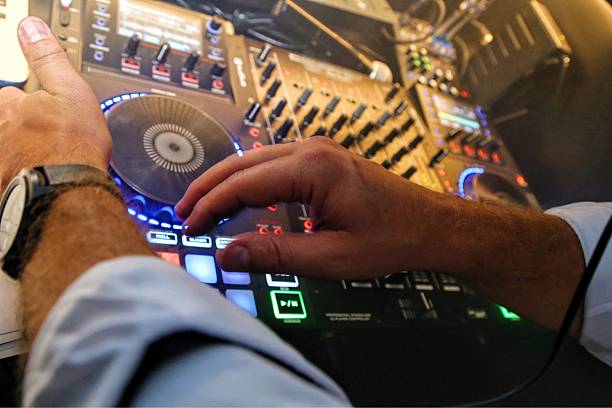
First things first, let’s talk about height. The golden rule of any killer DJ desk is that your elbows should sit at a comfortable 90-degree angle when your hands are on the mixer or jog wheels. If your desk is too high, you’ll be shrugging your shoulders like you’re trying to hear a secret, which leads to gnarly tension in your traps and neck. If it’s too low, you’ll be slouching forward, which compresses your discs and gives you that hunchback look that’s definitely not a vibe. Ideally, your forearms should rest parallel to the floor, and your wrists should be neutral, not bent up or down. A lot of DJs think they can just throw a couple of books under their gear to fix the height, but that’s temporary hacks at best. Invest in a proper adjustable desk, or at least a sturdy laptop stand that lifts your controller or mixer to eye level. When your gear is sitting flat on a regular desk, you’re basically begging for carpal tunnel syndrome. Your wrists are angled up, your fingers are doing micro-strains, and before you know it, your hand skills start feeling off, which is a nightmare when you’re trying to do precise cuts or filter sweeps.
Now, let’s talk about your screen. If you’re mixing on a controller with a laptop, your laptop screen is your window into the software world—your waveforms, your loops, your cues. But if that screen is sitting down at desk level, you’re constantly looking down, which is the number one way to wreck your cervical spine. The fix is simple: get a laptop riser or a monitor arm that brings your display up so the top of the screen is at or slightly below eye level. You should be looking straight ahead, not angling your head down like you’re reading a menu on the floor. This one change alone will transform your stamina during those three-hour practice sessions. And if you’re using standalone gear with a mixer and CDJs, consider placing a small laptop or tablet off to the side on a portable stand, just for track browsing or setting up hot cues. The goal is to keep your posture tall and open, like you’re commanding the room, not like you’re hiding under a desk.
Speaking of gear, don’t sleep on cable management. This is more than just aesthetics—it’s safety and sanity. Cables everywhere mean you’re constantly twisting and bending in weird ways to reach around them. You might be stepping over a messy nest of USB and power cables just to hit a kill switch, which throws off your flow and can lead to awkward habits. Use cable ties, velcro straps, or a simple under-desk tray to tuck everything away. Not only does a clean desk look mad professional, but it also frees up your body to move naturally. You’ll be able to swap between decks, reach for effects, and vibe out without any physical obstacles. And that’s crucial because DJing isn’t just about your hands—it’s about your whole body movement. When you’re feeling the music and throwing your hands up, the last thing you need is to trip over a random XLR cable.
But your desk setup isn’t just about the hardware. You also need to think about your chair. We’ve all seen those DJs who use a cheap folding chair or an old stool from their grandma’s kitchen—absolute madness. Your chair is arguably the most important piece of the ergonomics puzzle. Look for something with lumbar support and adjustable armrests, ideally armrests that you can lower out of the way when you’re mixing. If the armrests are too high, they’ll prop your arms up and create a weird, elevated shoulder position that feels horrible. Even better, get a chair that lets you recline slightly, so you can lean back during those chill moments. But remember, posture is active, not passive. You can have the sickest ergonomic chair on the planet, and you’ll still wreck yourself if you’re slumped forward like a wet noodle. So sit up, roll your shoulders back, and keep your feet flat on the floor. If your feet don’t touch, grab a footrest. That’s not a bougie extra—it’s a game changer for blood flow.
Another underrated aspect is lighting. Yes, lighting is ergonomics too. If your desk area is too dark, you’re squinting to see your waveforms, which makes you lean in closer, which murders your spine. Get a decent LED lamp with a warm or adjustable color temperature, and position it behind your gear or at a 45-degree angle so it doesn’t cause glare on your screen. Dimly lit rooms are dope for a late-night practice vibe, but you need enough light to function. Think about how many times you’ve missed a cue because you couldn’t see a tiny knob. That’s not just a equipment issue—that’s an ergonomic failure of vision and posture.
Finally, let’s talk about the difference between your home desk and a club booth. At the club, you don’t always get to control the setup. Some booths are cramped, some are elevated awkwardly, some have monitors placed horribly. That’s why your home ergonomics game is so important—it builds the muscle memory and awareness you need to adapt. If you practice in perfect posture, you’ll be better at adjusting on the fly. You’ll know exactly how to position your back, where to place your laptop, and when to ask for a riser or a stool. Because here’s the truth: the DJ career is a long game. You’re not just playing tonight’s crowd—you’re protecting your body for decades of gigs. A tweaked wrist or a pinched nerve can take you out of commission for weeks, and that’s a career killer. So level up your desk, fix your posture, and let your back breathe while your tracks slap.