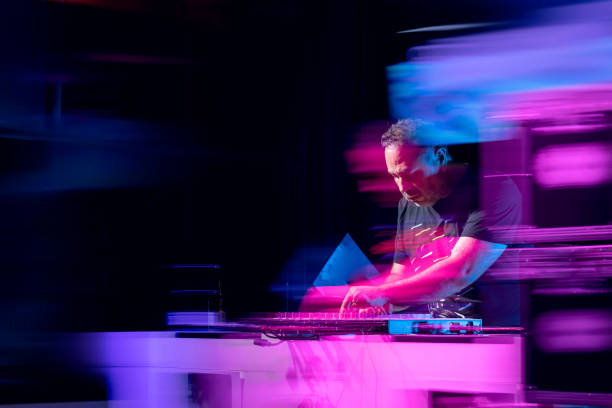
Before EDM festivals were just massive LED cathedrals of corporate rave, before your Spotify algorithm knew exactly what you needed at 2 a.m., there was a dingy loft on King Street in SoHo where a man in a custom-made tuxedo T-shirt wove disco edits, dub reggae, and early electronic experiments into a single, unbroken wave of catharsis. That man was Larry Levan, and his domain—Paradise Garage, or simply “the Garg” to its devotees—was less a nightclub and more a sonic resurrection chamber. In the history of DJing, the Garage isn’t just an important stop on the timeline; it’s the moment the DJ stopped being a human jukebox and became something closer to a healer, a shaman, a psychopomp guiding you through the night toward a version of yourself you forgot existed.
Levan didn’t stumble into this role. He approached the turntables with the obsessive precision of a mad scientist and the intuitive surrender of a gospel choir director. The Garage’s sound system, which he essentially co-designed with engineer Richard Long, was obscenely powerful for its era—a wall of bass bins that didn’t just hit your chest but rearranged your internal organs. But here’s the thing: Levan never played tracks the way they came. He’d take a disco 12-inch, loop the seltzer-bubbly build section until the room was sweating in anticipation, then drop the beat exactly when the crowd’s collective breath was about to break the ceiling. It wasn’t about playing music; it was about steering a narrative. He treated the dance floor like a living organism, reading its micro-movements like a sailor reading the ocean. Someone raises both arms? You have three seconds to transition into a deeper, more hypnotic groove. The energy dips near 3 a.m.? You pull out a bootleg edit of Taana Gardner’s “Heartbeat” stretched to nine minutes of pure percussive seduction.
But the true genius of the Garage wasn’t just technique—it was context. In the late ’70s and early ’80s, New York’s queer and Black and Brown communities, especially those living through the twin shadows of the AIDS crisis and rampant homophobia, needed a sanctuary. Paradise Garage was that sanctuary, but not in a passive, club-kid “safe space” way. It was a transformative space. Levan understood that the DJ’s role was to facilitate communal ecstasy, a kind of secular rapture where judgment evaporated in the low-hanging fog and the strobes turned everyone into fragments of a single, pulsing organism. He’d play tracks that had never been properly released—white labels he’d had pressed from his own edits—so that the dance floor’s relationship to each song was proprietary. You couldn’t hear that version anywhere else in the world. That exclusivity, combined with the audio purity of the system, made every night feel like a ritual you’d been personally initiated into. The music wasn’t a soundtrack; it was a liturgy.
Levan’s approach to mixing also laid the blueprint for what we now call “open format” and “genre-fluid” DJing. He didn’t care about genre police. One minute he’d spin a soulful vocal from Phyllis Hyman, the next a throbbing industrial track from Cabaret Voltaire, then a reggae dub from Lee “Scratch” Perry. The only unifying principle was the bassline and the emotional trajectory. That’s still the definitive skill for modern DJs—not just beatmatching, but mood arc. Larry wasn’t chasing perfection in a clinical sense; he’d often let a loop drift for a suspiciously long time or intentionally slam two tracks together just to see what happened. The Garage crowd trusted him, so they surrendered. That trust is the invisible currency of every great DJ-crowd relationship today, from a dive bar with a borrowed controller to a multi-million-dollar festival main stage.
Sadly, the Garage closed in 1987, and Levan passed in 1992. But his phantom fingerprints are all over contemporary electronic music. House music literally owes its name to a shortened version of “Garage” in some accounts, and the genre’s foundational ethos—deep, hypnotic, disorienting yet comforting grooves—is directly traceable to those King Street nights. Every time a DJ holds a record (or a digital waveform) a beat too long just to feel the crowd squirm, every time a producer loops a breakdown until the tension is unbearable, that’s Larry’s ghost whispering “not yet.“ And every time a club becomes a church, a place where strangers lock eyes and move as one against the world, that’s the Garage’s afterlife. The physical space is gone, but the transmission continues. When you step behind the decks, you’re not just playing music; you’re stepping into a lineage that runs from Larry Levan’s booth like a molten river of bass. Respect it, study it, and maybe—just maybe—you’ll learn to guide a room through its own personal apocalypse and out the other side, shimmering and unbroken.