You know that feeling when you stumble out of a sweaty club at 3 a.m. and the world feels like it’s wrapped in cotton? That muted, underwater vibe in your ears isn’t just your body being dramatic. It’s called a temporary threshold shift, and honestly, it’s your eardrums screaming for a break. But here’s the kicker: if you’re a DJ, that “temporary” part can turn into permanent faster than you can say “drop”. Tinnitus – that phantom ringing, buzzing, or hissing that never actually comes from your speakers – is the boogeyman of our industry. And once it sets in, there’s no magic filter to turn it off. So let’s get real about protecting your hearing longevity before your ears start archiving their own nasty remix.
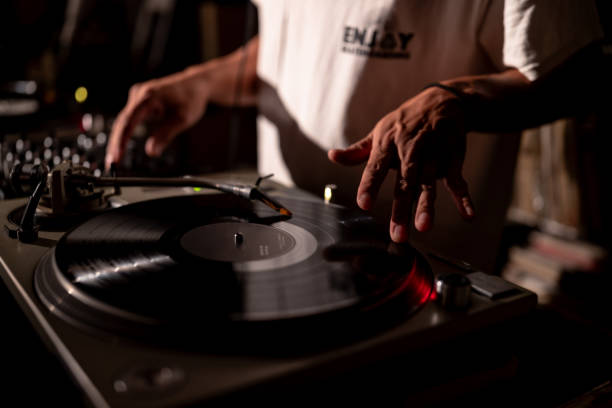
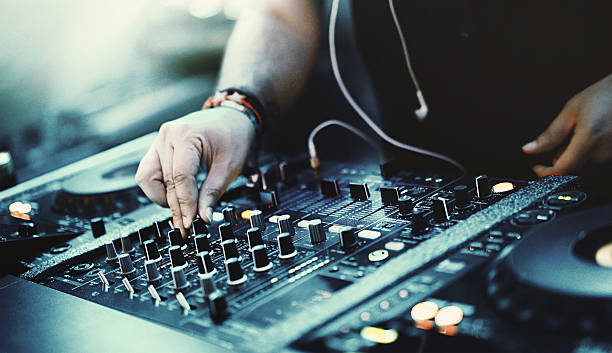
The thing is, we DJs are uniquely screwed. Our offices are 100+ decibel warzones. We’ve got club stacks pumping bass that you can feel in your teeth, booth monitors angled straight at our heads, and those big headphones we crank up to beat-match without missing a snare. It’s a triple threat. A typical night of DJing can easily expose you to 105 dB or more, and based on OSHA standards, you’ve got about four minutes of unprotected exposure at that level before damage kicks in. Four minutes. Meanwhile, you’re up there for four hours. That’s like choosing to stand in front of a jet engine for a full shift – then being surprised your ears feel fried.
Tinnitus doesn’t just appear one day with a dramatic whisper. It creeps in. Maybe you notice a slight ring after a particularly loud set. You shake your head, drink some water, and ignore it. That’s step one of the trap. Next comes that constant hiss during quiet moments on your night off, or the way you keep asking people to repeat themselves because everything sounds slightly muffled. That’s your cochlea sending out an SOS. The hair cells in your inner ear, the ones responsible for translating sound waves into brain signals, don’t regenerate. Once they’re damaged, they’re done. And here’s a nasty little fact: hearing loss from noise often hits the high frequencies first. That means you’ll lose your ability to hear the crisp hi-hats and sizzly cymbals – the very frequencies that tell you a mix is tight. Your ears are literally sacrificing the music you love.
So what’s a DJ supposed to do? Not quit – but you have to treat your ears like the premium gear they are. First off, custom-molded earplugs with high-fidelity filters are non-negotiable. Those cheap foam squishies muffle everything into a muddy blob, which makes you want to crank your headphones louder to compensate – a classic trap. Instead, get earplugs with a flat frequency response, -15 dB or -25 dB filters. They drop the volume while keeping the tonal balance, so you can still hear the room, ride the levels, and protect those precious hair cells. Yeah, it takes a few sets to get used to wearing something in your ears, but your future self will thank you when you can still hear the crowd cheering instead of a permanent buzz.
Another game-changer: monitor volume discipline. The booth monitors don’t have to feel like a chest massage. Work with the club’s sound tech to get the levels decent, then use your headphones for precise listening, not for blasting your own mix over a loud room. A good rule of thumb is to keep your headphone volume at the lowest level where you can still discern the beat – if the person next to you can hear your cans from two feet away, you’re cooked. Also, give your ears a break during small gaps. Use a compressor or a limiter to keep peaks in check, but more importantly, step away from the speakers every thirty minutes or so. Go to the back of the room, take a breath, let your ears recalibrate. That’s not weak; that’s smart.
Oh, and don’t sleep on your day-after routine. After a loud gig, your ears need quiet time. Avoid cranking up your own playlists the next morning, and consider noise-cancelling headphones for travel without the extra boost. Even small stuff like eating well and staying hydrated helps your inner ear’s blood flow, believe it or not. And get a baseline hearing test from an audiologist – especially if you’ve been at this for more than a couple of years. Knowing your current thresholds lets you catch any early shifts before they become your new normal.
Look, none of us became DJs to obsess over health metrics. We got into this for the music, the crowd, that electric moment when the whole room moves as one. But that magic is worthless if you can’t hear it anymore. Tinnitus isn’t some old-rock-star affliction; it’s just as real for bedroom producers and warehouse spinners. So invest in genuine ear protection, respect the volume, and give your ears the same passion you give your track selection. Because the best DJs don’t just have a long career – they also have the ears to enjoy it.