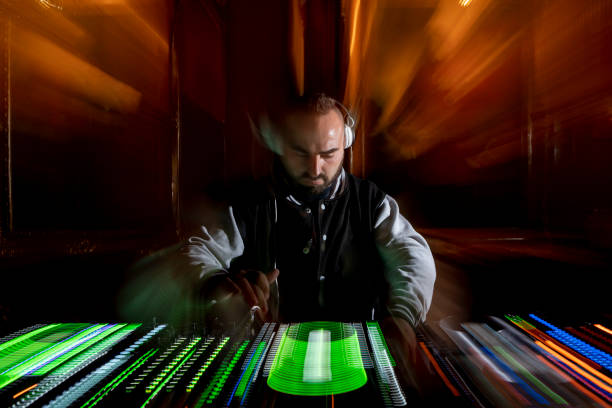
So you’ve just walked off stage after a banger of a set, heart still thumping, ears ringing with the ghost of the kick drum, and suddenly the backstage area feels like a tornado of handshakes, half-finished conversations, and someone’s vape cloud drifting into your face. Or maybe you’re pre-gig, sitting in a green room that smells like old carpet and Red Bull, with your phone buzzing every three seconds and a playlist of anxious thoughts looping in your head. That, my friend, is overstimulation, and it’s one of the sneakiest villains in the DJ game. You can nail your beatmatching, your track selection can be flawless, but if your brain is scrambled eggs before you even touch the decks, the whole vibe suffers. Backstage brain management is about getting your mental state right when everything around you is screaming for attention.
Here’s the thing: the DJ lifestyle is literally designed to fry your nervous system. You’re constantly switching between dark loud clubs and bright quiet hotel rooms, between adrenaline-pumping peaks and sudden dead air, between being the center of attention and being totally alone with your thoughts. Your brain doesn’t know whether to run, fight, or just melt into the floor. And when you’re backstage, that in-between zone, the chaos multiplies because there’s no clear job to do. You’re not mixing, you’re not sleeping, you’re just… existing in a weird limbo where everyone wants a piece of you. This is where overthinking thrives, where imposter syndrome hops on your shoulder, where that one tiny mix mistake from last night replays on a loop like a broken sample.
So what do you do? First, acknowledge that your brain is not the enemy. It’s just trying to protect you from the sensory tsunami. Instead of fighting the chaos, you need to ground yourself in the present physical moment. One killer technique is the 5-4-3-2-1 method. Look around and name five things you can see, four things you can touch, three things you can hear, two things you can smell, and one thing you can taste. That might sound like a wellness checklist from an app, but backstage, it’s pure magic because it forces your brain to zoom out from the mental noise and zoom into textures, colors, and sounds. Maybe the green room couch has a weird velour patch. Maybe the bass from downstairs is bleeding through the floor like a heartbeat. That’s your anchor. You’re not trying to escape the chaos, you’re trying to exist inside it without getting crushed.
Another move is to control your breathing with a bit of a DJ twist. Try box breathing: inhale for four counts, hold for four, exhale for four, hold for four. Do that for a minute or two and your heart rate drops faster than you can say “sync button.” But here’s the pro tip: pair that breathing with a physical ritual. Maybe you tap your fingers in a specific pattern on your thigh, or you roll your shoulders in a sequence. This gives your brain a pattern to latch onto, a tiny anchor in the storm. Some DJs swear by putting on headphones and listening to the room tone, not music, just the ambient hum, to recalibrate their auditory sense. That’s smart because you’re taking charge of what your ears hear instead of letting the backstage ruckus dictate your vibe.
You also need to manage your social energy. Backstage, people will want to talk, network, show you their latest track, or ask for a photo. And that’s wonderful, but it can also drain your battery super fast. Give yourself permission to take a mini social timeout. Sit in a corner, put your hood up, stare at the floor if you have to. You don’t need to explain yourself to anyone. The crowd isn’t waiting for you to be a social butterfly; they’re waiting for you to be a focused, magnetic DJ. And you can’t do that if you’ve given away all your brain bandwidth to small talk. So set a boundary, a secret code phrase you say to yourself like “time to zone in” and then physically turn your body away from the noise.
Also, let’s talk about the pre-gig hype spiral. It’s easy to get so amped up that you feel like you’re vibrating out of your skin. You start overthinking the track order, worrying about the crowd, double-checking your USBs for the fifth time. That’s overstimulation wearing a disguise as productivity. Instead, switch your intention. Rather than aiming for perfection, aim for connection. Tell yourself that your only job is to read the room and react with your gut. That takes a ton of pressure off. You’re not there to prove anything; you’re there to share a vibe. This mindset shift is basically backstage brain management 101.
And after the gig, when you’re riding that post-set high or that weird letdown, don’t just slam another beer and scroll your phone. Give your brain a gentle cooldown. Sit in silence for two minutes. Drink water. Stretch your neck. Notice how your body feels, because you’ve just done something intense. A quick body scan from your toes to your scalp can be surprisingly powerful. You’re basically telling the overstimulation, “I see you, you’re cool, but we’re done now.” That’s how you avoid the 3 a.m. crash where you’re staring at the hotel ceiling questioning your entire existence.
Ultimately, backstage brain management isn’t about becoming a monk in a hoodie. It’s about being the boss of your own nervous system, so that no matter how chaotic the environment gets, you stay centered in your pocket. The club will always be loud, the plays will always be pressurized, and the backstage will always be a little messy. But when you know how to ground yourself, you become that DJ who walks in cool, stays cool, and leaves the crowd breathless because your mind was clear enough to ride the wave instead of getting swallowed by it.