When we talk about turntablism today, it’s easy to forget that the turntable started out as a simple playback device. You know, something your grandparents used to spin Sinatra after dinner. But somewhere between the block parties of the Bronx and the scratch labs of Tokyo, DJs turned a humble record player into a full-blown instrument. That shift? It didn’t happen overnight. It happened because a handful of pioneers decided that two turntables and a mixer could sing, scream, and speak like nothing before.
Let’s rewind to the early 1970s. Hip hop was still a baby, crawling through the streets of New York. The godfather of it all is Kool Herc, a Jamaican-born DJ who realized that dancers wanted the “break” of a record—the funky, percussive part—to last longer than the original track allowed. So he grabbed two copies of the same record, isolated the break, and looped it manually by switching back and forth. That was the birth of the breakbeat. But Herc wasn’t just playing music. He was playing the music. His hands became the rhythm section, and the turntable became his drum.
Then came Grandmaster Flash. If Herc was the architect, Flash was the engineer. He took Herc’s idea and added precision. He invented techniques like the backspin (slamming a record backward to repeat a sound) and the punch phrase (dropping a vocal snippet mid-mix like a horn player hitting a staccato note). Flash wasn’t just selecting records—he was sculpting them. He treated the turntable as an extension of his body, with faders acting like breath and tone arms like vocal cords. His 1981 classic “The Adventures of Grandmaster Flash on the Wheels of Steel” is basically a tutorial in what turntablism can do: a collage of beats, scratches, and vocal cuts that sounds alive, even today.
But the person who truly pushed turntablism into instrument territory was Grand Wizard Theodore. He’s the one who accidentally discovered the scratch. Legend has it he was practicing in his room, hand resting on a record while his mom yelled at him to turn the music down. He slid the vinyl back and forth, heard that rhythmic “wikka wikka” sound, and thought, “Huh, that’s kinda cool.” That happy accident changed everything. Scratches became the turntable’s equivalent of a guitar riff or a snare roll. Suddenly, DJs weren’t just playing songs—they were adding their own percussive, tonal voice.
By the late 80s and early 90s, turntablism had evolved into a competitive sport. DJs like Q-Bert, Mix Master Mike, and the Invisibl Skratch Piklz brought the art to the world stage. They turned scratching into a language. Q-Bert invented the crab scratch (a hand motion that sounds like a rapid fire of clicks) and the transform scratch (a sharp, choppy pattern that mimics a drum roll). These techniques required serious muscle memory and ear training—just like a violinist learning bowing styles. Clubs like The Roxy in NYC and festivals like the DMC World DJ Championships became temples where turntables were worshipped as instruments.
Let’s not forget the club legends who set the stage for all of this. Larry Levan, the heartbeat of Paradise Garage in NYC, didn’t scratch much, but he used turntables to build epic, emotional journeys. His blending of disco, funk, and early house was a precursor to what hip hop DJs would later do with breakbeats. Frankie Knuckles, the “Godfather of House” in Chicago, used turntables to craft soulful house music that made people cry on the dancefloor. And Wendy Hunt, one of the early female DJs in the underground scene, proved that turntablism wasn’t just a boys’ club. She brought a dancer’s energy and a curator’s ear to the decks, showing that the turntable could be both instrument and storyteller.
Today, turntablism is alive and weird. New school artists like DJ Jazzy Jeff, DJ Premier, and even pop producers like Mark Ronson incorporate scratch patterns into studio recordings. But the spirit remains: a turntable is not a passive player. It’s a canvas. You can paint with beats, scratch in melodies, and mix in vocal samples like a sampler. The DJ pioneers took a machine designed for passive listening and turned it into something you can train with, compete with, and weep with.
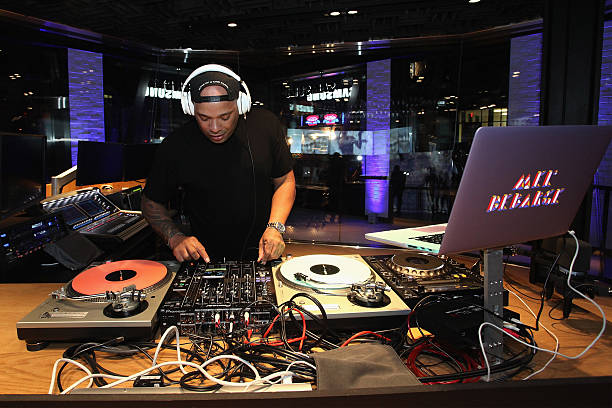
So next time you see a DJ hunched over two Technics 1200s, fingers flying, needle bouncing—remember they’re not just playing records. They’re playing the instrument that Herc, Flash, Theodore, and all those trailblazers built from scratch. Literally.