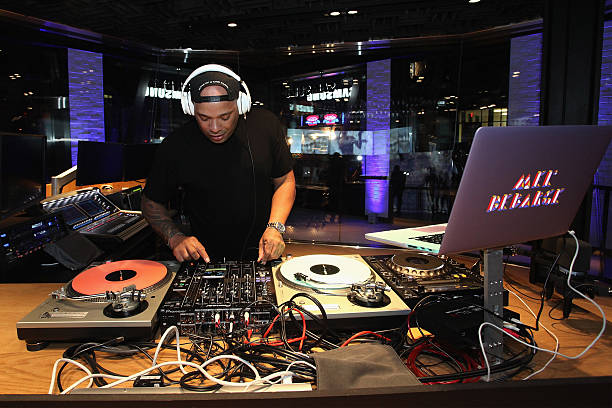
So you’re midway through a set, the room is sweaty, and then it hits: a squeaky bed sample, a vocal chopped into confetti, and a kick pattern that feels like someone sprinting up a fire escape. That’s Jersey club. If you’re a DJ who only knows it as “that sound from TikTok,” it’s time to update your mental crate. Calling every fast, chopped-up edit “Jersey club” is like calling every four-on-the-floor track “house.” Technically adjacent, but missing the whole personality.
Jersey club grew out of Newark, New Jersey, in the early 2000s. Baltimore club was already shaping fast, loop-heavy club music, and Jersey producers flipped that energy into something sharper and more stuttery. Names like DJ Tameil, DJ Tim Dolla, Mike V, and the Brick Bandits crew are foundational. They built a sound around broken-up kick patterns, sped-up R&B and hip-hop vocals, and samples that became inside jokes for the dance floor. The bed squeak is the most famous one, but it’s not the whole genre. It’s seasoning, not the meal.
For DJs, the first thing to clock is tempo. Jersey club usually sits around 130 to 140 BPM, but it doesn’t feel like a smooth house groove. The kicks are often syncopated and aggressive, landing in clusters that make the rhythm feel like a triplet or a stumble, depending on how you count it. That’s why blending it can be tricky. If you try to mix it like standard 4/4 club music, you’ll fight the drums. Instead, lean into the bounce. Use the one as an anchor, but don’t expect every bar to behave. Phrase changes can happen fast because the genre loves tension and release.
Vocals are another big marker. Jersey club producers chop vocals into tiny rhythmic fragments. A single syllable becomes a percussion hit. A line from a popular R&B song gets repeated until it’s hypnotic. That’s not laziness; it’s a hook-building technique. When you’re DJing, those chops are your cue points. They tell you where the drop is, where the energy resets, and where the crowd is supposed to lose it. If you’re doing a live edit, make sure the vocal rhythm locks with the kick pattern. Otherwise it sounds like two songs arguing in a group chat.
The dance element matters just as much as the production. Jersey club has its own movement vocabulary, and the music is designed for footwork, dips, and rapid-fire steps. That means the drops are physical. When the beat cuts out and then slams back in, the floor reacts. DJs should treat those moments as sacred. Don’t talk over them. Let the silence do its job, then bring the kick back like you’re pressing send on a risky text. The payoff hits harder when you respect the structure.
It’s also important to separate Jersey club from its internet-era remixes. TikTok and SoundCloud helped the sound travel worldwide, but the algorithm often flattens context. A Jersey club remix of a pop song might be someone’s first taste, but the roots are in Newark parties, local radio, and a tight-knit producer network. If you’re booking a set, don’t just play the viral edits and call it a day. Dig into the classic tracks, the regional anthems, and the newer producers pushing the sound forward. That’s how you show respect.
For beatmatching, practice with tracks that have clear intro loops. Many Jersey club songs start with a simple kick pattern or a chopped vocal before the full drop, which gives you a window to blend. But if the drums are too busy, try quick cuts, echo-outs, or drop transitions instead of long blends. This isn’t the genre for a five-minute smooth mix. It’s for sharp moves, punchy transitions, and reading the room. Energy is the point.
So when you file Jersey club under “TikTok music,” you’re doing it dirty. It’s a micro-genre with a distinct BPM range, a kick pattern that refuses to sit still, a sample culture that turned a bed squeak into a global signifier, and a dance legacy that started long before the algorithm found it. Learn the lingo, respect the roots, and let the kicks do the talking. Once you understand Jersey club as a language, your sets get sharper, your transitions get bolder, and the floor stays packed.