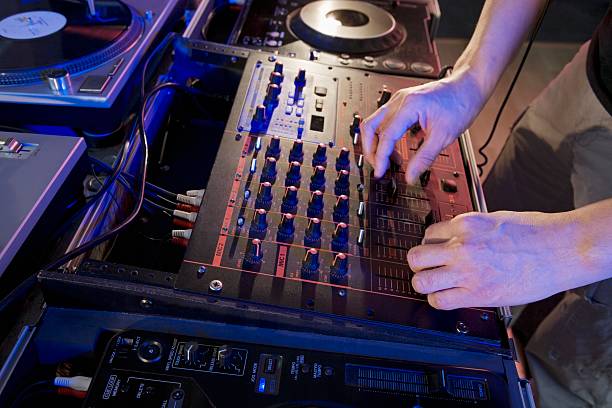
Picture this: you’re three hours into a marathon set, the bass is pushing through your entire soul, the crowd is absolutely locked in, and you’re vibing harder than you have all month. Then, you go to cue up the next track, and a tiny but insistent crick in your neck flares up like an unpaid subscription. You ignore it, keep pushing, but by the time you pack up your gear at 3 AM, your upper back feels like you just lost a fight with a folding table. Sound familiar? That’s your body’s way of saying your desk ergonomics are straight-up disrespectful to your spine. For a DJ, the hottest accessory isn’t a custom controller or a flashy pair of headphones — it’s a monitor arm that actually puts your screen at eye level.
We live in a world where most of us are crouched over laptops like we’re guarding a secret. And DJs are arguably worse because we’re not just scrolling; we’re intensely focusing on waveforms, hot cues, and FX parameters for hours on end. Every degree you tilt your head downward to squint at that glowing rectangle multiplies the effective weight of your skull. By the forty-five-minute mark, your neck muscles are doing the equivalent of a farmer’s walk with a bowling ball. That’s why the simple act of raising your screen to match your natural line of sight is a low-key game changer. It’s not about looking cool. It’s about making sure you can still look left and right without grinding your vertebrae into dust.
So how do you fix it? The most underrated piece of gear in any home studio is a solid monitor arm. You know, those articulated metal arms that hold screens and let you pivot, tilt, and rotate them like they’re performing ballet. For DJs who use a laptop, you might think a monitor arm is irrelevant, but hear me out: you can absolutely mount a laptop tray onto a monitor arm, or you can just use a quality laptop stand that elevates the screen to the same height as your eyes. The goal is to keep your neck neutral, your shoulders relaxed, and your gaze straight forward. If you’re peering down into your workflow, you’re literally draining the energy that should be going into your transitions.
Now, let’s talk about the desk itself. We’ve all done the “hold a controller on our knees while sitting on the edge of the bed” move. That’s not DJing, that’s a spine crime. A proper setup means having a desk surface that allows your arms to rest at a near-ninety-degree angle, with your elbows comfortably at your sides. That often means you need an adjustable standing desk. Before you roll your eyes, think about it: standing for a portion of your set keeps your blood moving and your energy high. You can ride the groove while swaying with your whole body instead of becoming a human shrimp. Then you lower the desk for a seated stretch or to get really detailed with a cue point. The variable height alone is a vibe. It’s like having a chair and a stage at the same time.
But there’s a deeper layer that often gets missed. Your ergonomic setup isn’t just about avoiding pain; it’s about preserving your flow state. When you’re uncomfortable, your brain sends little distress signals that steal precious RAM from your creative processing. You’re not fully living in the music because you’re lowkey processing how much your trapezius hurts. A clean, aligned workspace — with your screen at the right height, your controller on a stable surface, and your cables neatly out of the way — allows you to get into that zone where the music just moves through you. That’s the ultimate flex, honestly. Being pain-free means you can stay present for the journey.
And don’t sleep on the portable angle. Gig life doesn’t always come with an ergonomic booth. That’s why you should build a small, secret weapons kit: a foldable laptop riser, a rolled-up yoga mat for standing, or even a couple of thick books that can act as a mini stand in an emergency. The point isn’t to be a diva about your setup; it’s to be smart. Your body doesn’t care if you’re headlining Berghain or mixing a backyard bbq — it’s going to react the same way to a bad posture angle. Treat your spine like a headliner, not an opening act that’ll do anything for exposure.
So, next time you’re about to dive into a long practice session, look at your screen. Is it at eye level? If not, you’re paying penance with your posture. Raise that laptop. Get a monitor arm. Adjust the desk to a standing height for one track, then sit down for another. Your neck will thank you with every smooth mix you pull off without looking like you just crawled out of a cave. Ergonomics isn’t boring. It’s self-care, and honestly, it’s a massive power move for anyone who wants to keep doing this for decades. Your sets will be longer, your body happier, and your back will still bend perfectly when you need to give that final bow to the crowd.