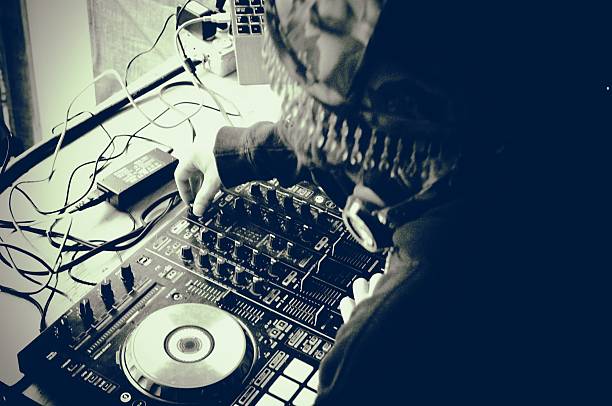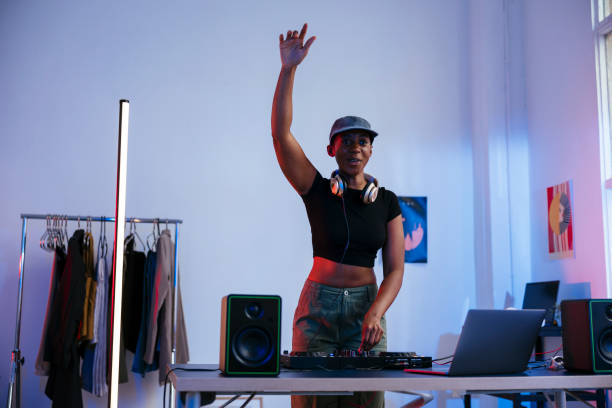
Amapiano is the genre that sneaks up on you. First it sounds like a slow house groove with a couple of jazzy piano chords. Then the log drum hits, and suddenly your whole body is doing that shoulder-bounce thing you didn’t authorize. For DJs, that’s the moment Amapiano stops being a TikTok sound and becomes a tool. It’s a South African genre that grew out of the townships around Pretoria and Johannesburg in the mid-2010s, blending deep house, kwaito, gqom, jazz, and broken beat into something relaxed but lethal. The name means “the pianos,“ and that’s your first clue: the piano is not decoration. It’s the emotional center.
The core ingredients are simple on paper. You’ve got a tempo usually sitting between 108 and 115 BPM, which is slower than most house, faster than a lot of hip-hop, and perfect for a half-time head-nod. You’ve got soft, airy pads and piano riffs that feel like a Sunday morning or a late-night drive. You’ve got shakers, rim clicks, and log drums. The log drum is the genre’s signature: a deep, percussive bass tone that sounds like someone thumping a hollow tree, tuned low and syncopated. It doesn’t just keep time; it answers the melody. If the piano asks a question, the log drum shrugs and says, “we’ll see.“
For DJs, the tricky part is that Amapiano doesn’t behave like standard four-on-the-floor house. Yes, there’s often a kick on every beat, but the groove lives in the offbeats and the space between them. The log drum pattern can make a track feel like it’s limping in the best way. That means beatmatching by waveform alone can betray you. You have to listen for the shaker, the kick, and the piano phrase, then ride the pitch fader until the swing locks in. When you get it right, two Amapiano tracks can blend into a long, hypnotic conversation. When you get it wrong, it sounds like two different conversations happening in the same group chat.
Phrasing is another thing. Most Amapiano is built in eight-bar and sixteen-bar blocks, so if you drop a new track on a random downbeat, the piano chords will collide like bumper cars. Count the bars, wait for the end of a vocal line or a piano run, then bring the new track in. Use loops if you need extra runway. EQ is your friend: the log drum and kick share low-end real estate, so don’t just slam both basslines together. Cut the incoming track’s lows for a few bars, let the crowd feel the new groove, then swap the bass. If you’re mixing digitally, you can also use key sync or harmonic mixing, but don’t let the software make every decision. Amapiano is too human for that.
Amapiano also has micro-scenes. There’s the soulful, jazzy side with lush chords and vocal features. There’s the “Bacardi” style, named after the house party vibe, with darker bass and sparse percussion. There’s the more aggressive, log-drum-heavy sound that leans toward gqom and techno. And there’s the TikTok-friendly, amapiano-pop crossover that blew up globally. Knowing the difference matters because dropping a deep, moody Amapiano track at peak festival time can clear the floor if the crowd expected something more obvious. But dropping a souled-out piano cut after a tech house banger can be a chef’s kiss reset.
Where does it fit in a set? Think of Amapiano as a bridge genre. It can connect Afrohouse, deep house, UK funky, and even hip-hop. At 112 BPM, you can mix out of a slower house track or blend into a rap acapella if the key and vibe align. You can also use it as a main course. In clubs from London to Lagos to New York, Amapiano nights are packed because the genre invites dancing without demanding exhaustion. It’s social music. It’s for people who want to move but also want to talk, sip, and look cute.
The culture matters too. Amapiano grew from Black South African youth culture, and its pioneers include Kabza De Small, DJ Maphorisa, and many producers who built the sound through local radio, WhatsApp groups, and underground parties before the world caught on. When you play it, you’re not just playing a beat. You’re playing a lineage. Give respect to the source, credit the producers, and don’t treat it like a random TikTok trend. Learn the language of the log drum, the piano, the shaker, and the silence. Once you do, Amapiano becomes more than a genre micro definition. It becomes a whole mood you can mix.