Beatmatching is the bedrock of DJing. Strip away the lights, festival stages, designer fits, and track IDs, and you still have two songs that need to feel like one. Beatmatching means matching tempo and phase so kicks, snares, and hi-hats land together instead of stumbling. When it works, the crowd doesn’t hear a transition. They just keep dancing, locked in the pocket. When it fails, you get the dreaded trainwreck, a clattering pileup that clears the floor faster than a fire alarm.
The first term is BPM, or beats per minute. House sits around 124 to 128, drum and bass closer to 174, and hip-hop can slide from 80 to 100 depending on how you count. The pitch fader controls tempo. Move it up or down, and the track speeds up or slows down. Digital setups show a BPM readout, but the readout is not gospel. Live drummers, swung rhythms, and weird intros confuse algorithms. Your ears are the final judge. Tap tempo helps, but nothing beats knowing what a locked groove sounds like.
Cueing is the next layer. Load a track, find the first downbeat, and set a cue point. In headphones, you hear the incoming track while the room hears the outgoing one. Some DJs cue only the new track, then blend it in. Others use split cue, one ear on master and one on cue. The goal is simple: bring the new track in on time. Not roughly on time. On time. That means counting bars, feeling phrases, and knowing where the drop, breakdown, or vocal enters.
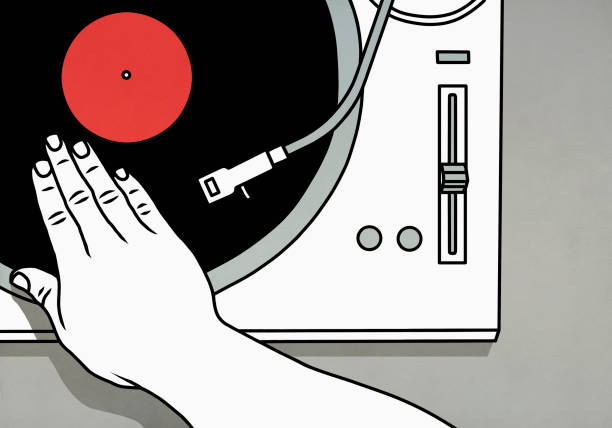
Phase is where beatmatching gets spicy. Even if two tracks are both at 126 BPM, they can be out of phase. One kick hits, then the other hits a fraction later. It sounds like a flam, a stutter, a weird double-thump. You fix phase by nudging the platter, tapping the jog wheel, or using pitch bend. Tiny movements. Overcorrect and you swing past the pocket. Under-correct and the flam lingers. Experienced DJs make these adjustments without thinking. Beginners feel like they’re defusing a bomb.
Then there is phrasing. Dance music is built in phrases, usually eight, sixteen, or thirty-two bars. Mix a new track in at the wrong phrase, and vocals might clash, the bassline might trip over the breakdown, or the drop might arrive too early. Beatmatching lines up the kicks. Phrase matching lines up the story. That is why many DJs mix in the intro or outro, where the arrangement is stripped back and forgiving. Looping helps too. Loop a section, stretch it out, and buy time to find the next phrase.
Sync is the elephant in the booth. Press the sync button, and software matches BPM and phase for you. Is that cheating? Nah, not automatically. Sync is a tool, like cruise control. It can free you to focus on EQ, effects, and reading the crowd. But relying on sync without understanding beatmatching is like using GPS without knowing how to drive. When the grid is wrong, when the track drifts, when the venue’s setup glitches, you need manual skills to save the mix. Manual beatmatching trains your ears. You start hearing the space between kicks. You feel the groove in your chest. You learn to trust yourself instead of a screen.
Practicing beatmatching doesn’t require a club residency or expensive gear. Two tracks with steady drums, headphones, and patience will do. Pick songs with clear kicks and similar BPMs. Turn off sync. Match tempo by ear, then fix phase. Count phrases out loud. Record mixes and listen back. You’ll hear every messy nudge and every perfect lock. At first it feels impossible. Then annoying. Then one day you blend two tracks and the kicks stack like Lego bricks. That click is the whole game.
Beatmatching is technical, but its payoff is emotional. The crowd doesn’t care about BPM readouts or pitch percentages. They care about momentum. They care about not being yanked out of the vibe. When two tracks lock, the DJ disappears for a second and the music takes over. That’s the magic trick. Learn the language, respect the mechanics, then forget the mechanics. Just keep the room moving.