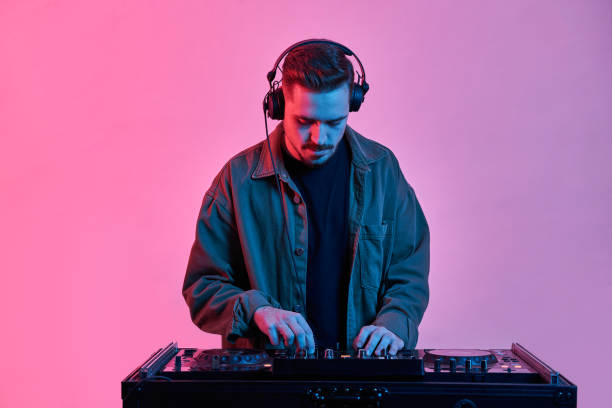
City festivals hit different. You’re not tucked away in a dark club with perfect sound and a crowd that already knows your name. You’re in a park, a warehouse courtyard, a rooftop, or some pop-up stage wedged between food trucks and a transit station, playing to people who just wandered over from a totally different vibe. That’s the magic and the chaos. The best city festival sets happen when you stop fighting the environment and start using it. Honestly, the urban backdrop is part of the set. Traffic noise, sirens, concrete echo, heat, rain, and a crowd that’s half locked in and half looking for their friends—it’s all part of the experience. Your job is to make that mess feel intentional.
First move is knowing the festival footprint before you touch the decks. City festivals are often spread across multiple stages, and the crowd flow matters more than you think. If your stage is near the entrance, people will drift through constantly; if you’re tucked in a corner, you might get the true heads who came specifically for you. Walk the site, clock where the bars, bathrooms, shade, and exits are, and figure out how sound bleeds between stages. That info shapes your set more than any pre-planned playlist. You don’t want to drop a slow, atmospheric moment while a nearby stage is throwing peak-time bass at the same park. Read the geography like a DJ reads a room.
Load-in and soundcheck are where city festival chaos loves to test you. Urban venues often have tight access, weird loading windows, and neighbors who care about noise curfews. Bring backup USBs, extra cables, and adapters because the booth might be a plug-and-play situation with exactly one working channel. Be cool with the sound tech even if monitoring is rough. Ask for what you need clearly, then adapt. If you can’t hear the low end properly, don’t crank the bass and pray—use the crowd’s reaction and the booth’s midrange to guide you. City festival sets reward flexibility. The DJ who stays calm when the monitor dies is the one everyone remembers as easy to work with.
Crowd-reading in a city festival is a different skill. People are not a single bloc. You’ve got locals, tourists, day-one fans, curious passersby, and someone who’s definitely lost. Start with a vibe that invites people in rather than demanding instant energy. A smooth, groovy opening can pull a scattered crowd together, then you can build. Watch the edges of the crowd as much as the front row. If people are drifting, change the energy without panicking. If they’re locked in, don’t overthink it—ride the wave. City festivals also mean shorter sets sometimes, so don’t save your best stuff for a “later” that might not exist. Make a statement, leave them wanting more, and trust your instincts.
Curfews and city rules are real, so plan your arc around them. You might have to end sharp, and the afters might be unofficial, scattered, or sold out. Don’t spiral about it. Treat the festival set as the main mission and the afters as bonus content. Hydrate, wear earplugs, protect your hearing, and eat something that isn’t just caffeine and adrenaline. Traveling DJs love to act invincible, but city festivals are marathons of noise, heat, and social interaction. A quick reset—shade, water, a snack, a moment off your feet—can save your set and your mood. The goal is to leave with your ears intact and your reputation glowing, not to burn out before the sun goes down.
Networking at city festivals is low-key but powerful. Be present in the green room, compliment the sound crew, swap contacts with other DJs, and don’t be the person who disappears immediately after their set. The scene is small, and good energy travels. When you’re onstage, keep it professional: no messy transitions for the sake of showing off, no hijacking the vibe from the DJ before you, no ignoring the crowd because you’re staring at your laptop. City festival experiences are unpredictable, and that’s the point. Bring backups, read the room, respect the chaos, and let the city’s energy become part of your sound.