Let’s be real for a second. When we talk about the founding fathers of dance music, Frankie Knuckles gets his flowers, rightly earning the title “The Godfather of House.“ Most stories stop at the obvious: he DJ’d at The Warehouse in Chicago in the late ’70s and ’80s, spliced disco into something faster and more hypnotic, and inadvertently gave a whole genre its name. But digging a little deeper, the actual magic trick that made Frankie a legend wasn’t just crate digging or beat matching. It was his weird, obsessive, almost mad-scientist relationship with a reel-to-reel tape machine. That dusty piece of tech was his secret weapon, and honestly, the reason why house music hit so hard in the early years. Without it, the entire trajectory of dance music might have stayed stuck in some polite, radio-friendly disco loop.
Here’s the setup. Frankie was already a big deal in New York, spinning at the Continental Baths alongside Larry Levan, soaking up the raw energy of gay club culture and the hedonistic pulse of early disco. When he moved to Chicago to take over The Warehouse, he was confronted with a problem. His audience was young, jacked up on a mix of drugs and pure boredom, and they wanted to dance all night. But the records he had access to were limited. Disco had famously hit its commercial breaking point, and the 12-inch singles that did exist had one major flaw for a club DJ: the good parts didn’t last long enough. A breakdown here, a percussive bridge there—you could loop them manually, but with vinyl, you had to ride the faders and your fingers got tired quickly. Frankie needed more. He needed to stretch those eternal moments of sheer, hands-in-the-air telepathy into something that felt like a drug-induced eternity.
So he copped a reel-to-reel tape player. Not for listening to albums on. No, no. He used it to physically cut and splice tape. He would take a track he loved—something like “Your Love” by Jamie Principle or the instrumental of Cheryl Lynn’s “You Bet Your Love”—and isolate that one section that made the crowd lose their mind. Maybe it was a booming kick drum and a slapping hi-hat pattern, or a pounding piano chord that promised something transcendent. He’d literally slice out a chunk of the tape, stick the ends together to create a seamless loop, and then let that loop run for five, ten, sometimes fifteen minutes. This was the original “edit.“ It wasn’t a remix, because it wasn’t about adding new sounds. It was about subtraction and repetition, about finding the DNA of a groove and locking it into a perfect, infinite polyrhythmic trance.
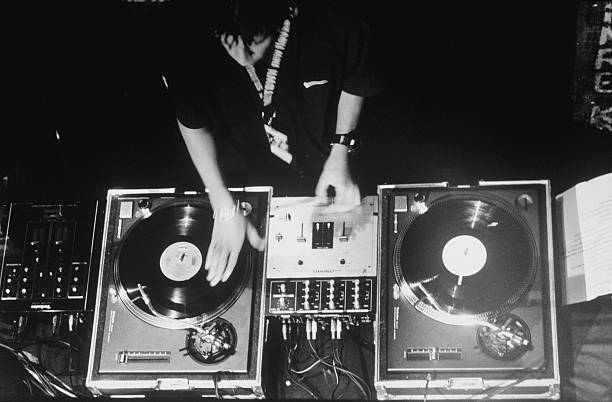
That’s a game-changing innovation when you think about it. Today, any kid with a laptop can pull up a track in Serato and hit a loop button. Or you can go into Ableton and warp a four-bar section with a few clicks. But Frankie was doing this with literal razor blades and magnetic tape, in a sweaty basement club, while maintaining the floor’s momentum. He had to physically cue the tape reel, balance the speed and pitch against the turntable, and mix in and out without losing the vibe. It was a skill that required insane timing and a kind of DJ clairvoyance. His tape edits were the first time in club history that a DJ truly became a producer in real time, crafting a bespoke version of a record that existed nowhere else on Earth. There was a mystique to it. People would hear these extended grooves and not even recognize the original track. They’d ask, “What record is this?“ And Frankie would just smile.
That DIY attitude bled directly into the birth of the house music scene. Early producers like Marshall Jefferson, Farley “Jackmaster” Funk, and even legendary labels like Trax and DJ International were spiritually indebted to Frankie’s cut-and-paste aesthetic. They wanted to capture that kinetic, stripped-down, no-filler energy on actual 12-inch releases. House music’s key features—the four-on-the-floor kick drum, the hypnotic bassline, the sweeping strings that rise and fall without a traditional song structure—all owe a debt to the seamless tape loops Knuckles crafted night after night. He shifted the focus from the vocalist and the verse-chorus-verse structure to the rhythm itself. The dance floor became the sole protagonist. In a very real sense, his tape machine became the first drum machine of house music, a primitive sampler that foreshadowed the Roland 808s and 909s that would dominate the late ’80s.
Frankie’s legacy isn’t just about being a great DJ. It’s about resourcefulness and refusing to accept that a record was finished when the groove felt unfinished. He understood that the real music happened in the club, in the subtle pitch variations between two tracks, in the infinite decay of a reverb tail he extended with a tape splice. Every modern DJ who live-loops, every producer who samples a dusty break and repeats it into a drop, every genre from techno to garage to jersey club—they’re all standing on the shoulders of a man with a razor blade. So next time you hit that loop function and ride the energy for an extra minute, whisper a quick thank-you to Frankie. He did it with sticky tape, a trembling hand, and pure god-tier instinct.