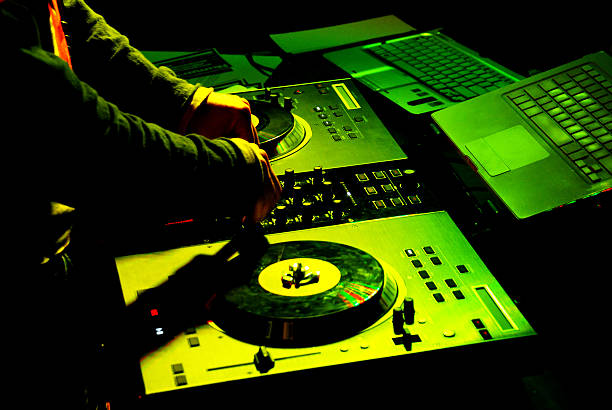
You know that moment in a set when everything just clicks? The floor is grooving, the energy is peaking, and you slide into the next track so seamlessly that nobody even notices where one song ended and the other began. That magic isn’t luck. It’s rarely about having the fanciest gear or the most expensive vinyl collection. Nope, the hidden MVP in those moments is often an effect so basic that it’s easy to sleep on: delay. Sure, reverb gets all the love for adding “space,“ and filters get the credit for dramatic sweeps, but delay? Delay is the quiet chef who seasons the whole dish without you ever spotting the salt shaker. That’s the secret sauce.
Let’s break down why delay slaps so hard in a mix. Unlike reverb, which smears things into a shimmering haze, delay is rhythmical. It takes a sound and repeats it in time, which means it can lock into the groove if you treat it right. The trick is to align your delay time to the tempo of the track you’re playing. No, you don’t need a math degree. Most modern CDJs and controllers have a beat-sync for effects, or you can tap tempo with your finger. But once you get that repeat landing on a dotted eighth or a triplet, something alchemical happens. The echoes start dancing between the beats, filling up the gaps like a second percussionist who just walked in uninvited but with killer taste.
Here’s where the magic really shows up: transitions. You know that awkward moment when the outgoing track’s vocals are still poppin’ but the incoming track is already trying to make its presence known? Raw talk, but we’ve all been there. Most DJs reach for a filter sweep or a quick high-pass to mask the clash. But the next-level move is to send the outgoing melody into a delay with a decent feedback amount, then let the repeats ring out like a ghost that’s stuck in the room. As those echoes trail off, you bring in the next track, maybe with its own low-pass filter closed a bit. The delay gives you a musical bridge—it’s not just noise, it’s a melodic echo that buys you precious seconds to align the new beat. By the time the last repeat fades into silence, the new tune has already snuck under its own groove. Chef’s kiss.
You can also use delay to sculpt tension before a drop. Take a simple percussive hit—a clap, a snare, even a little vocal chop—and crank up the feedback while you’re building the energy. The repeats start telescoping into each other, creating a riser effect that doesn’t sound like your typical white-noise sweep. It’s more organic, more hypnotic. Then, at the exact moment you want the floor to lose it, cut the delay completely and smash in the drop. The contrast from that rhythmic clutter to a perfectly clean, dry, punchy beat feels like a cold splash of water on a sweaty face. Pure dopamine.
And let’s give some flowers to the OGs who figured this out before digital ever existed. Larry Levan at the Paradise Garage would run vocals through heavy tape echo, making the room feel like a cosmic cathedral. Frankie Knuckles, the Godfather of House, used delays and echoes to stretch out chords for minutes at a time, turning simple records into epic journeys. These cats didn’t have OLED touchscreens or beat-sync FX. They had a send/return knob, a reel of tape, and an ear for space. That spirit lives on every time you twist that little “time” knob into a sweet spot.
But here’s the thing about secret sauce—you can’t pour the whole bottle on everything. A common mistake is to keep delay at a 50% wet mix across your whole set, which just turns your sound into a muddy, washy mess. Lowkey, that’s how you make a dancefloor feel like it’s underwater. Instead, use delay like a spice: taste as you go. Keep the wetness around 10 to 20 percent for texture, and save the dramatic echoes for those peak-time moments or breakdowns when the track drops out and you want to play with the silence. Also, try ping-pong delay where the repeats bounce left and right—it widens the stereo image and makes your mix feel bigger than it actually is. That’s a huge flex for tiny room speakers.
Another pro move: use delay to create glue when two tracks are in the same key but have totally different rhythms. Say you’re going from a half-time dubstep banger into a four-on-the-floor techno stomper. The energy shift is jarring, even for the most headstrong crowd. But if you take a short stab from the outgoing track, let it chew through a tight 1/8th note delay, and keep that looping while you bring in the new kick, the ear gets a subtle foundation to hold onto. The rhythmic continuity lets your brain accept the change because the delay becomes a metronome that ties both tracks together. You’re not just pitch-bending your way through; you’re weaving a sonic net.
At the end of the day, the real secret isn’t the effect itself—it’s knowing when to back away. An FX-heavy mix can seem impressive in your headphones, but the crowd reacts to the vibe, not your knob-twiddling prowess. So practice with delay on a single phrase, record your sets, and listen back. Ask yourself: did that echo make the transition feel buttery, or did it just confuse the groove? The more you train your ear to hear the musical potential of delays, the more they become an extension of your hands. Soon you’ll be dropping mixes so seamless that people will think you’re using some mystical software. Nope, just the oldest trick in the book, served lowkey with a little bit of patience and a whole lot of feel.