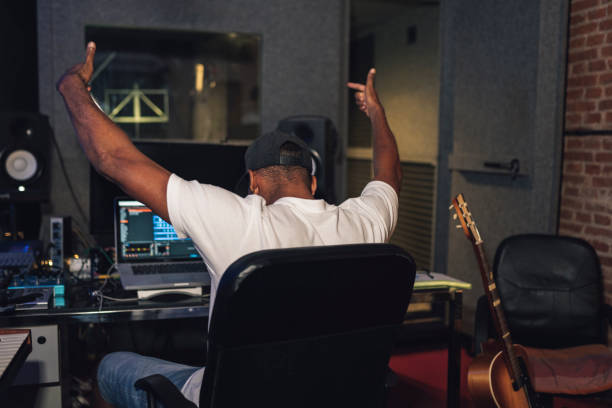
Layering acapellas live is one of those moves that can make you look like a wizard or a complete clown. There’s no middle ground. Drop a vocal over a beat that wasn’t built for it, and you’re walking a tightrope. But when you nail it, the crowd feels like they’re in on a secret. So how do you get there? It all comes down to creating space. And the fastest way to create space in a live mix is to treat your acapella layers like they’re being painted onto a canvas, using echo and reverb as your brush.
A raw acapella is dry. It’s a vocal ripped from its original context, begging for an environment to live in. Your job as the DJ is to give it that environment. That’s where delay comes in. A simple quarter-note echo fills the gaps between phrases, making the vocal feel like it’s breathing in sync with the track. But don’t just slap a preset on it. Match the delay time to the BPM of your current beat. If your echo is off by even a few milliseconds, the layer feels off-kilter. Most DJ software has a sync button, but don’t rely on it blindly. Nudge the delay until it grooves with the kick and snare. And if you’re using a loop, make sure it locks into the phrase length of your main track, otherwise the layers will fight for attention.
Reverb is your other best friend, but it’s a sneaky monster. Too much and your acapella turns into a ghostly smear. Too little and it stays harsh and disconnected. The sweet spot is a short, subtle reverb that gives the illusion of a room, not a cathedral. Think of a studio booth, not a mountain canyon. You want the vocal to sit inside the mix, not float above it. A good trick is to set your reverb’s predelay to 20-30 milliseconds. This lets the top of the vocal punch through before the reverb tail kicks in, giving you both attack and space.
Layering acapellas isn’t just about effects on a single vocal. It’s about stacking vocals that talk to each other. You might have a main phrase on the one, and another snippet as a call-and-response on the two and four. But if both vocals get the same heavy reverb, they’ll blur into a soup of syllables. Be strategic. Use less reverb on the primary vocal and more on the secondary, so they sit at different depths. Think of it like a conversation: the lead speaker is upfront, while the background voice echoes from the hallway. That contrast gives your mix dimension.
Another pro move is to use echo as a rhythmic tool. Take a single acapella word like “fire” or “dream” and let the echo repeat it, building tension. Then bring in the beat drop, and the echoes either fade out or morph into a filter sweep. This turns a simple layer into a narrative arc. You’re sculpting a moment. For instance, try layering a classic 80s vocal over a modern tech-house beat; the contrast alone creates a nostalgic tension that fills the floor.
Live layering is about subtraction as much as addition. You don’t always need the acapella at full volume. Dip it in and out using your mixer’s EQ, or automate the filter. That creates movement. The crowd wants the tease, the peek, the revelation. So let your echo trail off, then bring the vocal back with a new twist. Change the pitch or add a flanger. Keep it fresh. Remember, the goal isn’t to show off every trick you know, but to make the crowd move.
Practice is the only path to comfort. Start by layering acapellas over tracks you know inside out. Play with the dry/wet knob. Record your sets and listen back to where the layers clash. That feedback loop is gold. Trust your ears over your eyes. If it sounds good, it is good. Layering acapellas live is an art, not a science. So go ham, but keep your delays tight and your reverbs subtle, and you’ll be the DJ everyone swears has some secret sauce. Don’t be afraid to experiment with other effects like phaser or chorus, but always come back to the core of echo and reverb for that live glue.