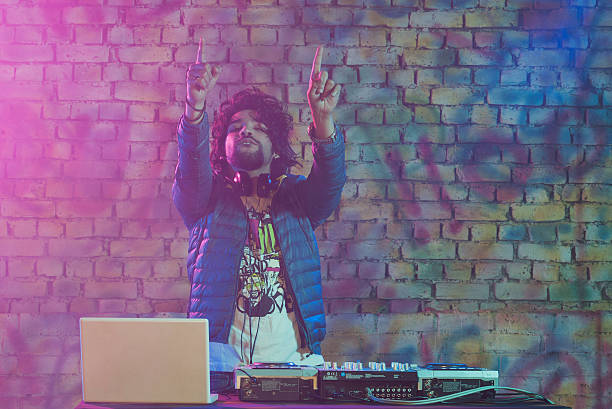
There’s a moment every new DJ knows too well. You’re scrolling through a live set on YouTube, the bassline hits your chest like a friendly shove, and suddenly the crowd in your headphones goes absolutely feral. You need this song. Not tomorrow, not after class. Right now. So you do what any self-respecting digital native does: you sprint to the comments, thumbs flying, and type two letters. “ID?” You hit post, refresh twice, and hope the universe delivers.
That tiny acronym — standing for “identification” — is arguably the most powerful shorthand in the entire DJ ecosystem. It’s the digital culture equivalent of a bat signal for music nerds. And in a generation raised on instant answers, it’s a deliciously old-school act of faith. Because unlike every other piece of information in your pocket, a track ID refuses to be Googled. Shazam gives up. Swipe left. Your last three group chats come back empty. Only the community, with its collective memory and insider knowledge, can crack the code.
The genius of “ID” is its beautiful ambiguity. Sometimes it’s a question: “anyone know the ID?” Sometimes it’s a label on a tracklist after a festival — “Diplo & friends – unreleased ID” — confirming that the song is so fresh, even its parents haven’t decided on a name. In producer circles, dropping an “ID” onto your SoundCloud is a flex. It says: this track is exclusive, unmastered, and not for your weak ears on Spotify yet. It’s the musical equivalent of wearing a vintage band tee to a party where nobody knows the band. You’re not just sharing a vibe. You’re gatekeeping it.
But here’s the thing about digital culture shorthand: it evolves faster than a TikTok trend on a Tuesday. “ID” has birthed entire sub-languages. When two DJs trade unreleased weapons in a back-to-back set, fans call it an “ID battle.” When a producer finally drops a highly anticipated track after two years of teasing, the comments flood with “finally not an ID anymore.” There’s even the “ITI” (Identify The Incoming) — a lesser-known but beloved cousin, used in niche forums for tracks heard in the background of vlogs or Instagram stories. And let’s not forget the relatable descent into madness that happens when you’ve heard an “ID” one time at a festival, recorded a 15-second clip on a dying phone battery, and then spend six months humming a melody that sounds suspiciously like three different songs but somehow none of them.
This shorthand isn’t just about efficiency, either. It’s about belonging. When you ask for an ID in a live chat, you’re not just asking a question. You’re raising your hand in a club that has no physical walls. You’re saying, “I was here. I felt that drop. Let me carry it home with me.” And when someone replies, “That’s the new unreleased thing from DJ So-and-So, played only once before in Tokyo,” you’ve been let into a secret society. You now hold a piece of digital lore that makes you, for a glorious minute, the main character in your friend group’s group chat. You don’t have the file, sure. But you have the name. And in the economy of dance music, a name is worth more than the track itself. It’s the key that unlocks a thousand YouTube rips and pirate SoundCloud mirrored uploads.
What makes “ID” so emblematic of our digital moment is its refusal to be optimized. We live in an era of algorithmic precision. Spotify knows your sleep schedule better than your roommate. Apple Music suggests playlists for moods you haven’t even felt yet. But an “ID” stands outside that clean, curated world. It’s a beautiful glitch in the system. It reminds us that some things still require human effort. That not all culture is instantly scalable or machine-readable. The ultimate flex in 2025 isn’t having 10,000 followers or a verified badge. It’s knowing the ID to a track so obscure that even the algorithm bows down.
Rooted in DJ history — from Larry Levan’s unheard acetates at the Garage to Frankie Knuckles’ tape vault — “ID” has always been the shadow language of the crate digger. But the digital age supercharged it. Today, the quest for an ID has become its own genre of content. Creators post short clips with watermarks, teasing a track and hiding the answer with their upload etiquette to avoid copyright takedowns. The comment section becomes a detective agency. And if you’re lucky, a random user with a handle like @discobiscuit747 will come through with not just the name, but the BPM, the label, the year, and a link to the exact vinyl rip, complete with crackle.
So the next time you type “ID?” or see it flash across a screen, take a second to appreciate the weight of those two letters. They represent a refusal to let convenience kill curiosity. A tiny act of digital rebellion that says: my taste can’t be predicted. My soundtrack hasn’t been copyrighted yet. And my connection to this music is so real, I’ll chase a single ambient pad through a week of dead ends and false leads. That’s not just shorthand. That’s a lifestyle.