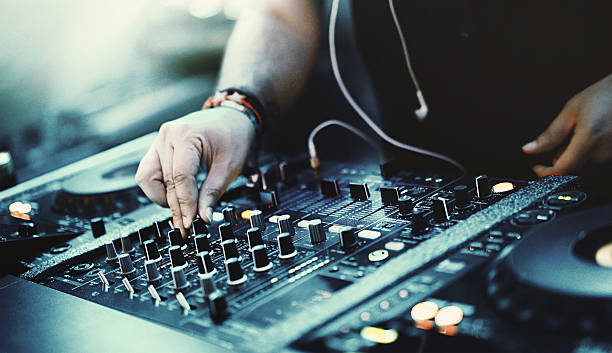
The crossfader is the one piece of gear that separates a pro-level mixer from a glorified channel strip. Yeah, channel faders, EQ, filters, and FX get the likes, but the crossfader is where the magic gets physical. If your crossfader feels mid, your cuts will sound mid. No cap. Whether you’re scratching, juggling, blending, or doing quick acapella flips that make the crowd lose it, the crossfader is the thing your hand keeps coming back to. It’s not just for turntablists anymore. Open-format DJs, club DJs, livestreamers, and bedroom producers use it to tighten transitions and add energy without touching a laptop. IYKYK.
Battle mixers like Pioneer DJM-S11, Rane Seventy-Two, and Reloop Elite are built around the crossfader. They give you adjustable cut-in, curve, and tension. Some use magnetic faders, some use contactless optical faders, and some let you swap in an Innofader or Magvel Fader without soldering. That matters because faders wear out. A pro mixer should be serviceable, not disposable. If replacing a crossfader feels like defusing a bomb, that mixer is not really pro. It’s just expensive. The best battle mixers include hamster switches, reverse switches, and fader curve controls so you can set the crossfader to behave exactly how your brain expects. Sharp cut for transforms, smoother cut for blends, and a long throw for slow mixes. That customization is the whole point.
Club standard mixers like Pioneer DJM-A9, Allen & Heath Xone:96, and Denon DJ X1850 Prime take a different approach. They focus on four channels, phono and line inputs, digital routing, booth outputs, balanced XLR master outs, and effects that sound good in a big room. Their crossfaders are usually solid, but not always optimized for scratching. Rotary mixers like Rane MP2015 or Master Sounds Valve go further into smooth blend territory, sometimes skipping the crossfader entirely. If your style is long, hypnotic house and techno mixes, a rotary can feel like a warm hug. But if you cut, scratch, or juggle, a battle mixer is probably your soulmate. The pro move is matching the mixer to your actual workflow, not buying whatever looks cool on Instagram.
Here’s the thing: a pro-level mixer is the hub of your setup. It connects turntables, CDJs, controllers, DVS boxes, mics, and outboard gear. It manages cue mix, booth monitor, master level, and headroom so you’re not clipping when the club system is loud. It lets you switch between Serato, rekordbox, and Traktor without losing your mind. And it gives you a crossfader that feels like an instrument, not a volume knob. That feel is lowkey everything. A smooth crossfader can make a simple blend sound expensive. A stiff or wobbly one can make a clean cut sound like a mistake. You can’t fix bad fader feel with practice alone. You can adapt, but why would you?
When shopping, listen to your hands, not the spec sheet. Try cuts and a slow blend. Check cut-in, tension, and curve. Sharp curve for scratching, gentle curve for long blends. Many mixers let you adjust both. You’re paying for options that become muscle memory.
Maintenance is part of the unlock too. Faders collect dust, sweat, and whatever else is in the air at 3 a.m. Keep compressed air nearby, don’t spill drinks on the mixer, and learn how to calibrate or replace faders. A pro mixer is an investment. Treat it like one. Update firmware. Use a surge protector. Label your cables. That’s not adulting boredom; that’s protecting your bag. If you’re traveling, a flight case or padded bag is not optional. Your mixer makes the whole rig work. If it gets cooked, your set gets cooked.
At the end of the day, the crossfader still rules the booth because it’s direct. No menu diving. No latency. Just your hand, your rhythm, and two channels slamming together. Master the crossfader and you unlock a whole new language. You can cut, transform, crab, flare, and blend with intention. You can make a track breathe. You can make a crowd scream. That’s the pro-level difference. It’s not about having the most expensive mixer. It’s about having one that responds to you like it already knows what you’re going to do next.