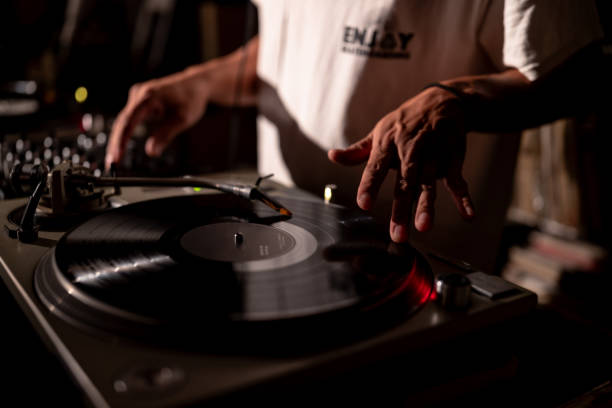
Reading a crowd is less like mind reading and more like paying attention to a group chat happening in real time. The floor is always talking. Feet, shoulders, phones, drink lines, bathroom traffic, and the way people scream when a certain synth hits — that’s all data. Your job as a DJ isn’t to force your perfect playlist on a room. It’s to meet the room where it’s at, then take it somewhere better. Here’s how to get your crowd-reading basics right without spiraling.
First, clock the room before you touch the decks. Is it a wedding, a basement warehouse, a rooftop happy hour, a college bar, a queer club, a festival tent at 3 p.m.? Context changes everything. Look at age range, dress code, drink situation, and how people are standing. Arms crossed and backs against the wall means you need to warm things up. Bodies already moving, hands up, someone doing a full main-character dance battle? You can push harder sooner.
Then watch feet. Feet don’t lie. Heads can nod politely. Faces can smile because they’re being nice. But feet decide whether someone stays or goes to the bar. If toes are tapping and hips are swaying, you’re in the pocket. If feet are pointed toward the exit or the smoking area, that’s your cue to switch lanes. Don’t take it personally. A dead floor isn’t a judgment on your taste. It’s feedback.
Start where they are, not where you want them to be. This is the golden rule. If the room is at a four out of ten energy, don’t open with a ten. Play something familiar enough to feel safe, then nudge the BPM and intensity up by five or ten percent. A loop, a filter, a well-timed acapella, or a clean blend into a track with more percussion can shift the vibe without whiplash. The goal is a staircase, not an elevator. Let them climb with you.
Requests are data, not demands. Someone asking for a song doesn’t always mean they want that exact track right now. Sometimes they’re telling you what era, language, tempo, or feeling they’re craving. If three people ask for Afrobeats, maybe the room wants rhythm and release, not one specific hit. If everyone keeps yelling for a throwback, give them a taste, then bridge into something fresh. You’re a curator, not a jukebox with a tip jar.
Watch the edges of the floor too. The front row is usually your ride-or-dies. They’ll go crazy for almost anything with a beat. The middle is your swing vote. The back is your reality check. If the back starts filling in, you’re winning. If the middle empties out but the front stays hype, you’re playing for the front row only. That can be fun for five minutes, but it’s not reading the room. Zoom out.
Use your tools to buy time. Loops are your bestie. If you need to figure out what’s next, loop a groove and scan the crowd. A filter sweep can create tension before a drop, but don’t overuse effects like you’re trying to prove something. The crowd wants connection, not a magic trick. Pay attention to vocals too. People sing when they feel seen. A recognizable hook, a lyric in their language, or a sample they grew up with can unlock the whole room.
Trust your gut, but test it. Play two tracks that fit the vibe and see what happens. If 70 percent of the floor is moving, keep going in that direction. If it’s 30 percent, pivot. Don’t panic and don’t announce defeat. Just blend out, reset, and try another lane. Have a few emergency directions ready: hip-hop, house, pop, afrobeats, disco, throwbacks, techno, whatever fits your world. Not to pander, but to stay flexible.
Finally, remember that reading a crowd is a conversation, not a performance review. You lead, they answer. Sometimes the answer is “more.“ Sometimes it’s “take us somewhere weird.“ Stay curious, keep your ego in check, and protect the vibe. If someone looks unwell, tell staff. A great set isn’t just about bangers. It’s about making a room feel safe enough to let go. That’s the real read.