You can have the slickest gear, a crate of unreleased bangers, and fingers that glide across the mixer like butter, but if you don’t know how to read the room, you’re basically just playing music at people instead of with them. The core vibe check isn’t some mystical sixth sense—it’s a skill, a muscle you train every time you step behind the decks. It’s the difference between a set that gets polite nods and one that turns a random Tuesday into a collective fever dream. Think of yourself not as a music player, but as an emotional architect. Your job is to build a structure of feeling that carries the dancefloor from the first warm-up groove to the last sweaty, euphoric exhale.
Start before you even press play. Walk the floor, feel the room’s baseline temperature. Is it a warehouse with concrete floors and a suspicious smell, or a slick club with LED walls? What’s the crowd’s age range, their outfits, their postures? Are they huddled in groups nursing drinks, or already bouncing near the booth? This pre-set reconnaissance is like checking the weather before a flight. You don’t need a full forecast, but you should know if there’s turbulence ahead. If the room is sparse and cold, slamming into a 128 BPM peak-time stomper is a recipe for a ghost town. Instead, ease in with something low-slung, hypnotic, maybe a touch dubby. Let the space breathe, let the early arrivers feel like they’ve found a secret hideout.
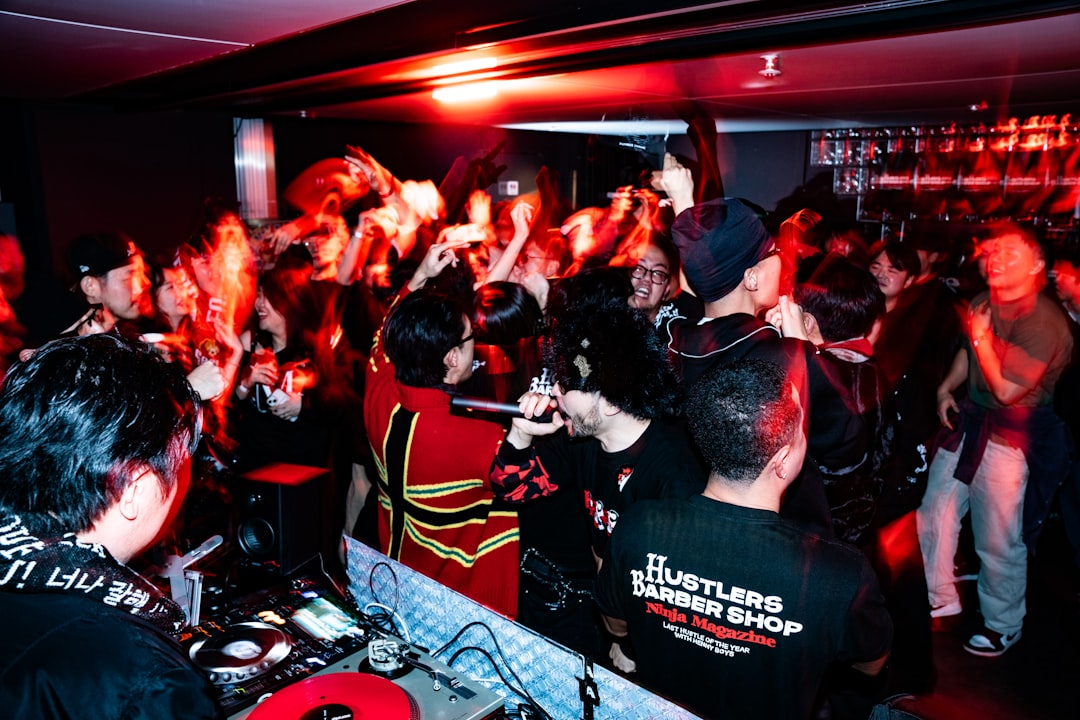
Once you’re live, your eyes become your most underrated instrument. Watch the bodies, not just the crowd as a blob. Are feet tapping? Heads nodding? Is that group by the bar actually facing you or just facing each other? Look for the pockets of energy—the two people going absolutely feral near the speaker stack. They are your early-warning system. If they lose steam, you lose everyone. Conversely, if you see someone checking their phone mid-drop, that’s a signal to pivot. Maybe the energy is too chaotic, or not chaotic enough. The trick is to make small adjustments before the vibe fully deteriorates. Drop a filter, roll off some highs, loop a vocal, or double-time the percussion—but do it subtly. The room shouldn’t feel like you’re yanking the steering wheel; it should feel like a gentle river current that slowly bends.
Track selection is only half the story. The other half is sequencing—how you sculpt tension over time. A classic mistake is peaking too early. You drop three heavy hitters in the first twenty minutes, and the crowd goes ballistic. That feels great in the moment, but then you’ve got nowhere to go. You’ve spent your emotional currency. Instead, think of your set as an arc, like a great movie. There’s an opening act that establishes trust, a rising action where you introduce a recurring melodic theme or a signature sound, a breakthrough moment where the energy finally tips over into a shared trance, and then a landing that leaves everyone wanting more. The best DJs ride the edge of anticipation—they tease a familiar riff, pull it back, let the groove breathe, then release it right when the crowd is screaming for it. That’s the vibe check mastered: knowing exactly when to give and when to withhold.
Your own mental state is part of the room, too. If you’re stressed, checking your phone, or overthinking every transition, the crowd will feel that stiffness. Nerves are contagious in a way that’s almost supernatural. So on a basic level, read your own energy before you step up. Take three deep breaths. Smile at a friendly face in the front row. Anchor yourself in your body—feel your feet on the ground, the knobs under your fingers. You’re not there to prove anything; you’re there to facilitate a shared experience. When you genuinely enjoy the music you’re playing, the room picks up on that joy. It sounds woo-woo, but it’s just neurobiology. Mirror neurons fire when people watch someone in a state of flow. Your relaxed, playful focus becomes their relaxed, playful focus.
Finally, don’t be afraid to change the plan. Maybe you had a whole file folder of peak-time techno, but the crowd is vibing harder with your downtempo house B-sides. Throw the plan out the window. Follow the energy, not your ego. Some of the most legendary sets are the ones where the DJ completely abandoned the prepared tracklist and chased the room’s whim. That’s the core truth of the vibe check: it’s an ongoing conversation, not a monologue. You speak with your selections, the crowd answers with their feet, and you adjust your next sentence accordingly. Every set is a live, breathing organism. The moment you stop reading it, it dies. But when you’re locked in, when every transition feels obvious and every drop lands exactly like a shared heartbeat, that’s when DJing stops being a technical exercise and becomes pure, unfiltered magic. That’s why you started in the first place—not to play records, but to move people. And moving people starts with seeing them.