Seoul doesn’t ease you into the night. It yanks you in, hands you a drink, and says, “Okay, now make the people move.” For any DJ mapping out an Asia circuit run, Seoul is not a maybe. It’s a core memory waiting to happen. The city splits its personality between Hongdae’s sweaty basement energy and Itaewon’s global late-night pulse, with Gangnam doing its own polished thing if you’re into bottle-service chaos. But the real magic for beatmixing nerds and open-format maniacs lives where the sound is loud, the floors are sticky, and the crowd actually listens.
Hongdae is the classic first stop. It grew around Hongik University, so the crowd is young, artsy, and allergic to boring sets. The clubs are often down narrow stairs, through unmarked doors, and into rooms that feel like someone’s finished basement got a Funktion-One upgrade. You might play Chicago house, UK garage, disco, techno, or a K-pop edit that makes the room lose its collective mind. The vibe is less VIP velvet rope and more “we’re all here because the music is the main character.” DJs who can build a journey with proper phrasing and clean EQ work get rewarded. DJs who just slam drops every eight bars get a polite but brutal floor clear.
Itaewon is where Seoul goes international. The crowd is a mix of expats, travelers, Korean locals, and people who somehow just landed from Berlin. Hip-hop, R&B, afrobeats, dancehall, house, and amapiano all have a home here. Legendary spots like Cakeshop have been part of the fabric for years, and the energy can go from chill to feral in one transition. You need to be versatile. Maybe you start with smooth R&B, slide into a baile edit, then take it to techno before the sunrise. If you only know one lane, Itaewon will humble you. If you can read the room and pivot, it will love you.
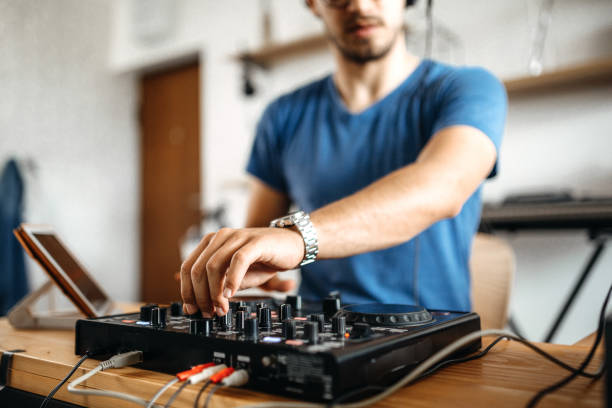
Technically, Seoul is a dream and a test. Most clubs run Pioneer CDJ-3000s and DJM-900NXS2 or V10 mixers, so your rekordbox exports need to be tight. Bring multiple USBs, update your playlists, and don’t rely on Wi-Fi. Analyze your tracks, set cue points, and know your gains. Some booths are cramped, monitors can be hit or miss, and the booth might be a literal closet. Learn to mix in your headphones if the monitors are trash. Beatmatching by ear is still a flex, especially when the crowd is watching you like a reality show. Don’t redline. Respect the gear. The sound engineers in Seoul do not play.
The crowd is another level. Seoul clubbers are not just there to be seen. They know the music, they know the drops, and they will follow you if you take them somewhere interesting. But they can be shy at first. You might play to a full room that’s just nodding, then one perfect track flips the switch and suddenly everyone’s dancing like the rent is due. That’s the Seoul vibe check. You earn it. You don’t demand it. Talk less on the mic. Let the music breathe. If the floor empties, switch it up. Don’t die on a hill of one genre just because it’s your personality.
Nightlife in Seoul runs late. Like, “why is the sun up” late. Clubs can go until 6 or 7 a.m., and then someone suggests a second round at a convenience store or a jjimjilbang. For traveling DJs, this is where wellness becomes a real thing. Hydrate between drinks. Wear earplugs. Stretch your back before and after your set. Sleep when you can, even if it’s just a disco nap. Jet lag, alcohol, and ego can wreck your mental health if you let them. Take a walk by the Han River. Touch grass. Eat something that isn’t just ramyeon, though the 7 a.m. convenience store ramyeon is a rite of passage.
The bucket-list moment hits when you’re playing a K-pop edit you flipped, the crowd sings every word, and you realize you’re in Seoul, in the booth, at sunrise. That’s the Asia circuit stop that rewires your DJ brain. It teaches you versatility, humility, and how to hold a room without begging for attention. Pack your USBs, bring your best transitions, and leave your ego at the door. Seoul will give you a night you’ll be talking about for years.