Real talk: most beginner DJs practice in chaotic three-hour binges, then ghost their decks for two weeks. Life is busy. You have group chats, shifts, gym, maybe school. But DJing is a motor skill plus an ear skill plus a library skill. It grows through repetition, not heroic weekend sessions. The habit that sticks is embarrassingly small: twenty minutes a day, same time, decks or controller ready. Not because twenty minutes is magic, but because it’s easy enough to not negotiate with yourself.
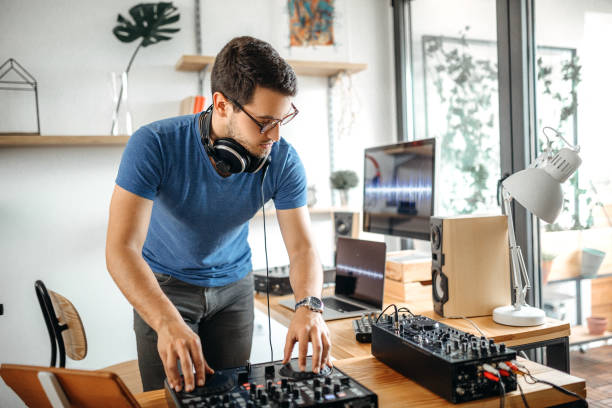
Set up a practice station. If your controller lives in a bag under your bed, you’re not practicing. Leave it plugged in if possible. Cue tracks loaded. Headphones on hook. Make it frictionless. The goal is to remove the “ugh” barrier. Even if you only do fifteen, that’s a win. Consistency beats intensity. A DJ who practices twenty minutes five days a week will smoke someone who practices once a month for four hours.
Structure the session like a mini set. Five minutes: warm-up. Pick two tracks you know. Beatmatch by ear if you can, or use sync as training wheels but turn off visual waveforms sometimes. Focus on hearing the kick and snare lock. Don’t worry about perfect. Then ten minutes: one skill. Maybe phrase mixing. Count bars in eights. Practice bringing in a track on the one of a phrase. Maybe EQ swaps. Maybe looping. Maybe scratching baby scratches. Keep it one thing. The last five minutes: record it. Listen back. Not to roast yourself, but to notice. Did the transition trainwreck? Was the bass muddy? Did you drop on phrase? Take one note for tomorrow.
The biggest trap is trying to learn everything at once. Beatmatching, harmonic mixing, scratching, effects, production, social media. That’s how you burn out. Pick a weekly focus. Week one: beatmatching. Week two: phrasing. Week three: EQ and levels. Week four: crowd reading by playing for a friend or recording a mini mix. This is like going to the gym. You don’t max out every muscle every day. You split it up.
Library prep counts as practice, but don’t let it eat the whole session. It’s easy to spend forty minutes downloading tracks and fixing tags and calling it practice. That’s admin. Useful, but not the same as touching the decks. Do a separate ten-minute library sprint: analyze tracks, set cue points, sort by energy, make a playlist for your next practice. Then close the laptop and mix. Your future self will thank you when you’re playing a set and not scrolling for a banger.
Record everything. Your phone voice memo is fine. Listening back is humbling. You’ll hear rushed blends, clashing vocals, and levels all over the place. Good. That’s data. The pros aren’t magical. They’ve just heard themselves mess up thousands of times and adjusted. Larry Levan and Frankie Knuckles didn’t have sync or waveform displays. They learned by playing records over and over, reading the room, and trusting their ears. You can borrow that spirit without romanticizing the grind. Short, focused reps build the same instincts.
Make it social sometimes. Practice with a friend. Trade fifteen-minute sets. Give each other one compliment and one note. Or join a Discord and post a mix. Accountability is a cheat code. If someone expects your weekly mix, you’ll actually do it. But don’t turn every session into a livestream. Practice is not performance. You need space to be trash without an audience.
Track your streak, not your hours. A calendar with an X is enough. Missing one day is fine. Missing two is a pattern. Don’t punish yourself. Just reset. The goal is to become the kind of person who touches the decks regularly. That identity shift matters more than any single trick. Eventually twenty minutes becomes forty because you’re having fun. But you only get there by making the first twenty stupidly easy.
End with a cool-down. Play one track you love, no mixing, just listen. It reminds you why you started. Then shut it down. Leave the next session set up. The habit sticks when it feels less like a task and more like a ritual. Twenty minutes. One skill. Record. Repeat. That’s how you go from bedroom DJ to someone who actually knows their craft.