Back in the early 1970s, in the Boogie Down Bronx, a handful of teenagers pulled off a sonic revolution that still echoes through every club, festival, and bedroom studio today. They didn’t pick up guitars or syncopated drum kits. Instead, they grabbed turntables – the very same machines used to spin records at weddings and house parties – and treated them like they were living, breathing instruments made of steel and vinyl. This evolution of the hip hop DJ transformed the humble “selector” into a full-blown artist, a technician, and a cultural architect. And honestly, the story is pure unadulterated genius.
It all started with Kool Herc, the Jamaican-born visionary who noticed something crucial about the crowd at his block parties. When the record hit the break – that drum-only section in a funk or soul tune where everything else drops out – the dancefloor absolutely went ballistic. Herc figured out a way to loop those breaks endlessly by switching between two copies of the same record, stretching what was once a five-second burst of rhythm into a ten-minute jam session. He called this the Merry-Go-Round, and it laid the entire foundation for hip hop music. Kids weren’t just dancing anymore; they were waiting for that precise moment when the beat kicked in and the world forgot its problems. Herc’s innovation was pure intuition, but it took a freaky technical brain to turn it into a science.
Enter Grandmaster Flash, a kid who disassembled his father’s turntables just to understand how they worked. Flash took Kool Herc’s concept and refined it to the point of obsession. He invented beat juggling – the art of manipulating two records with your hands to create entirely new rhythmic patterns. He also pioneered quick-cut mixing, using a mixer and headphones to cue up beats with surgical precision. But Flash didn’t just sound good; he looked good. He understood that DJing was a performance, not just a job. He built a crew, schooled them in syncopation, and turned the turntable into the centerpiece of a show. He was the first real superstar DJ, and he proved that the person behind the decks could be just as captivating as the music itself.
Then came Grand Wizard Theodore, a young kid who made a legendary happy accident. While trying to hold a record still with his hand, he wiggled it back and forth and heard something crazy – the scratch. That raw, percussive shriek, that “shh-ihh-shh” sound, would become the universal signifier of hip hop. From that moment on, scratching exploded into a universe of its own. DJs started developing techniques like the chirp, the crab, and the transform. Each one required thousands of hours of practice, calloused fingertips, and an almost spiritual relationship with vinyl. The turntable was no longer just a playback device. It was a voice, a drum, a conversation starter, a weapon.
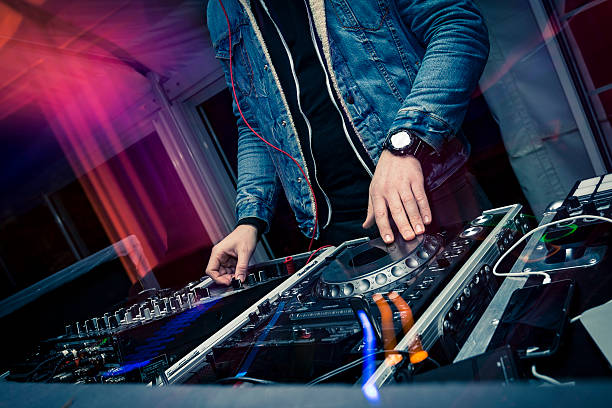
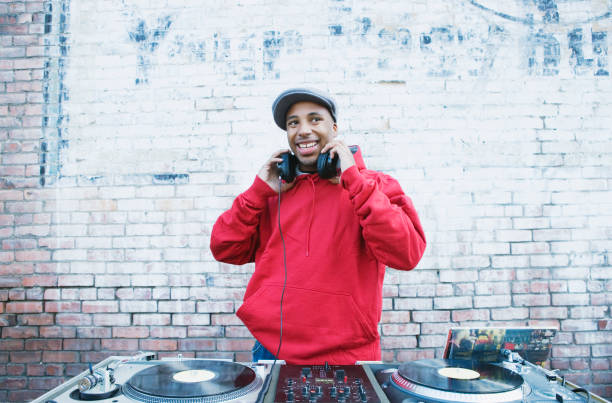
By the 1990s, turntablism had become a serious competitive sport. Legends like Q-Bert, Mix Master Mike, and DJ Craze pushed the boundaries until the turntable honestly sounded like a full band. They used the crossfader like a percussive instrument, chopping sounds into patterns that made your brain smile. Battle routines became theatrical, technical, and deeply personal. The DMC World DJ Championships elevated these artists to international fame, showing the entire world that a pair of Technics 1200s and a mixer could rival any guitar solo. This era solidified the DJ as a true musician, not just someone who plays other people’s records, but someone who creates music in real time.
The gear mattered, too. Technics 1200s earned their legendary status for their raw torque and reliable pitch control. Vinyl records were the canvas, and crate-digging became a sacred hunt. DJs would trek from dusty basements to flea markets, searching for obscure 45s with the hardest breaks. Every find was a treasure, a secret weapon that could define an entire set. That tactile connection between hand, needle, and groove was something you couldn’t replicate – you could feel the record’s history, hear the surface noise, and know exactly where to drop the needle for maximum impact.
Technology eventually moved on. Digital software and controllers now let anyone scratch with a click of a mouse. But the heart of hip hop DJing remains the same – a deep respect for rhythm, timing, and crowd energy. Today’s DJs still study the pioneers, still practice their precision cuts, still chase that magical feeling of dropping the perfect record at the perfect moment. They might be doing it on a laptop, but the philosophy is straight out of the Bronx circa 1974.
The evolution of the hip hop DJ is a lesson in creative rebellion. It flips the idea that you need expensive gear or a music degree to change culture. All you need is an open mind, a pair of turntables, and the nerve to try something new. That spirit lives on in every beat, every scratch, every back-to-back blend. The needle drop never gets old – it just keeps turning the world on its head, one break at a time.