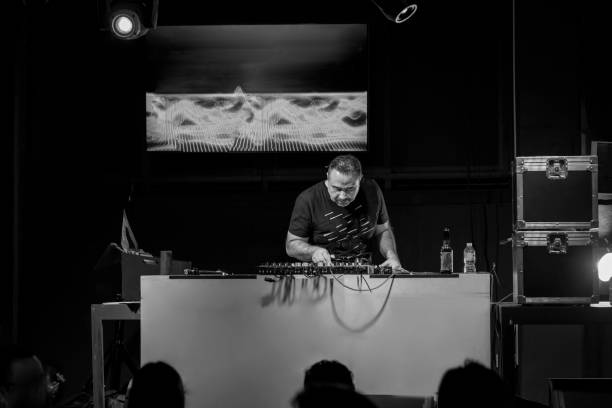
Every time you step up to the decks, you’re not just playing tracks. You’re becoming a narrator, a conductor of collective feeling, a tour guide through a sonic landscape that exists for one night only. The art of set storytelling is about understanding that your playlist is a plot, your transitions are pacing devices, and the crowd’s reaction is the audience cheering at the end of a chapter. The most memorable DJ sets—the ones that get talked about for months, that get uploaded to SoundCloud and studied, that become personal legends—are the ones that feel less like a random sequence of bangers and more like a complete emotional journey. That means you need a beginning, a middle, and an end, and you need to know exactly how to move between them.
Think about your favorite film. The opening scene sets the tone, introduces the characters, and promises something big. Your opening tracks should do the same. When you’re starting your set, you’re not supposed to drop the heaviest bomb right away unless that’s literally the story you’re telling. More often, you’re establishing a world, finding a groove, and letting people settle in. You’re giving the room a chance to breathe, to look at each other, to move their shoulders before their feet. This is the exposition. And if you rush it, you lose the chance to build curiosity. The best openers are the ones that feel like a question: “Where are we going?“ A deep, hypnotic groove, some percussive tension, or a familiar vocal teased from afar. You’re not answering anything yet. You’re creating a hum of anticipation.
Then comes the rising action. This is where you start climbing the energy mountain. Each track should feel like a logical next step, but not a predictable one. You’re adding elements—more bass, more tempo, more urgency—but you’re also shifting the emotional color. Maybe you move from minor-key melancholy to a major-key euphoria. Maybe you introduce a vocal that everyone knows, but only as a snippet. Or you layer in a rhythmic pattern that feels like a heartbeat accelerating. This is the part of the story where conflicts arise, where momentum builds, and where the crowd starts to invest. You’re reading their responses constantly, adjusting your path. If a track lands flat, you pivot. If the energy spikes too early, you pull back. This is the gritty, intuitive work of DJing—less about track selection, more about emotional sensing.
The peak is the climax, the moment when everything drops—literally and figuratively. But here’s the secret: the climax only works if you’ve earned it. The biggest drop in the world feels hollow if you haven’t built enough tension. Tension comes from restraint. It comes from those moments where you almost let go, you tease the beat, you strip out the drums for a bar or two, and the crowd screams because they know what’s coming. The pause, the breakdown, the breath before the drop—that’s the narrative device that separates great storytellers from track-selection robots. After the peak, you need to resolve. Just as a film doesn’t end right after the action sequence, your set can’t just stop at the highest energy point. You bring it down gradually, but you don’t lose the momentum completely. You enter the falling action, a space for reflection or release, where the crowd catches their breath but still feels the pulse. This is where you can get more experimental, more emotional, or even more anthemic in a different way. The storytelling here is about giving the night a sense of completeness, a landing zone that feels satisfying.
Some of the best storytellers love to play with silence itself. A carefully placed moment of near-nothing—a single synth pad, a vinyl crackle, a vocal loop with no beat behind it—can be more powerful than a hundred filtered builds. Silence creates contrast, and contrast is what makes people feel things. If everything is loud, nothing is loud. If every drop is massive, the massive loses its meaning. The art is in the spacing, the negative space, the moments where the room holds its breath collectively. You’re not just a DJ then. You’re a playwright, and the silence is your stage pause.
Finally, you have the outro, the epilogue. This is where you end the story. Sometimes you end with a subtle callback to a theme from earlier in your set. Sometimes you leave everyone on a gentle, uplifting note that sends them home smiling. The worst thing you can do is just play your last scheduled track and cut the energy cold. A good storyteller knows how to close, how to signal the end without breaking the illusion. You’re acknowledging the journey you all just took together. And when you walk away from the decks, the crowd’s memory of that journey will linger far longer than any single track you played.