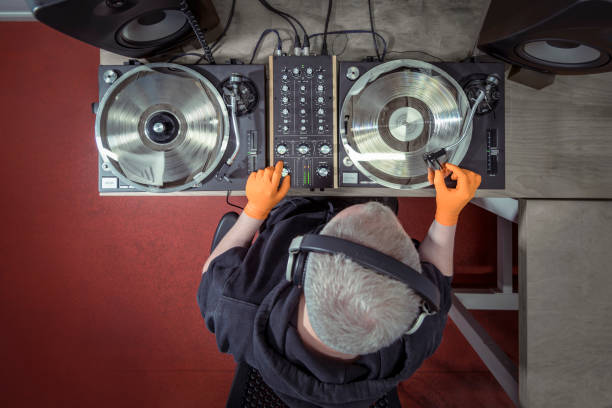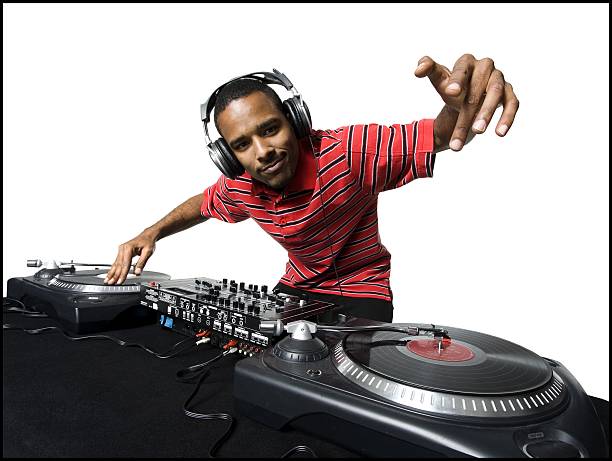
You’ve spent months, maybe years, perfecting that transition. Your cue points are dialed, your phrasing is tight, and you’ve finally got the crowd eating out of your hand. But there’s one thing no tutorial tells you: the monitor wedge pointed at your face might be slowly robbing you of the high-end frequencies you need to hear tomorrow’s mix. Welcome to the DJ Monitor Fallacy—the dangerous belief that louder monitors mean better mixing, when in reality, they’re the fastest track to tinnitus, hearing loss, and a career cut short.
Let’s get real. The DJ booth is not designed for your long-term ear health. It’s a concrete box with speakers firing at your head from three directions while subwoofers rattle your ribcage. And what do we do? We crank the monitor volume because we can’t hear the kick over the floor rumble. This is the fallacy: that you need to hear your mix at decibel levels that match the dance floor. Spoiler—you don’t. The dance floor is a chaotic soup of crowd noise, reverb, and system delays. Your ears are not built to process that level of distortion for four hours straight. By the time you’re 40, that “loudness addiction” could leave you with permanent high-frequency loss, meaning you’ll miss the shimmer of hi-hats and the snap of a snare. Game over.
Here’s the science without the jargon. Every 3 dB increase doubles the sound pressure hitting your eardrums. Most club monitors hit 95–105 dB at the DJ’s head position. At 100 dB, safe exposure time is 15 minutes. You’re mixing for hours. That’s not passion—that’s an acoustic car crash happening inside your cochlea. The fallacy is thinking “I’ll just get used to it” or “I need to feel the bass in my chest to lock the beat.” The truth is your brain can adapt to loud environments temporarily, but your hair cells (the little sensors that translate sound into electrical signals) don’t regenerate. Once they’re gone, they’re gone. No firmware update. No reset button.
So how do you protect your hearing longevity without sacrificing your mix? Start with monitor placement. That wedge should never be pointed directly at your ears. Angle it off-axis, so the sound hits the side of your head rather than blasting into your ear canal like a fire hose. If the club lets you use IEMs (in-ear monitors), that’s the gold standard. IEMs isolate the booth sound from the room, letting you dial in a safe volume while still hearing every transient. Even a pair of custom-molded earplugs with 15–20 dB filters can save your ears without making your mix sound like it’s underwater. The pros use these. The ones who still hear at 50 do too.
Another piece of the puzzle is monitor technique. Instead of relying on raw volume, use your booth mix to blend the cue channel and master output at lower levels. Your cue should be quiet enough that you can still hear a normal conversation. If you’re shouting at the bartender after a set, you’re doing damage. Also, learn to trust your meters. A waveform is an honest representation of frequency content—your ears at 1 AM after three Red Bulls are not. Use your eyes to confirm what your ears think they’re hearing. This is smart DJing, not weak DJing.
And let’s talk about the culture. The fallacy is reinforced by peer pressure. When you step into a booth and the previous DJ had the monitor cranking at 112 dB, you feel like you have to match it to “get the vibe.” This is ego. Real DJs who last decades know that protecting your hearing is a flex, not a weakness. Kendrick Lamar’s in-ear monitor engineer doesn’t crank his feed. Neither should you. The best sets happen when you’re in a zone of controlled clarity, not chaos.
Here’s your immediate action plan for every gig. First, invest in a decibel meter app that actually works (NIOSH SLM is free and accurate). Set a max level of 85 dB in your monitor zone. That’s your safety ceiling. Second, take a five-minute break every hour to give your ears a rest. Walk away from the booth. Let your stapedius muscle (the one that contracts to protect your inner ear from loud sounds) relax. Third, hydrate. Yes, water. Dehydration reduces blood flow to the cochlea, accelerating hearing fatigue. Four hours on a stage with dry air and bass pressure is already a workout for your ears—don’t make it harder.
Finally, get a baseline hearing test. Most audio clinics do them cheap or free. Know your starting point. If you already have a notch in the 4 kHz range (common for DJs), you can adjust your monitoring style before it gets worse. The DJ Monitor Fallacy isn’t going away overnight, but you can outsmart it. Longevity in this game isn’t about how hard you drop the bass—it’s about how clearly you can still hear it years later. Protect your ears like you protect your USB. They’re irreplaceable.