Okay, so you finally landed a booking that isn’t just you playing to four dudes and a disco ball in someone’s basement. Real club. Real promoter. Real money. You’re hyped. But then the promoter hits you with that word, the one that sounds both bougie and terrifying: rider. And your brain goes straight to the rock stars asking for a bowl of green M&Ms with all the brown ones removed. That’s not entirely wrong, but it’s also not the whole story. Your rider is basically a wishlist and a requirement list mashed into one, split into two halves: the technical side and the hospitality side. The technical rider is your gear, your monitors, your mixer model, your needle carts, your backup USB ports. The hospitality side is the vibe-support stuff: water, energy drinks, maybe a decent meal if you’re playing late, a quiet corner to decompress. And here’s the thing – you should absolutely have one, but you also need to keep it realistic, flexible, and genuinely useful, not just a flex to make you look important.
Let’s talk about the hospitality rider first because that’s where most young DJs either become divas or doormats. You don’t need champagne and a personal masseuse. You need water, preferably a few bottles, because DJing for three hours under lights and keeping the dancefloor hyped is legitimate cardio. You need some kind of non-alcoholic option if you’re not drinking – sparkling water, a Red Bull, maybe a smoothie if the venue is fancy. And you need food if you’re playing during dinner hours or until 4am. But here’s the secret: you don’t demand food with your chest puffed out like an entitled rapper. You ask for it politely in advance, and you specify something practical, like “vegetarian options are appreciated” or “a sandwich after 2am is a lifesaver.” Promoters want you to play well, and a fed DJ is a happy DJ, but they also have budgets. If you ask for a $40 sushi platter when you’re playing to a 120-capacity room, you look out of touch. Ask for simple, portable stuff. That’s how you build trust.
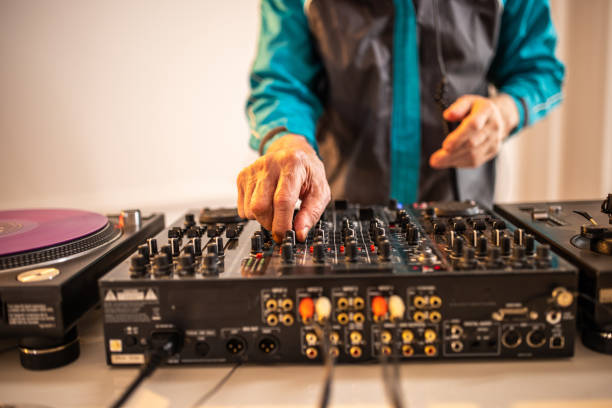
The technical rider is where you actually save your own ass. You don’t want to show up and find a mixer you’re unfamiliar with, or worse, a controller that’s missing a fader. Your technical rider should list the exact equipment you need, but also mention your backup plan. For example: “Primary: Pioneer DJM-900NXS2 with two CDJ-2000NXS2s. Backup: any comparable mixer with a working booth monitor.” That gives the promoter a clue without making you look like a nightmare. You should also specify if you’re bringing your own USB sticks, if you need a specific type of adapter, or if you’re going to use your own headphones and just need a 1/4-inch jack. And here’s the golden rule: always send your rider at least a week before the gig, not the night before. Promoters are juggling sound guys, security, and a leaky roof – don’t add a last-minute panic about a missing power cable. You send it early, you follow up politely, and you show up open to slight changes. That’s called professionalism, and it’ll get you rebooked way faster than any flashy trick on the decks.
Another key term in the gig world is “buyout.” Sometimes a promoter won’t provide food or drinks, but they’ll give you a cash buyout – a set amount like $50 or $100 – to get your own stuff. That’s totally cool. You take the cash, you hit the gas station, you get your electrolytes and a cold sandwich, and you move on. But don’t try to double-dip by asking for a buyout and also demanding the rider items. That’s the kind of move that gets you labeled as “difficult” on the promoter group chat. Similarly, be careful with the “hospitality clause” in your contract. Some venues have a minimum rider value they’ll cover, and if you don’t use it, they don’t care. But if you use more than that, they’ll subtract it from your fee. So read the fine print. A rider is not a blank check; it’s a communication tool. It tells the venue, “Hey, these are the bare essentials for me to give you the best hour, two hours, or all-night set you’ve ever heard.” That’s it. It’s not a power play.
Now, let’s talk about the awkward side: what happens when you’re the opener or the undercard? Your rider should be scaled accordingly. If you’re playing a 9pm opening slot for a headliner, you don’t need the same amenities as the 2am closer. But you still need your basics. And you should also know the phrase “backline” – that’s all the shared gear on stage, typically the mixer and players. For DJs, backline is usually the house equipment. You should ask what’s included, because some tiny clubs expect you to bring everything except a mixer. That’s not a rider problem; that’s a logistics nightmare. Always ask: “What backline is provided?” and put that in your email thread. Also know your “call time” – that’s when you need to be physically there, not when you start playing. Call time is often two hours before your set for soundcheck and load-in. If you roll in at your actual start time, you’ve already lost. Use that pre-gig time to check your gear, test the booth monitors, and vibe with the room.
One more treasure: the “door deal.” For a lot of smaller events and underground nights, you don’t get a fixed fee; you get a cut of the door cover charge. That’s where your rider becomes a negotiation chip. Let’s say the promoter offers you 50/50 on the door but no guarantee. You might accept a smaller rider (just water, no food) in exchange for a higher percentage. Or you might ask for a “guarantee” – a minimum amount you’ll walk away with regardless of turnout. These are all legit terms you should know. And if you’re confused, just ask. “Hey, what does the door deal look like?” is the most normal, down-to-earth question you can ask. The cringe part is pretending you understand everything and then throwing a fit at 3am because you made forty bucks and no one counted right.
So, your takeaway? Build a rider that’s both pragmatic and professional. Write it down, keep it in your notes app, and update it every time you get new gear or discover a new dietary need. Send it early. Be cool about changes. Remember that the rider is not about status – it’s about setting yourself up to focus entirely on the music. When you’re not stressing about water, food, or whether the booth monitor is working, you’re free to read the crowd, take risks, and drop that secret track that makes the whole room lose it. That’s why riders exist. Not to make you look like a star, but to let you actually play like one. And honestly, a promoter who sees you handle your rider with grace and flexibility will hire you again, recommend you to other venues, and maybe even bump you to a better slot next time. That’s how the game works. So craft that rider, send it off, and go crush your gig.