BPM is the heartbeat of everything. It stands for beats per minute, and it’s the first number every DJ checks before a track enters the chat. If a song is 128 BPM, that means 128 kicks land in sixty seconds. House usually hangs around 120 to 130, techno can push 130 to 150, hip-hop often sits in the 80 to 100 range, and drum and bass is a whole different universe at 170-plus. When someone says the tempo is “too fast,“ they mean the BPM is higher than the room wants. When they say “drag the tempo,“ they mean slow it down.
Beatmatching is the classic skill: aligning the beats of two tracks so they sound like one continuous groove. You do this by listening, nudging the jog wheel, and adjusting the pitch fader. The pitch fader changes a track’s speed, which also changes its BPM. On CDJs and controllers, it’s still a vibe, just with more digits. Sync is the automatic version. Press it, and the software matches BPMs for you. Sync isn’t cheating, but it’s not a personality either. You still need phrasing, because dropping a track at the wrong moment is how you turn a smooth blend into a trainwreck.
Phrasing is the invisible architecture of a DJ set. Most dance music is built in bars, usually four beats per bar. Four bars make a phrase, so eight, sixteen, or thirty-two bars form the sections you actually feel: intro, build, drop, breakdown, outro. When you mix in on the first beat of a new phrase, the transition lands like a puzzle piece. When you mix in halfway through a bar, it can feel like someone tripped over the aux cord. Count it out: one, two, three, four, over and over until the phrase clicks. Congrats, you’re phrasing.
Cue points are your bookmarks. A cue is a saved moment in a track, like the first kick, the drop, or the vocal hook. Hot cues let you jump there instantly. You’ll also hear “cueing” as the act of pre-listening to a track in your headphones before the crowd hears it. That’s where the cue button and cue mix knob come in. The cue mix knob controls how much of the cued track you hear versus the master output. The booth monitor is what you hear in the DJ booth. If a DJ looks like they’re doing brain surgery with headphones, they’re probably just cueing the next track.
EQ and gain are the difference between a clean blend and a muddy mess. EQ stands for equalization, and it splits sound into low, mid, and high frequencies. Kill the bass on the incoming track, bring it in, then swap the basslines so two kicks don’t fight for the same space. Gain, sometimes called trim, sets the input level. If you push it too hard, you get clipping, which sounds like crunchy distortion. Redlining means your levels are peaking in the red. Headroom is the space you leave before clipping.
Harmonic mixing is the next-level nerdy stuff. Every track has a key, like 8A or 12B. The Camelot wheel organizes keys so you can mix tracks that sound musically compatible. Mixing in key can make a transition feel euphoric instead of chaotic.
Loops, rolls, and slip mode are creative tools. A loop repeats a section, a roll is a quick burst of repeats, and slip mode lets you scratch or loop while the track keeps moving underneath. Effects like reverb, delay, and filter can add drama, but too much is like putting hot sauce on everything. A filter sweep before a drop? Chef’s kiss.
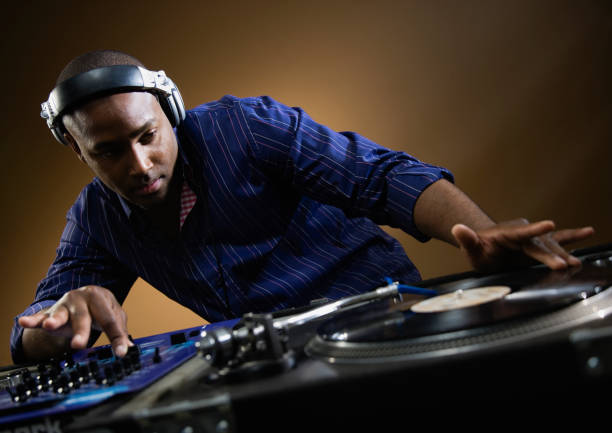
Finally, know the gear lingo. CDJs are club-standard media players. A DVS uses timecode vinyl to control digital files. Controllers combine decks and mixer into one unit. Stems let you isolate vocals, drums, bass, and melody. Acapella is vocals only. Instrumental is the beat without vocals. A transition is how you get from one track to the next. Learn them, practice them, and eventually they’ll feel less like vocabulary and more like instinct. That’s when the technical stuff disappears and the set just flows.