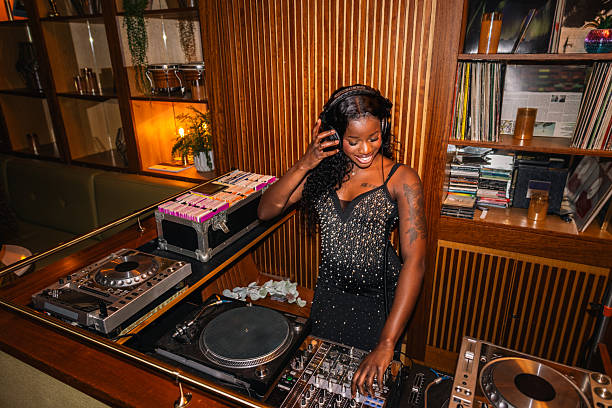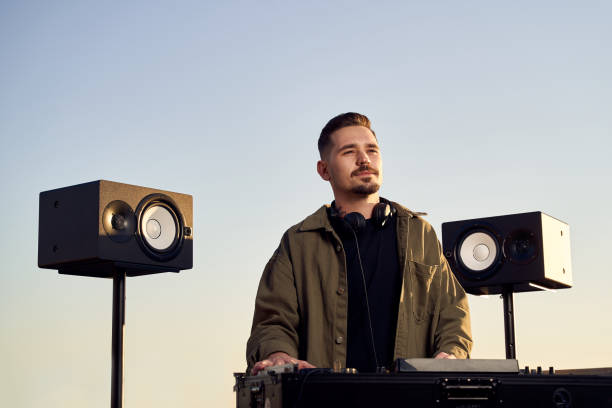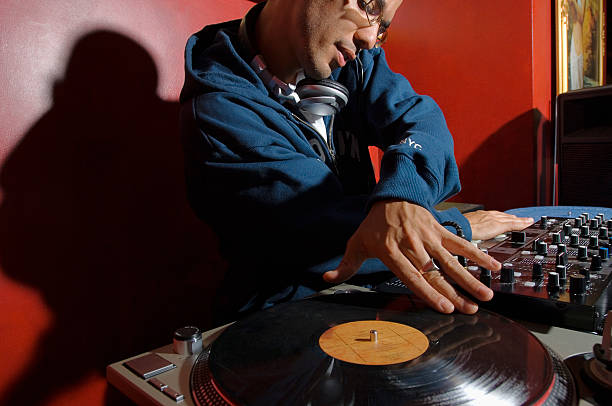
There’s a specific moment at every massive festival when the whole crowd seems to hold its breath. The heat of the afternoon starts to soften, the sky turns from that harsh blue into something more like cotton candy, and every single person on the grounds feels the shift. You’ve got maybe ninety minutes of pure magic before the night takes over. This is the golden hour, and for DJs, it’s not just another slot on the schedule. It’s the realest test of your ability to read a sea of humans, to shape a vibe that’s both massive and intimate, and to drop the kind of tracks that make people remember exactly where they were when the sun dipped below the main stage.
On a mega festival stage, the golden hour is unlike any other time of day. The lighting rigs aren’t doing their dramatic thing yet. The lasers are still sleeping. You don’t have the full dark-sky spectacle of pyro and flames to lean on. What you do have is actual light, natural and warm, hitting every face in the crowd. And that light is brutally honest. It shows you who’s vibing, who’s tired from walking between stages, who’s waiting for the headliner and who’s secretly hoping you’ll surprise them. The best DJs live for this. They’re not scared of the missing production value because they know the real production is the crowd itself, backlit by a setting sun, creating the kind of silhouette symphony that no LED wall can touch.
This is where you see the difference between a playlist jockey and a true selector. Anyone can close a night with a barrage of bangers when the moon is up and the bass is shaking your ribcage. But during the golden hour, you’ve got to be surgical. You’re bridging the day energy and the night energy. People are coming down from a long afternoon, but they’re also charging up for whatever madness the evening holds. So you give them melodic house with those deep, plucky basslines. You throw in some classic vocal chops that feel like a shared memory. You might even dip into a little trance, not the pounding kind, but the euphoric, arms-wide-open kind that matches the sky perfectly. The goal is to create a soundtrack that feels like the sun is personally waving goodbye to every single person in the field.
But here’s the thing about mega festival stages—they’re massive. You’re not playing to a hundred sweaty bodies in a basement. You’re playing to forty thousand people spread out across a field that goes on forever. The golden hour crowd is a living organism with its own mood, and reading that mood is a skill that takes years. You’ve gotta scan the outer edges, where the casual fans are sitting on the grass or waiting in line for overpriced water. You’ve gotta feel the middle, where the diehards are bobbing their heads and filming everything for their story. And you’ve gotta lock in with the front few rows, the ones who’ve camped out for hours just to get a glimpse of the stage. Your track selection has to speak to all of them simultaneously. That means every tune needs a hook, a melody, or a beat that works on a personal level even when the scale is impossibly huge.
The other sneaky challenge of the sunset slot is the pressure to go viral. In this era, every set is being live-streamed or clipped for TikTok within seconds. The golden hour provides the most beautiful backdrop for those clips—the amber glow, the dust particles floating in the air, the crowd silhhouettes. So you’ve got to deliver moments that are not just musically satisfying but visually photogenic. That’s why so many festival DJs save their most singalong-friendly tracks for this exact window. You know the ones. That remix with a vocal sample that makes forty thousand strangers suddenly become a choir. That melodic drop that hits at the precise second the sun touches the horizon. It feels magical, but it’s actually calculated. The magic is just really well planned.
And let’s be real, the golden hour is also a survival thing. If you’re playing the closing slot, you’re dealing with fatigue, way too many substances floating around, and a crowd that’s been going hard for eight hours. But the sunset crowd is still fresh. They’re optimistic. They haven’t lost their voices yet. They’re more likely to sway with you, to close their eyes, to let a pretty chord progression wash over them. That vulnerability is a gift. It lets you take risks you wouldn’t take at 1 AM. You can play something slower. You can play a track with no beat for a second. You can let the quiet hang in the air and trust that the silence itself feels communal. That’s the energy that separates the legends from the technicians. Legends know that the golden hour isn’t about showing off your mixing skills—it’s about holding the crowd in a moment they’ll never want to let go of.
So if you’re a DJ dreaming of main stage glory, don’t just obsess over the closing slot. Pray for the sunset. It’s the opportunity to make an entire festival weep with joy before the night even begins. And when you nail it, the darkness doesn’t end your set—it just extends it, because every person in that crowd will carry that glow with them for the rest of the night. That’s the golden hour’s real power. It doesn’t end when the sun goes down. It just changes form.